Connect with us

Opinion

Opinion: Dear General Elijah Ayodele, Where Is the Next Coup Taking Place?
Published

on

By Sammy Godson

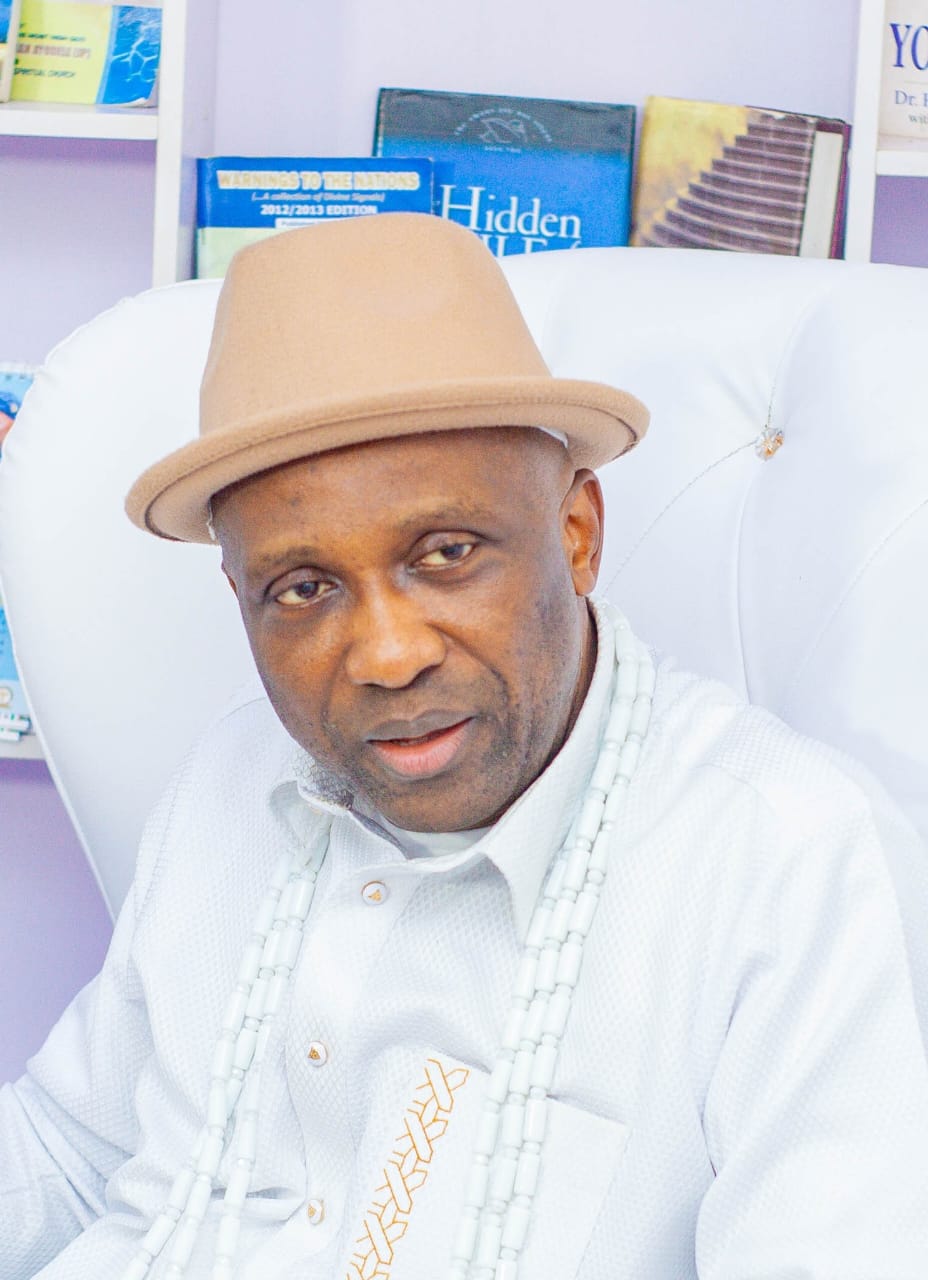
Seeing the title General attached to Elijah Ayodele may surprise many because everyone knows he is not a member of the army, nor has he ever been publicly addressed as such. But permit me to rechristen him, because at this point, his revelations on security matters go far beyond what an army general’s intelligence can cover.

General Elijah Ayodele is a prophet and the leader of the INRI Evangelical Spiritual Church in Lagos, yet one wonders how he has accurately foretold coup-related events across Africa—events that have been happening exactly as he mentioned.

There is a huge difference between vaguely predicting that coups will occur in a continent and specifically naming the exact countries where they will take place—and seeing them happen precisely that way. Even the world’s most powerful army general cannot achieve such accuracy, no matter the intelligence available. It is absolutely impossible.

An army general is limited to the affairs of his own country. A Nigerian general cannot know of a coup being planned in Benin Republic, and vice versa. Yet General Elijah Ayodele will sit in Lagos and speak of dangerous events such as military coups in distant countries, and they happen exactly as though he wrote the script.

This simply shows that General Elijah Ayodele is firmly connected to the throne of heaven, from where all things are revealed. As the Bible says, God does nothing without revealing it to His prophets. His prophets are His generals, and in Nigeria, we can boldly say that General Elijah Ayodele is not just a member of God’s troops but a commander—no one else comes close.

Starting with the latest coup attempt in Africa, which occurred in Benin Republic: on Sunday morning, a group of soldiers seized the national television station to announce that they had taken over the country and removed President Talon from power. They declared the suspension of all political activities and the constitution. It was a tense situation before the soldiers were repelled, resulting in the ultimate failure of the coup.

This did not happen without General Elijah Ayodele mentioning it days earlier. He had spoken about it at least three times, with the last warning given on Friday—just two days before the incident. He said some countries would experience revolutions through coups or elections, and Benin Republic was among them. He warned these nations to prepare, and within two days, it happened.

His exact words were:

“The following nations will face revolution in the coming year, either by coup or any other way. There will be disorderliness in the following countries: Cameroon, Chad, Niger, Mali, Tanzania, Benin Republic, Ethiopia, South Sudan, and Uganda. Let them prepare for the challenges ahead.”

Recently, a coup also occurred in Guinea-Bissau after the presidential election. The army announced that they had taken over the country, suspended all electoral activities, and removed the president from power.

This, too, did not occur without General Elijah Ayodele’s warning earlier in November. He called on the president to be careful during the election and not tamper with the process, warning that a coup could occur if he attempted it. In videos and news publications, he advised the president to step down if he lost, so as not to be removed unconstitutionally.

He said:

“In Guinea-Bissau, there is going to be an election, but if there is a coalition and the president tries to rig the election, the country will turn to fire. There will be anarchy, and the impossible coup can be possible. To the president: if you lose this election, just leave. Don’t force yourself because you will fail.”

Additionally, during a live service on November 11, General Ayodele said that Guinea-Bissau would experience military action. He specifically warned that the president would lose relevance and would need to take urgent steps to stabilize the country.

His words were:

“Guinea-Bissau: The country isn’t yet settled; there is still a crisis. They will be fighting seriously. The president will not be reckoned with, and the military will carry out another action. The president must be ready to do anything to stabilize the country because I see a crisis in Guinea.”

Let us also not forget the reported attempt to unseat President Bola Ahmed Tinubu months ago, which allegedly led to the removal of some service chiefs. Weeks before the incident, General Ayodele specifically mentioned that soldiers were angry with the president and that powerful Nigerians were planning to use the military against him.

He warned:

“There will be an attempt to unseat Tinubu unconstitutionally; the NSA, DSS, and Chief of Army Staff must be careful. There are gangs planning between November and January to unseat him.”

“Even the Navy and Air Force will be part of it, including the Nigerian Army. President Tinubu must be ready for anything and fortify himself. He needs to change his security strategy because these personalities will be unbelievable names.”

In July 2025, he had also said that Tinubu must strengthen his security system because he foresaw an attempt to carry out a coup against his government.

“I see an attempt to take power from him (Tinubu) in an unconstitutional manner. God warns him to take his personal safety seriously. What I saw was coup-like, with tension everywhere.”

Going back further, in 2019—before the 2020 coup in Mali—General Ayodele warned in his prophecy for 2020 (released in December 2019) that there would be a gang-up against the president. Just months into the new year, it came to pass.

He had said:

“There will be a gang-up against the Malian president. The country should pray against protests and disorderliness.”

In Gabon, before Ali Bongo was ousted, General Ayodele stood in his church on October 7, 2022, during a live service and advised Bongo to resign because the military would remove him. This was long before the election that ultimately ended in a coup.

He told Bongo:

“Gabonese president, your time is up. I am seeing a crisis, if not a coup d’état. Because of your health, why not resign? Why do you want to die on this seat? I am telling you what the Lord has said. Your staying on the throne is killing you. You are incapacitated, but no one is telling you the truth. I am advising you to humble yourself, resign, and hand over to someone who can do better so you won’t cause a crisis in your country.”

Other coups—including those in Niger and Burkina Faso—were also foretold by General Ayodele. Even though some governments did nothing until events swept them away, one thing is certain: none of them can ever say the prophet did not warn them.

However, for the sake of the good citizens of the nations concerned, I would like to ask the General:
Where is the next coup taking place?

Thank you.

Continue Reading
Click to comment

Leave a Reply

Your email address will not be published. Required fields are marked *

Opinion

What Nigeria’s Power Sector Trends Signal for Infrastructure Development in 2026

Published

on

By

Recent trends in Nigeria’s power sector suggest that infrastructure development will be the defining factor shaping electricity performance in 2026, despite notable policy and revenue reforms recorded over the past two years.

The years 2024 and 2025 marked a pivotal phase for the sector, with electricity market revenues growing by approximately 70 per cent following the introduction of cost-reflective tariffs and the launch of the National Integrated Electricity Policy (NIEP), a long-term framework designed to address regulatory, investment, and structural challenges.

However, these reforms have yet to translate into proportional improvements in power delivery. Despite an installed generation capacity estimated at 12,000–13,500 megawatts, actual available generation in 2025 rarely exceeded 5,500 MW, highlighting persistent constraints across gas supply, transmission, and distribution infrastructure.

According to Tola Ibironke, General Manager, Systems Engineering at PPC Limited (www.ppcng.com), this contrast reflects a sector that has begun to stabilise financially but now faces its most critical test: execution.

“Nigeria has made meaningful progress in fixing the economics of the power sector,” Ibironke said. “The next phase must focus on fixing the infrastructure, strengthening transmission systems, modernising distribution networks, and deploying resilient power solutions, without which policy gains cannot be fully realised.”

Regional comparisons reinforce this point. Countries such as Ghana, with smaller generation capacity, have achieved higher electricity access and more reliable supply by aligning policy reforms with systematic infrastructure upgrades and sustained grid investment.

As Nigeria looks toward 2026, PPC Limited, drawing on its experience in engineering and infrastructure services, notes that reliability, resilience, and system integration, rather than headline capacity figures, will define success in the power sector.

Ibironke added that the conversation is increasingly shifting from how much power Nigeria can generate to how reliably it can deliver it, placing infrastructure development at the centre of the sector’s future.

Continue Reading

Opinion

Bitcoin vs Gold: Understanding Safe-Haven Assets in a Volatile World

Published

on

By

When investors are most unsure, they reach for assets that retain their value during market turmoil. For institutional and individual investors in Africa, including Nigeria, gold has been the go-to haven for several years. More recently, Bitcoin has been increasingly touted by its advocates as a digital alternative to gold because of its decentralized architecture, capped supply, and rising international profile. In reality, matters are far more nuanced. Although Bitcoin certainly constitutes a profoundly important development in the field of digital money, it is not a stable store of value at this time. Instead, its price dynamics more closely resemble those of risk assets, such as major stock indices and speculative technology stocks.Given the inflation pressures, currency devaluation, and exchange rate instability that encourage diversification beyond traditional financial instruments in Nigeria, the question is: Which asset can reliably preserve wealth? To understand what makes an asset a safe haven, one needs to be clear on the definition. A true safe haven preserves purchasing power during crises, maintains demand across economic cycles, and retains liquidity under stress. Gold has met these criteria time and time again throughout the centuries and across geopolitical events. Bitcoin, in relative contrast, has shown high volatility, strong correlation with global risk sentiment, and rapid speculative inflows and outflows. These characteristics position it closer to a high-risk growth asset than a defensive hedge.Why Gold Remains the Primary Safe-Haven AssetGold has been a store of value for millennia. Its value is independent of any government, central bank, or digital infrastructure, and of any external platform. The price of gold mainly responds to currency weakness, geopolitical tension, and macroeconomic uncertainty. When inflation grows or currencies lose their purchasing power, gold usually appreciates. This can be clearly seen in Nigeria in recent years, as inflation and a weakening Naira have led to increased domestic demand for gold as a means of capital preservation.image.pngGold (XAUUSD) 1W chart 13.11.2025/ TradingViewThe stability of Gold is not accidental. Deep global liquidity, central bank participation, and sustained demand from industry and jewelry markets all underpin it. These structural characteristics reduce speculative volatility and create price behavior that, relatively speaking, is smoother during periods of global market stress.Bitcoin Has More With Risk AssetsBitcoin is often referred to as “digital gold” because of its limited supply and decentralized architecture. However, it behaves more like a high-beta market instrument in terms of price action. When global markets are higher and technology stocks are outperforming, Bitcoin tends to appreciate strongly, while it declines with equity indices when risk sentiment is poor.For instance, during global risk-off events such as major central bank tightening cycles, Bitcoin has plunged along with stock markets. This is consistent with speculative capital exiting high-volatility assets first when liquidity tightens. A safe-haven asset should behave differently. It should either remain stable or appreciate during market uncertainty, not decline with broader markets.image.pngBitcoin 1W chart 13.11.2025/ TradingViewBitcoin’s sensitivity to leverage conditions, liquidity cycles, and risk appetite precludes it from being viewed as a defensive portfolio asset at this time. It remains a speculative growth asset, with its price driven by sentiment, innovation cycles, and capital flows from both retail and institutional traders seeking momentum opportunities.Nigeria’s Inflation and the Search for StabilityThe Nigerian economy has experienced its fair share of runaway inflation, currency turmoil, and foreign-exchange pressure. Against this backdrop, the difference between a speculative asset and a true store of value becomes material. Most Nigerians like Bitcoin because it is accessible, internationally mobile, and free from local currency constraints. Features like these make Bitcoin a valuable alternative for transactions and savings, especially when access to banking is limited or capital controls limit currency movement.However, the ability to move capital does not translate into its value being preserved. Wealth protection requires stability. Gold provides this stability through centuries of price memory and broad demand. Bitcoin offers mobility and the growth potential, but mobility must not be confused with safety.Complementary Rather Than Substitutive RolesGold and Bitcoin do not compete directly; they serve different roles within a portfolio. Gold is a foundational asset for stability, while Bitcoin can be used as a speculative vehicle, diversification tool, or to get exposure to digital innovation, but only as a controlled percentage of one’s capital. For most traders and investors, Bitcoin is an appropriate allocation, balanced by assets that maintain value regardless of global liquidity conditions.A common framework amongst professional portfolio managers today is to consider gold a core defensive asset and Bitcoin a satellite holding of high conviction, which is sized according to one’s personal risk tolerance.Stability vs Growth PotentialGold stores value through stability and resilience in the long term. Bitcoin offers potential growth, but it is highly volatile and sensitive to global risk sentiment. For both investors and traders that want to protect capital while maintaining strategic flexibility in Nigeria, these will make a difference. Understanding the respective role of each asset leads to better portfolio construction and more sustainable financial outcomes.Bitcoin is a powerful innovation and an important part of modern financial evolution. Gold remains the foundation for wealth preservation. The right balance does not depend on a question of preference but of purpose.To start using the JustMarkets Trading app, simply register and download it on your Android or iOS device.Disclaimer: CFDs are complex instruments and carry a high risk of losing money rapidly due to leverage. Ensure you understand how CFDs work and whether you can afford to take the high risk of losing your money. JustMarkets does not provide investment advice or recommendations.

Continue Reading

Opinion

Service With Humility: The Leadership Example of Hon. Temitope Adewale

Published

on

By

By Adeyemi Obadimu

In the bustling heart of Ifako-Ijaiye Constituency I, Lagos State, a quiet revolution is taking shape, one driven not by rhetoric, but by results. Honourable Temitope Adedeji Adewale, a second-term member of the Lagos State House of Assembly, stands today as a symbol of purposeful representation, distinguished by his tireless investment in education, empowerment, and community development.

Championing Education and Youth Empowerment

For Adewale, education is not a privilege it is a right that the people must enjoy. Through his Adewale Temitope Educational Initiative (ATA-EI), the lawmaker has distributed thousands of free JAMB and GCE forms to indigent students across his constituency. Most recently, over 1,500 students received free JAMB forms, while hundreds more benefited from free GCE registration, a rare and impactful gesture that has opened doors of opportunity for many young Nigerians who might otherwise have been left behind.

Beyond this, Adewale’s annual Back-to-School Support Programme provides learning materials from school bags and exercise books to mathematical sets and writing supplies to pupils in both public and private schools. The initiative, according to the lawmaker, aims to reduce the financial burden on parents while encouraging academic excellence.

“Our goal is to make Ifako-Ijaiye the most educated local government in Lagos State by 2037,” Adewale often says, a vision he continues to pursue with passion and measurable impact. To further this goal, he has recently registered over 100 constituents for a new section of his Adult Literacy classes.

Touching Lives Through Compassion

The lawmaker’s empathy extends beyond education. His humanitarian drive is evident in his annual Widows’ Empowerment Programme, where over 500 widows receive food items, cash support, and welfare assistance each time. Through this gesture, Adewale has reaffirmed his belief that governance must serve the vulnerable as much as the powerful. The fifth edition of the programme held on November 10, 2025.

In the healthcare sector, he recently funded 50 free cataract surgeries and distributed 750 pairs of eyeglasses to residents under his health outreach initiative a project designed to restore not just sight, but hope, to constituents who had long struggled with vision challenges.

Advocating Food Security and Community Growth

In a bold call for sustainable living, Adewale recently also urged his constituents to embrace subsistence farming as part of the drive toward food security. He continues to explore ways to support local farmers through access to land, tools, and training aligning with Lagos State’s broader agricultural agenda.

Recognition and Commendation

Adewale’s consistency in service has not gone unnoticed. He has been recognised with multiple awards, including the “Man of Excellence Award” by Cerebrology International, for his outstanding contributions to education, youth empowerment, and social welfare. He also earned commendations from the Lagos State Ministry of Basic Education for aligning his projects with Governor Babajide Sanwo-Olu’s T.H.E.M.E.S Plus Agenda, particularly in advancing inclusive learning.

A Vision Rooted in Service

Behind the accolades and community projects lies a simple philosophy of service with humility and sincerity. Honourable Temitope Adedeji Adewale exemplifies what it means to be a “Lawmaker Per Excellence” one whose representation transcends politics to touch real lives and shape lasting change.

For the people of Ifako-Ijaiye, his name has become synonymous with hope, development, and integrity, a testament that good governance still breathes in the corridors of Nigerian politics.

Continue Reading

Trending

Mega Awareness 2023