Opinion
Opinion: Dear General Elijah Ayodele, Where Is the Next Coup Taking Place?
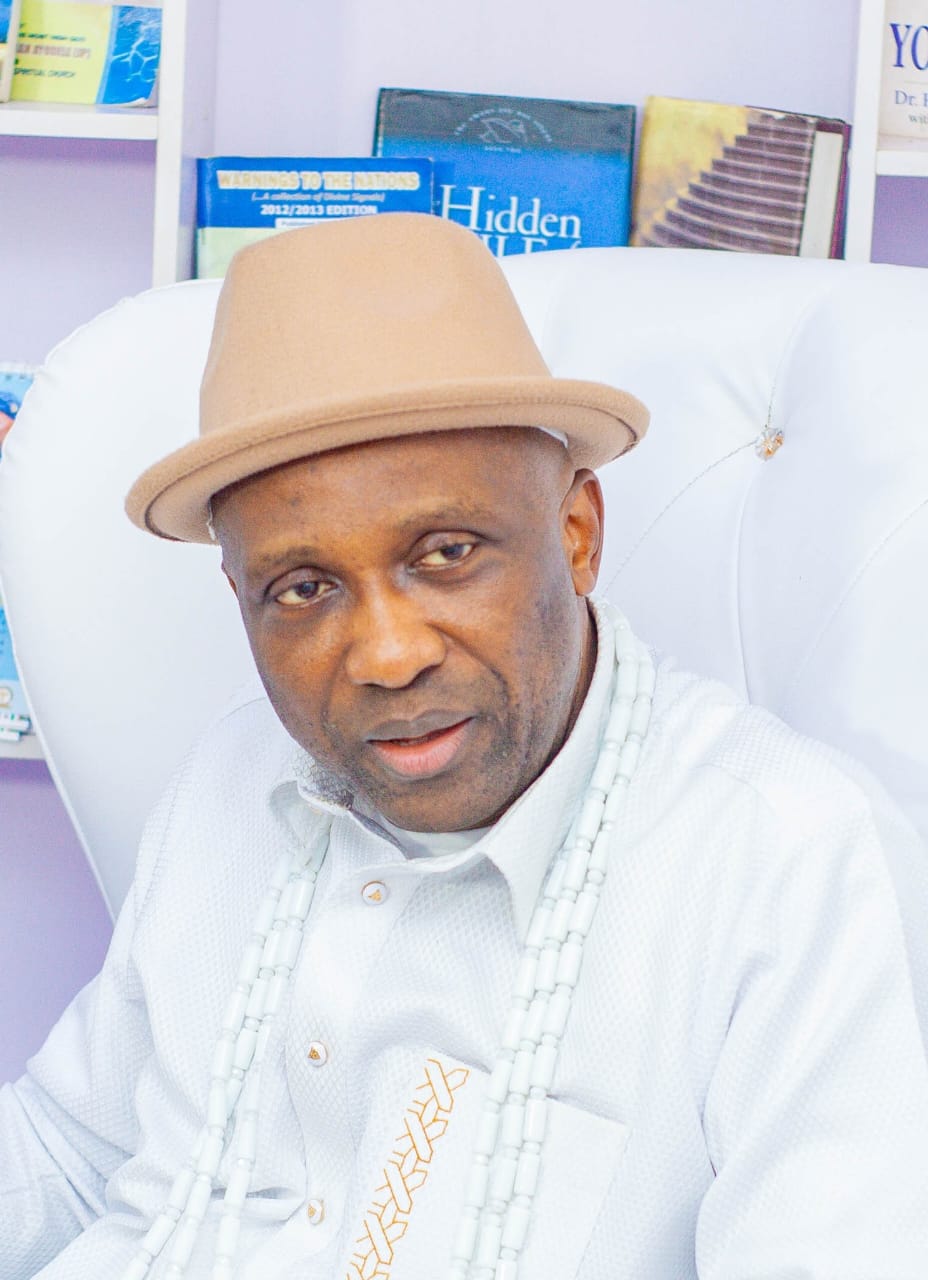
By Sammy Godson
Seeing the title General attached to Elijah Ayodele may surprise many because everyone knows he is not a member of the army, nor has he ever been publicly addressed as such. But permit me to rechristen him, because at this point, his revelations on security matters go far beyond what an army general’s intelligence can cover.
General Elijah Ayodele is a prophet and the leader of the INRI Evangelical Spiritual Church in Lagos, yet one wonders how he has accurately foretold coup-related events across Africa—events that have been happening exactly as he mentioned.
There is a huge difference between vaguely predicting that coups will occur in a continent and specifically naming the exact countries where they will take place—and seeing them happen precisely that way. Even the world’s most powerful army general cannot achieve such accuracy, no matter the intelligence available. It is absolutely impossible.
An army general is limited to the affairs of his own country. A Nigerian general cannot know of a coup being planned in Benin Republic, and vice versa. Yet General Elijah Ayodele will sit in Lagos and speak of dangerous events such as military coups in distant countries, and they happen exactly as though he wrote the script.
This simply shows that General Elijah Ayodele is firmly connected to the throne of heaven, from where all things are revealed. As the Bible says, God does nothing without revealing it to His prophets. His prophets are His generals, and in Nigeria, we can boldly say that General Elijah Ayodele is not just a member of God’s troops but a commander—no one else comes close.
Starting with the latest coup attempt in Africa, which occurred in Benin Republic: on Sunday morning, a group of soldiers seized the national television station to announce that they had taken over the country and removed President Talon from power. They declared the suspension of all political activities and the constitution. It was a tense situation before the soldiers were repelled, resulting in the ultimate failure of the coup.
This did not happen without General Elijah Ayodele mentioning it days earlier. He had spoken about it at least three times, with the last warning given on Friday—just two days before the incident. He said some countries would experience revolutions through coups or elections, and Benin Republic was among them. He warned these nations to prepare, and within two days, it happened.
His exact words were:
“The following nations will face revolution in the coming year, either by coup or any other way. There will be disorderliness in the following countries: Cameroon, Chad, Niger, Mali, Tanzania, Benin Republic, Ethiopia, South Sudan, and Uganda. Let them prepare for the challenges ahead.”
Recently, a coup also occurred in Guinea-Bissau after the presidential election. The army announced that they had taken over the country, suspended all electoral activities, and removed the president from power.
This, too, did not occur without General Elijah Ayodele’s warning earlier in November. He called on the president to be careful during the election and not tamper with the process, warning that a coup could occur if he attempted it. In videos and news publications, he advised the president to step down if he lost, so as not to be removed unconstitutionally.
He said:
“In Guinea-Bissau, there is going to be an election, but if there is a coalition and the president tries to rig the election, the country will turn to fire. There will be anarchy, and the impossible coup can be possible. To the president: if you lose this election, just leave. Don’t force yourself because you will fail.”
Additionally, during a live service on November 11, General Ayodele said that Guinea-Bissau would experience military action. He specifically warned that the president would lose relevance and would need to take urgent steps to stabilize the country.
His words were:
“Guinea-Bissau: The country isn’t yet settled; there is still a crisis. They will be fighting seriously. The president will not be reckoned with, and the military will carry out another action. The president must be ready to do anything to stabilize the country because I see a crisis in Guinea.”
Let us also not forget the reported attempt to unseat President Bola Ahmed Tinubu months ago, which allegedly led to the removal of some service chiefs. Weeks before the incident, General Ayodele specifically mentioned that soldiers were angry with the president and that powerful Nigerians were planning to use the military against him.
He warned:
“There will be an attempt to unseat Tinubu unconstitutionally; the NSA, DSS, and Chief of Army Staff must be careful. There are gangs planning between November and January to unseat him.”
“Even the Navy and Air Force will be part of it, including the Nigerian Army. President Tinubu must be ready for anything and fortify himself. He needs to change his security strategy because these personalities will be unbelievable names.”
In July 2025, he had also said that Tinubu must strengthen his security system because he foresaw an attempt to carry out a coup against his government.
“I see an attempt to take power from him (Tinubu) in an unconstitutional manner. God warns him to take his personal safety seriously. What I saw was coup-like, with tension everywhere.”
Going back further, in 2019—before the 2020 coup in Mali—General Ayodele warned in his prophecy for 2020 (released in December 2019) that there would be a gang-up against the president. Just months into the new year, it came to pass.
He had said:
“There will be a gang-up against the Malian president. The country should pray against protests and disorderliness.”
In Gabon, before Ali Bongo was ousted, General Ayodele stood in his church on October 7, 2022, during a live service and advised Bongo to resign because the military would remove him. This was long before the election that ultimately ended in a coup.
He told Bongo:
“Gabonese president, your time is up. I am seeing a crisis, if not a coup d’état. Because of your health, why not resign? Why do you want to die on this seat? I am telling you what the Lord has said. Your staying on the throne is killing you. You are incapacitated, but no one is telling you the truth. I am advising you to humble yourself, resign, and hand over to someone who can do better so you won’t cause a crisis in your country.”
Other coups—including those in Niger and Burkina Faso—were also foretold by General Ayodele. Even though some governments did nothing until events swept them away, one thing is certain: none of them can ever say the prophet did not warn them.
However, for the sake of the good citizens of the nations concerned, I would like to ask the General:
Where is the next coup taking place?
Thank you.
Opinion
Innovation without accountability is just experimentation – Emelia Sunday-Edet
These days, everything is called innovation. Governments talk about it in speeches. Startups promise it in pitch decks. Investors say they are funding it. Across Africa’s tech ecosystem, the word shows up everywhere. Yet one question often goes unexamined: who benefits from innovation, and who bears the cost when it fails?Because innovation without accountability is not really innovation, it’s experimentation. And experimentation becomes dangerous when the systems being tested are the same ones millions of people depend on. In my work testing software systems, I’ve learned that the problems that cause the biggest failures are rarely dramatic ones. They are small issues no one thought were serious—until the system scaled. Technology ecosystems are not very different.The rush to move fast. Anyone who follows the tech world knows the mantra: move fast, launch quickly, figure things out later.That approach has produced some remarkable companies. But it has also produced platforms that grew so quickly that no one really understood their consequences until much later. Africa’s technology sector is beginning to move at that same pace.New payment apps appear every year. Digital lending platforms promise instant credit. Logistics startups claim they can reinvent commerce. Some of these ideas will succeed. Many won’t. The real concern is not failure. Failure is part of building things.The real concern is when systems scale before anyone asks whether they are safe, fair, or sustainable.We’ve seen this before. A startup runs a successful campaign, user numbers surge, and the very success it hoped for becomes its biggest challenge. Systems slow down. Support queues grow. Security gaps become visible. What looked stable under normal conditions struggles under pressure.Scale has a way of revealing problems that were always present but easy to ignore.Growth Reveals WeaknessesPeople who build and manage systems- engineers, product managers, quality assurance professionals, developers, and executives, learn one lesson quickly: small problems grow when systems grow. A bug affecting a few users is annoying. The same bug affecting millions becomes a crisis.Technology ecosystems work similarly. When financial platforms expand too quickly without strong safeguards, the risks spread just as quickly.Users rarely see the early warning signs. By the time the problems surface, the platform may already be embedded in everyday life. At that point, fixing things becomes harder.When responsibility fadesAnother strange feature of the tech world is how easily responsibility disappears.When something goes wrong, everyone seems slightly removed from the decision. The startup says it only built the tool. The investor says they only funded the company. The platform says the system behaved as designed. Yet systems don’t design themselves.Behind every platform are choices about incentives, trade-offs, and acceptable levels of risk. Those choices shape who benefits from the technology and who carries the downside when things break.Too often, the people carrying the consequences are the users who had no role in making those decisions.Building Systems That LastRegulators across Africa face a difficult position. Move too aggressively and you risk choking innovation before it has a chance to grow. Move too slowly and fragile systems can spread before anyone understands the risks. But framing the issue as innovation versus regulation misses the point.The real goal should be innovation that lasts. The systems that endure are rarely the fastest ones. They are the ones built with enough care that they can survive mistakes, scale responsibly, and adapt when things go wrong.Let’s Redefine InnovationIt’s tempting to measure innovation by how quickly a product launches or how much venture capital a startup raises. But those metrics are temporary. A product can launch in months. Funding rounds can make headlines overnight. Neither tells us much about whether the system will actually work when people begin to depend on it.A better test of innovation is simpler: does the system hold up over time? Does it still work when millions of people rely on it every day? When something breaks, is someone responsible for fixing it? And does the system genuinely make life better, or does it quietly introduce new risks along the way?If those questions cannot be answered confidently, then what we are seeing is not innovation. It is experimentation.Societies can recover from failed experiments. They struggle much more when those experiments become critical infrastructure before anyone has tested their limits.
Opinion
Can Nigeria Become Africa’s Crypto Hub? Bidemi Oke
The most important question about Nigeria’s crypto future is not whether Nigerians love crypto. We already know they do.The real question is this: What if widespread crypto adoption is actually the least important requirement for becoming Africa’s crypto hub?That sounds counterintuitive. After all, Nigeria consistently ranks among the world’s most active crypto markets. Millions of young people use digital assets for payments, savings, remittances and investments. Venture capital continues to flow into blockchain-related businesses. Local talent is building products that serve users across multiple continents.Yet history offers an uncomfortable lesson. The places that become industry hubs are rarely the places with the highest consumption. They are the places with the strongest systems.Hollywood did not become the centre of global entertainment because Americans watched the most films. Silicon Valley did not emerge because Californians used the most computers. London did not become a financial powerhouse because Britons loved banking more than everyone else.They became hubs because they built ecosystems. That distinction matters.Many conversations about Nigeria’s crypto future focus on adoption metrics. How many users? How many wallets? How many transactions? How much trading volume?Those numbers are impressive, but they can also be misleading. Consumption creates activity. Ecosystems create dominance.If Nigeria truly wants to become Africa’s crypto hub, it must think beyond adoption and focus on what I call the “Hub Equation”: Talent + Capital + Regulation + Infrastructure.Most countries succeed in one or two of these areas. Very few succeed in all four simultaneously.Nigeria’s greatest advantage is talent. Across blockchain development, product design, cybersecurity, engineering and digital entrepreneurship, Nigerian professionals are increasingly visible on the global stage. Many of the most innovative crypto products serving African users are being designed, built or scaled by Nigerians.The second advantage is market depth. A large population, strong entrepreneurial culture and persistent demand for alternative financial solutions create conditions that are difficult to replicate elsewhere on the continent. Markets matter because they provide the testing ground where products evolve from ideas into viable businesses.However, talent and demand alone do not create hubs. The remaining two variables, regulation and infrastructure, often determine whether innovation stays, scales or leaves.This is where the conversation becomes more nuanced. A common assumption is that innovation thrives when governments simply “stay out of the way”. In reality, investors rarely commit significant capital to environments characterised by uncertainty. The world’s leading innovation centres did not emerge from regulatory absence. They emerged from regulatory clarity.The lesson is not that crypto should be heavily controlled. The lesson is that predictable rules attract serious builders. Founders can adapt to regulation. What they struggle to adapt to is unpredictability.Infrastructure presents a similar challenge. Reliable digital identity systems, efficient payment rails, cybersecurity standards, institutional custody solutions and scalable internet connectivity are often less exciting than token launches or market rallies. Yet these foundations determine whether an industry can mature beyond speculation.This reveals a useful way to think about Nigeria’s opportunity. The race to become Africa’s crypto hub is not a technology race. It is a coordination race. The winning country will not necessarily be the one with the most traders, the most social media conversations or even the most start-ups.It will be the country that aligns entrepreneurs, regulators, investors and institutions around a shared vision of long-term value creation. Nigeria is arguably closer to that position than many observers realise. The talent exists. The demand exists. The entrepreneurial energy exists.What remains is the deliberate construction of the systems that transform activity into leadership.The future of crypto in Africa will not be determined by who adopts the technology first.It will be determined by who builds the environment where innovation can compound.And if Nigeria understands that distinction, it may discover that becoming Africa’s crypto hub is not primarily a crypto challenge, it is a nation-building challenge.About the AuthorBidemi Oke is the Chief Executive Officer of FlashChange, a fintech platform focused on secure digital asset exchange. He is an entrepreneur and vibrant leader, recognised for driving innovation and redefining access in the financial technology industry.
Opinion
Communication that make your fintech brand stand out – John Kokome
In today’s crowded fintech ecosystem, building a great product is no longer enough. Across markets from Lagos to London and San Francisco, dozens of startups are solving similar problems in payments, remittances, digital banking, and wealth management. What truly separates the winners from the also-rans is not just innovation, but communication. In fintech, how you say what you do can be as important as what you actually do.At its core, fintech operates at the intersection of money and trust. Unlike social media or entertainment platforms, users are not just sharing photos or watching videos; they are entrusting companies with their livelihoods. This makes communication a strategic asset, not a support function. The brands that stand out are those that communicate with clarity, consistency, and credibility traditionally associated with banks, while retaining the agility of startups.First, clarity is non-negotiable. Fintech products can be inherently complex, think blockchain infrastructure, algorithmic trading, or cross-border settlements. Yet, the most successful brands translate complexity into simplicity. They speak the language of their users, not that of engineers. Whether it is a mobile app onboarding flow or a CEO’s public statement, every touch point must answer a simple question: “What does this mean for me?” Brands that fail here risk alienating the very audience they seek to serve.Second, consistency builds recognition and recall. A fintech brand must sound the same across all channels, its app notifications, social media posts, investor updates, and customer support interactions. This is where many startups falter. In their rush to scale, they adopt fragmented voices that confuse users. Consistency does not mean rigidity; it means coherence. It ensures that whether a user encounters your brand on X or through an email alert, the experience feels familiar and trustworthy.Third, credibility is the currency of fintech communication. Trust is not claimed; it is earned. This requires transparency, especially in moments of crisis. Downtime, security breaches, or regulatory challenges are inevitable. What differentiates strong brands is not the absence of these issues, but how they communicate during them. Honest, timely, and accountable communication can turn a potential reputational crisis into an opportunity to reinforce trust. Silence or spin, on the other hand, can be fatal.Moreover, fintech brands must embrace thought leadership as a communication strategy. In a rapidly evolving space, users and stakeholders are looking for guidance. By offering insights on trends such as digital currencies, financial inclusion, or regulatory developments, companies position themselves as more than service providers; they become voices of authority. This not only builds brand equity but also shapes industry narratives.Equally important is localisation. A one-size-fits-all communication strategy rarely works in diverse markets. What resonates in Nigeria may not necessarily appeal in Europe or North America. Cultural nuances, economic realities, and regulatory environments all influence how messages are received. Fintech brands that invest in understanding local contexts, and reflect this in their communication gain a significant competitive edge.Finally, authenticity is the differentiator that ties everything together. In an era of scepticism, users can quickly detect when a brand is being disingenuous. Authentic communication is not about perfection; it is about honesty and relatability. It is about showing the human side of a brand, its values, its mission, and even its challenges.The fintech landscape will only become more competitive in the years ahead. New entrants will continue to emerge, armed with capital and cutting-edge technology. But technology alone will not guarantee success. The brands that will endure are those that recognise communication as a core pillar of their strategy.In the end, fintech is not just about financial transactions; it is about relationships. And like all relationships, it is built on trust, nurtured through consistent engagement, and sustained by meaningful communication. Brands that understand this will not just stand out, they will stand the test of time.
John Kokome is the Corporate Communications Manager at FlashChange, a fintech platform redefining secure digital asset exchange. With experience across fintech, cryptocurrency, telecoms, and development communications in Africa. He currently leads strategic storytelling, reputation management, and stakeholder engagement initiatives at the company, focusing on building trust, transparency, and financial literacy in the digital assets space. John’s work sits at the intersection of policy, technology, and public perception, with a strong emphasis on Africa-first narratives and responsible innovation. He has contributed opinion pieces and thought leadership articles on governance, youth empowerment, branding, and Nigeria’s evolving digital economy.
-
Business and Brand2 days agoMILO Recovers over 1 Million Wrappers Through Elevate Recycling Initiative
-
Entertainment22 hours agoEntertainment Non-Stop: Movies and Shows to Watch on GOtv This Week
-
Aviation2 days agoQatar Airways Strengthens Leadership for Next Phase of Growth
-
Entertainment5 hours agoThe Role of TV in Preserving African Stories and Identity
-
Banking and Finance22 hours agoFidelity Bank Empowers Exporters to Unlock AfCFTA Opportunities with EMP 19
-
Cover3 hours agoPrimate Ayodele Fulfilled Prophecies On UK Prime Minister, Lagos Explosion