Opinion
Service With Humility: The Leadership Example of Hon. Temitope Adewale
By Adeyemi Obadimu
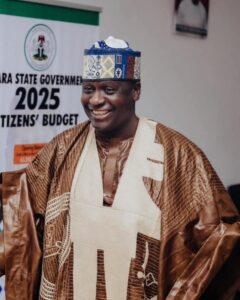
In the bustling heart of Ifako-Ijaiye Constituency I, Lagos State, a quiet revolution is taking shape, one driven not by rhetoric, but by results. Honourable Temitope Adedeji Adewale, a second-term member of the Lagos State House of Assembly, stands today as a symbol of purposeful representation, distinguished by his tireless investment in education, empowerment, and community development.
Championing Education and Youth Empowerment
For Adewale, education is not a privilege it is a right that the people must enjoy. Through his Adewale Temitope Educational Initiative (ATA-EI), the lawmaker has distributed thousands of free JAMB and GCE forms to indigent students across his constituency. Most recently, over 1,500 students received free JAMB forms, while hundreds more benefited from free GCE registration, a rare and impactful gesture that has opened doors of opportunity for many young Nigerians who might otherwise have been left behind.
Beyond this, Adewale’s annual Back-to-School Support Programme provides learning materials from school bags and exercise books to mathematical sets and writing supplies to pupils in both public and private schools. The initiative, according to the lawmaker, aims to reduce the financial burden on parents while encouraging academic excellence.
“Our goal is to make Ifako-Ijaiye the most educated local government in Lagos State by 2037,” Adewale often says, a vision he continues to pursue with passion and measurable impact. To further this goal, he has recently registered over 100 constituents for a new section of his Adult Literacy classes.
Touching Lives Through Compassion
The lawmaker’s empathy extends beyond education. His humanitarian drive is evident in his annual Widows’ Empowerment Programme, where over 500 widows receive food items, cash support, and welfare assistance each time. Through this gesture, Adewale has reaffirmed his belief that governance must serve the vulnerable as much as the powerful. The fifth edition of the programme held on November 10, 2025.
In the healthcare sector, he recently funded 50 free cataract surgeries and distributed 750 pairs of eyeglasses to residents under his health outreach initiative a project designed to restore not just sight, but hope, to constituents who had long struggled with vision challenges.
Advocating Food Security and Community Growth
In a bold call for sustainable living, Adewale recently also urged his constituents to embrace subsistence farming as part of the drive toward food security. He continues to explore ways to support local farmers through access to land, tools, and training aligning with Lagos State’s broader agricultural agenda.
Recognition and Commendation
Adewale’s consistency in service has not gone unnoticed. He has been recognised with multiple awards, including the “Man of Excellence Award” by Cerebrology International, for his outstanding contributions to education, youth empowerment, and social welfare. He also earned commendations from the Lagos State Ministry of Basic Education for aligning his projects with Governor Babajide Sanwo-Olu’s T.H.E.M.E.S Plus Agenda, particularly in advancing inclusive learning.
A Vision Rooted in Service
Behind the accolades and community projects lies a simple philosophy of service with humility and sincerity. Honourable Temitope Adedeji Adewale exemplifies what it means to be a “Lawmaker Per Excellence” one whose representation transcends politics to touch real lives and shape lasting change.
For the people of Ifako-Ijaiye, his name has become synonymous with hope, development, and integrity, a testament that good governance still breathes in the corridors of Nigerian politics.
Opinion
The Visibility Trap
There is a persistent assumption in modern business that attention is progress. If people are seeing you,
engaging with you, and talking about you, then you must be growing. On the surface, this feels true. In
practice, it is one of the most expensive misconceptions companies carry.
Visibility is not legitimacy. And confusing the two creates fragile businesses that look successful long
before they actually are.
Visibility is distribution. It is how often you are seen, how far your message travels, and how loudly you
exist in a market. It is driven by campaigns, partnerships, content, and media. It is measurable in
impressions, reach, mentions, and recall.
Legitimacy is something else entirely. It is not what people see. It is what they conclude. It is the quiet but
critical judgement a user makes when deciding whether to trust you with something that matters. Their
money, their time, their reputation, their belief. Legitimacy is not declared. It is inferred. This is where
most companies miscalculate.
A platform can be highly visible and still feel unsafe. It can be everywhere and still feel uncertain. It can
dominate conversations and still fail at conversion when the moment of decision arrives. Because today,
users are not asking, “Have I seen this before?” They are asking, “Do I trust what happens next?”
In financial services, especially in emerging markets, this distinction becomes sharper. Users do not
operate from abundance. They operate from risk awareness. Every transaction is evaluated, consciously or
not, through a lens of potential loss. What could go wrong? How fast can I recover if it does? Who is
accountable if it fails? Visibility does not answer these questions. Legitimacy does.
Legitimacy is built through signals that reduce perceived risk. Not theoretical safety, but experienced
reliability. It shows up in consistency of outcomes, in how predictable your system is under pressure, and
in whether your platform behaves the same way every time, not just when everything is working but also
when something breaks. It is reinforced by clarity. Users trust what they understand, not what is explained
to them in long paragraphs, but what is immediately obvious in interaction. What happens next, how long
it takes and what they can expect. It is strengthened by accountability. Not in policy documents, but in
visible behaviour. How issues are handled, how quickly they are resolved, whether responsibility is
assumed or deflected.
These are not branding elements in the traditional sense. They are operational realities. But this is exactly
where branding is often misunderstood. Brand is not what you say about your product. It is the system of
signals that shape how your product is perceived before, during, and after use. While visibility amplifies
your presence, legitimacy sustains your relevance.
When companies prioritize visibility without building legitimacy, they create a dangerous gap between
expectation and experience. Growth accelerates, but trust does not compound at the same rate. Eventually,
the system corrects itself. Users withdraw, reputation weakens, and recovery becomes significantly harder
than initial growth.
On the other hand, when legitimacy is established first, visibility becomes an accelerator rather than a
risk. Every new user acquired enters a system that can hold them. Every interaction reinforces the same
conclusion. This works; I can rely on this.
This is slower to build, but far more durable. The strategic implication is simple but rarely followed. Do
not ask how to be seen more; ask what conclusions users are forming when they see you. Do not optimise
for attention in isolation, optimise for the alignment between what is promised and what is experienced.
Do not treat trust as a communication problem, treat it as a systems problem that communication must
accurately represent. Because in the end, markets do not reward visibility. They reward reliability that has
been observed, tested, and believed. And that is legitimacy.
Ememobong Udofot E. is a branding and communications executive specialising in strategy, systems
thinking, and trust design within financial technology. She currently leads Branding and Communications
at FlashChange, a digital value exchange platform focused on enabling reliable, efficient movement of
digital assets.
Her work sits at the intersection of brand, product, and growth, where she focuses on building coherent
systems that align what companies promise with what users consistently experience. With a strong
grounding in behavioural insight and market dynamics, she brings a structured, operator-led perspective
to how trust is built, communicated, and sustained in low-trust environments.
Through her writing, Ememobong explores the deeper mechanics of user behaviour, credibility, and
execution in emerging markets, offering clear models and practical thinking shaped by real-world
application.
Opinion
What Nigeria’s Power Sector Trends Signal for Infrastructure Development in 2026
Recent trends in Nigeria’s power sector suggest that infrastructure development will be the defining factor shaping electricity performance in 2026, despite notable policy and revenue reforms recorded over the past two years.
The years 2024 and 2025 marked a pivotal phase for the sector, with electricity market revenues growing by approximately 70 per cent following the introduction of cost-reflective tariffs and the launch of the National Integrated Electricity Policy (NIEP), a long-term framework designed to address regulatory, investment, and structural challenges.
However, these reforms have yet to translate into proportional improvements in power delivery. Despite an installed generation capacity estimated at 12,000–13,500 megawatts, actual available generation in 2025 rarely exceeded 5,500 MW, highlighting persistent constraints across gas supply, transmission, and distribution infrastructure.
According to Tola Ibironke, General Manager, Systems Engineering at PPC Limited (www.ppcng.com), this contrast reflects a sector that has begun to stabilise financially but now faces its most critical test: execution.
“Nigeria has made meaningful progress in fixing the economics of the power sector,” Ibironke said. “The next phase must focus on fixing the infrastructure, strengthening transmission systems, modernising distribution networks, and deploying resilient power solutions, without which policy gains cannot be fully realised.”
Regional comparisons reinforce this point. Countries such as Ghana, with smaller generation capacity, have achieved higher electricity access and more reliable supply by aligning policy reforms with systematic infrastructure upgrades and sustained grid investment.
As Nigeria looks toward 2026, PPC Limited, drawing on its experience in engineering and infrastructure services, notes that reliability, resilience, and system integration, rather than headline capacity figures, will define success in the power sector.
Ibironke added that the conversation is increasingly shifting from how much power Nigeria can generate to how reliably it can deliver it, placing infrastructure development at the centre of the sector’s future.
Opinion
Opinion: Dear General Elijah Ayodele, Where Is the Next Coup Taking Place?
By Sammy Godson
Seeing the title General attached to Elijah Ayodele may surprise many because everyone knows he is not a member of the army, nor has he ever been publicly addressed as such. But permit me to rechristen him, because at this point, his revelations on security matters go far beyond what an army general’s intelligence can cover.
General Elijah Ayodele is a prophet and the leader of the INRI Evangelical Spiritual Church in Lagos, yet one wonders how he has accurately foretold coup-related events across Africa—events that have been happening exactly as he mentioned.
There is a huge difference between vaguely predicting that coups will occur in a continent and specifically naming the exact countries where they will take place—and seeing them happen precisely that way. Even the world’s most powerful army general cannot achieve such accuracy, no matter the intelligence available. It is absolutely impossible.
An army general is limited to the affairs of his own country. A Nigerian general cannot know of a coup being planned in Benin Republic, and vice versa. Yet General Elijah Ayodele will sit in Lagos and speak of dangerous events such as military coups in distant countries, and they happen exactly as though he wrote the script.
This simply shows that General Elijah Ayodele is firmly connected to the throne of heaven, from where all things are revealed. As the Bible says, God does nothing without revealing it to His prophets. His prophets are His generals, and in Nigeria, we can boldly say that General Elijah Ayodele is not just a member of God’s troops but a commander—no one else comes close.
Starting with the latest coup attempt in Africa, which occurred in Benin Republic: on Sunday morning, a group of soldiers seized the national television station to announce that they had taken over the country and removed President Talon from power. They declared the suspension of all political activities and the constitution. It was a tense situation before the soldiers were repelled, resulting in the ultimate failure of the coup.
This did not happen without General Elijah Ayodele mentioning it days earlier. He had spoken about it at least three times, with the last warning given on Friday—just two days before the incident. He said some countries would experience revolutions through coups or elections, and Benin Republic was among them. He warned these nations to prepare, and within two days, it happened.
His exact words were:
“The following nations will face revolution in the coming year, either by coup or any other way. There will be disorderliness in the following countries: Cameroon, Chad, Niger, Mali, Tanzania, Benin Republic, Ethiopia, South Sudan, and Uganda. Let them prepare for the challenges ahead.”
Recently, a coup also occurred in Guinea-Bissau after the presidential election. The army announced that they had taken over the country, suspended all electoral activities, and removed the president from power.
This, too, did not occur without General Elijah Ayodele’s warning earlier in November. He called on the president to be careful during the election and not tamper with the process, warning that a coup could occur if he attempted it. In videos and news publications, he advised the president to step down if he lost, so as not to be removed unconstitutionally.
He said:
“In Guinea-Bissau, there is going to be an election, but if there is a coalition and the president tries to rig the election, the country will turn to fire. There will be anarchy, and the impossible coup can be possible. To the president: if you lose this election, just leave. Don’t force yourself because you will fail.”
Additionally, during a live service on November 11, General Ayodele said that Guinea-Bissau would experience military action. He specifically warned that the president would lose relevance and would need to take urgent steps to stabilize the country.
His words were:
“Guinea-Bissau: The country isn’t yet settled; there is still a crisis. They will be fighting seriously. The president will not be reckoned with, and the military will carry out another action. The president must be ready to do anything to stabilize the country because I see a crisis in Guinea.”
Let us also not forget the reported attempt to unseat President Bola Ahmed Tinubu months ago, which allegedly led to the removal of some service chiefs. Weeks before the incident, General Ayodele specifically mentioned that soldiers were angry with the president and that powerful Nigerians were planning to use the military against him.
He warned:
“There will be an attempt to unseat Tinubu unconstitutionally; the NSA, DSS, and Chief of Army Staff must be careful. There are gangs planning between November and January to unseat him.”
“Even the Navy and Air Force will be part of it, including the Nigerian Army. President Tinubu must be ready for anything and fortify himself. He needs to change his security strategy because these personalities will be unbelievable names.”
In July 2025, he had also said that Tinubu must strengthen his security system because he foresaw an attempt to carry out a coup against his government.
“I see an attempt to take power from him (Tinubu) in an unconstitutional manner. God warns him to take his personal safety seriously. What I saw was coup-like, with tension everywhere.”
Going back further, in 2019—before the 2020 coup in Mali—General Ayodele warned in his prophecy for 2020 (released in December 2019) that there would be a gang-up against the president. Just months into the new year, it came to pass.
He had said:
“There will be a gang-up against the Malian president. The country should pray against protests and disorderliness.”
In Gabon, before Ali Bongo was ousted, General Ayodele stood in his church on October 7, 2022, during a live service and advised Bongo to resign because the military would remove him. This was long before the election that ultimately ended in a coup.
He told Bongo:
“Gabonese president, your time is up. I am seeing a crisis, if not a coup d’état. Because of your health, why not resign? Why do you want to die on this seat? I am telling you what the Lord has said. Your staying on the throne is killing you. You are incapacitated, but no one is telling you the truth. I am advising you to humble yourself, resign, and hand over to someone who can do better so you won’t cause a crisis in your country.”
Other coups—including those in Niger and Burkina Faso—were also foretold by General Ayodele. Even though some governments did nothing until events swept them away, one thing is certain: none of them can ever say the prophet did not warn them.
However, for the sake of the good citizens of the nations concerned, I would like to ask the General:
Where is the next coup taking place?
Thank you.
-
Entertainment15 hours agoAMVCA Young Filmmakers Day: Where African Talent Meets Opportunity
-
Entertainment6 hours agoMasterChef Nigeria Arrives And Sunday Nights on GOtv Just Got Better
-
Brand1 day agoInterswitch Returns as Key Sponsor of 12th AMVCAs, as Quickteller and Verve Spotlight Excellence in African Music and Storytelling
-
Business and Brand6 hours agoPlateau Grocery Seller Wins ₦5 Million as Golden Morn Golden Hunt Rewards Nigerians
-
Uncategorized16 hours agoInterswitch Deploys Smart Parking System at Asaba International Airport to Improve Operations
-
Entertainment15 hours agoRelive the Shows You Grew Up With on GOtv
-
Banking and Finance5 hours agoFidelity Bank Extends “Give Her Power” Initiative to Ikorodu
-
Sports6 hours agoUEFA Semi-Finals on SuperSport, as Europe’s Elite Face Defining First Legs