NEWS
GOV. LAWAL WINS BON GOVERNOR OF THE YEAR FOR ZAMFARA’S INFRASTRUCTURE
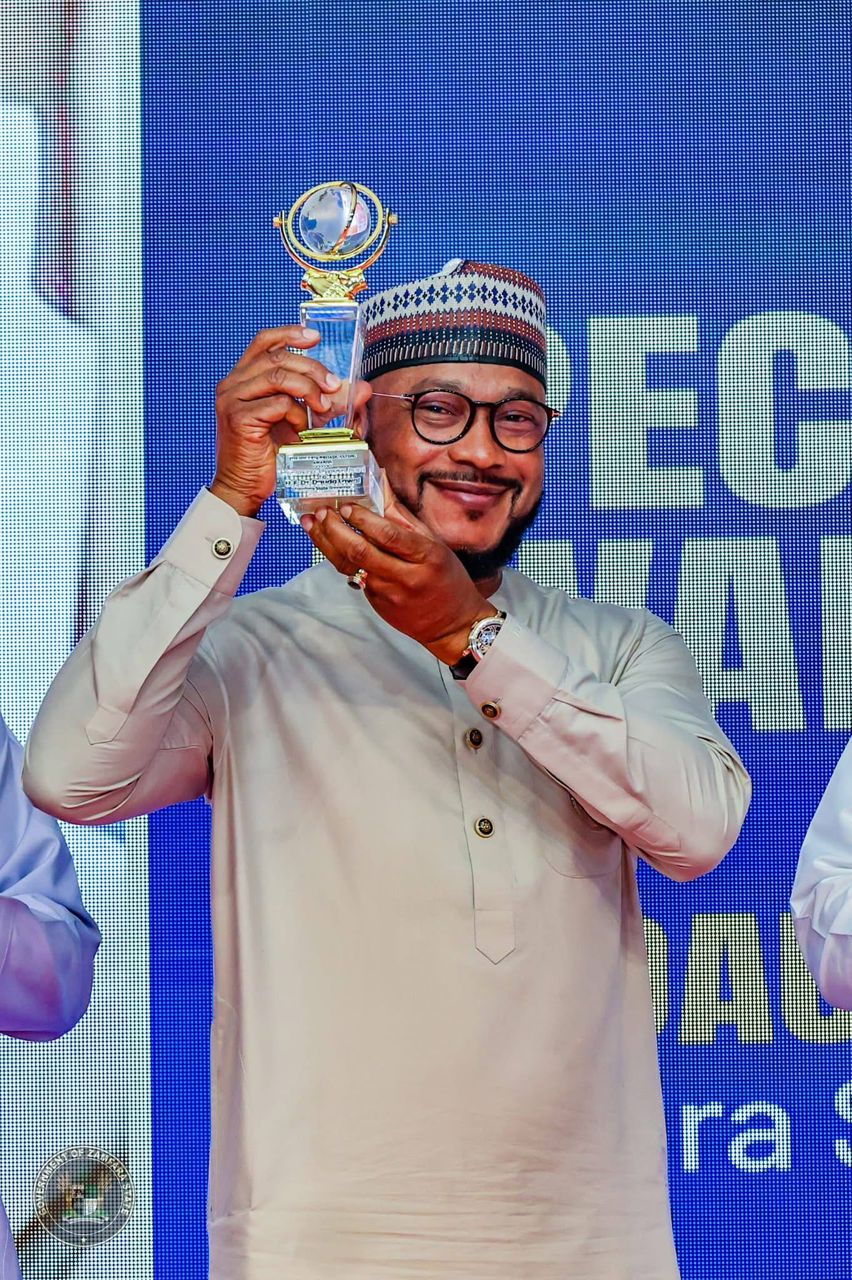
The Broadcasting Organisations of Nigeria (BON) has awarded Governor Dauda Lawal the Infrastructure Governor of the Year honour for his administration’s giant strides in the Urban Renewal project across Zamfara.
The governor received the award at the second edition of the Broadcasting Organisations of Nigeria (BON) held at the NAF conference centre, Abuja.
A statement by the governor’s spokesperson, Sulaiman Bala Idris, revealed that the BON acknowledged Zamfara state’s unprecedented and transformative achievements in infrastructure, recognising excellence beyond the broadcasting industry.
He added that Governors Bassey Otu of Cross River and Uba Sani of Kaduna, the minister of information and national orientation, Mohammed Idris, along with John Momoh, Shyngle Wigwe, Abubakar Jijiwa, and Sa’a Ibrahim, were among the prominent Nigerians honoured at the 2026 Nigeria Broadcasting Awards.
The statement read in parts, “The Broadcasting Organisation of Nigeria, an umbrella body for public and private broadcasters in Nigeria, was established in 1973 to promote the interests of the broadcasting industry and ensure high standards in media practices.
“The organisation conducted a thorough months-long selection process aimed at recognising professional excellence and raising standards for media practice across Nigeria.
“The Awards Selection Committee was chaired by Dr Danladi Bako, former Director-General of the National Broadcasting Commission (NBC). The awards panel included veterans and representatives from the Advertising Regulatory Council of Nigeria (ARCON) and the NBC.
“The selection committee cited numerous reasons for awarding Governor Dauda Lawal, notably his significant progress across sectors, particularly for transforming Gusau into a modern State Capital.
“Zamfara has witnessed unprecedented achievements under Governor Dauda Lawal, including the historic construction of a modern International Airport in the State.
“Apart from urban renewal projects, as well as the construction and outfitting of General Hospitals, Governor Dauda Lawal’s administration has built, refurbished, and equipped over 800 schools across the 14 local government areas of the State.
“This recognition by the highest broadcasting authority in Nigeria will motivate the governor to dedicate more effort to his mission to serve and rebuild Zamfara state.”
NEWS
Ifako Mini Stadium, Temitope Adewale And His Result-Oriented Youth Development
By Oluwatosin John
At last, the long awaited remodelling of Ifako Mini Stadium is coming to fruition, we say a ‘big kudos’ to Hon. Adewale Temitope Adedeji, OON, member representing Ifako-Ijaiye Constituency I at the Lagos State House of Assembly.
The Ifako Mini Stadium is the only sporting facility that serves over one million residents of Ifako-Ijaiye Local Government and environs including several youths in neighbouring communities in Ogun State. Since its demolition and approval for renovation, standard sporting activities had been put to halt.
The development and growing impact of the Ifako Mini Stadium is now being widely recognised as a significant step toward advancing grassroots sports and youth empowerment within the community.
Facilitated by Hon. Adewale and constructed by the Governor of Lagos State, Mr. Babajide Olusola Sanwo-Olu, the modern sporting facility is designed to provide accessible and functional infrastructure for recreational and competitive activities. It will also serve as a hub for youth engagement, talent discovery, and community development.
The initiative, according to residents who would benefit from it, reflects a broader commitment to addressing the challenges faced by young people, particularly the lack of structured recreational spaces and opportunities for personal growth.
The stadium features a beautiful standard football pitch, spectator seating area, floodlighting for evening activities as well as essential amenities such as world class changing rooms, restrooms, and administrative spaces. These features position the complex as a suitable venue for tournaments, training programmes and community events.
For emphasis and the purpose of appreciation, it is noted again that central to the success and visibility of this initiative is Hon. Temitope Adewale, a son of Ifako-Ijaiye whose continued commitment to youth development and community advancement has been instrumental in promoting projects that directly impact the lives of residents in the area.
This lawmaker’s dedication underscores the importance of leadership that prioritizes sustainable development through investments in young people and community infrastructure. His education initiatives have catapulted Ifako-Ijaiye from the bottom to the top.
“The Ifako Mini Stadium represents more than just a place for sports—it is a foundation for opportunity, growth, and the future of our youth,” Mr. Johnson Oredolu, a community representative, said about the facility and he is right.
Before now, sporting activities in the constituency and its neighbourhood had been reduced to streets and school compounds leaving no room for professional experiences and exposures to expert connections. The youth are now excitedly optimistic believing that these challenges will become ‘a thing of the past’.
The Ifako Mini Stadium will surely create opportunities for local coaches, sports organisers, and small businesses to benefit from activities hosted at the venue.
Residents and observers note that the stadium has the potential to serve as a pipeline for discovering and nurturing future professional athletes while also strengthening community ties through regular sporting and social events.
As Lagos State continues to expand its investment in grassroots sports infrastructure, the Ifako Mini Stadium stands out as a model of how targeted initiatives can drive meaningful change at the community level.
With sustained support, effective management, and active community participation, the facility is expected to remain a cornerstone for youth empowerment and sports development in Ifako-Ijaiye for years to come. The long awaited JAHrity Cup, a novel football competition to combine sports and charity will be unveiled soon at the stadium.
The enormous value of this infrastructure will remain unquantifiable as it will attract sports enthusiasts from around the state and beyond to experience classical games at a standard-class facility, thus putting Ifako-Ijaiye in the spotlight as a destination for sports lovers.
With the continued efforts of this worthy legislator, our own Hon. Adewale Temitope Adedeji, OON, the future of sports in Ifako-Ijaiye can only be more experienced than imagined.
NEWS
UN Deputy Chief Commends Governor Dauda Lawal’s Reforms, as Zamfara Unveils Development Blueprint
In a significant diplomatic endorsement, the United Nations Deputy Secretary-General, Hajiya Amina Mohammed, on Thursday visited Governor Dauda Lawal in Gusau, Zamfara State, where the governor formally presented his administration’s comprehensive development blueprint aimed at rebuilding the state after years of banditry, economic instability, and governance deficit.
The visit, which lasted several hours, included closed-door talks at the Government House, a brief tour of ongoing infrastructure projects, and a joint press appearance. It marks the highest-level UN visit to the North-Western state in nearly a decade.
Speaking to reporters afterward, the UN Deputy Secretary-General commended Governor Lawal for what she called tangible progress in opening up Zamfara, noting that he had made the state more accessible not just in terms of roads but by creating an enabling environment for investors and development partners. She highlighted ongoing administrative reforms, including the digitization of revenue collection and steps to strengthen the civil service, as encouraging signs that Zamfara is moving toward greater stability, economic growth, and sustainable development.
Her remarks were particularly notable given the state’s recent history, as large parts of Zamfara were until last year no-go zones for international agencies due to banditry, kidnappings, and poor road networks.
During the meeting, Governor Lawal presented a 97-page document titled the Zamfara State Development Plan 2024 to 2028, which his aides have called the “Zamfara Rising” blueprint. The plan is built on four pillars: security and rule of law; economic revival focusing on agriculture and mining reforms; human capital development including rebuilding schools and health centers; and infrastructure with an emphasis on rural roads and digital access.
Governor Lawal said the document is not just a policy paper but a covenant with the people of Zamfara and an open invitation to the world. He reaffirmed his administration’s commitment to working with international partners, including the United Nations, to promote development, improve livelihoods, and attract more investment opportunities, adding that the state has moved from survival mode to development mode. Governor Lawal, a former banker who took office in May 2023, inherited a state that the World Bank had ranked among Nigeria’s poorest and least resilient, with his predecessor’s tenure marked by accusations of mismanagement and failed amnesty deals with bandits.
While security remains the greatest challenge and critics note that rural communities still face sporadic attacks, the UN Deputy Secretary-General’s visit signals cautious optimism. She revealed that the UN system will deploy a technical team to Gusau within 30 days to align the state’s development plan with the UN Sustainable Development Cooperation Framework for Nigeria, and she hinted at a possible high-level donors’ conference for Zamfara later in 2026 that could attract funding from the World Bank, African Development Bank, and European Union.
NEWS
The Unfinished Rescue Mission: Ten Reasons Zamfara Must Re-elect Governor Dauda Lawal in 2027
By Oladapo Sofowora
In the resilient heart of Northwestern Nigeria, a different kind of storm is blowing hard. It is not the whirlwind of banditry that has long defined Zamfara State, but the quiet, determined tempest of reconstruction and recalibration done by Governor Dauda Lawal, who took the reins of a state gasping for air choked by insecurity, bankrupt of spirit, and paralyzed by decades of maladministration steering it to the path of prosperity. Three years into his first term, the landscape is shifting and the story is changing for the better. Yet, every revolution needs time to root. For Zamfara indigenes, here are ten detailed reasons why they must hand Governor Dauda Lawal another mandate to steer the state to the promised land, so as to enable him to finish the work he has so boldly begun.
- The Security Recalibration
For years, Zamfara’s security apparatus was reactive, arriving after villages had been razed, but Governor Lawal changed the paradigm with a shift. He didn’t just procure guns; he built a comprehensive Zamfara Community Guard integrated with local vigilantes and formal military intelligence that has served its purpose of gathering local intelligence and sharing it with security agencies to tackle all sorts of insecurity in the state. His administration invested over ₦4 billion in surveillance drones, armoured personnel carriers, and rapid-response communication towers across the 14 local government areas. The result? A 60% reduction in major attacks in the last 18 months. Another term means expanding this network to the most remote forests of Tsafe and Maradun, finally breaking the spine of the criminal enclaves. One term was used to stabilize the patient; a second term handed to him will cure the disease totally.
- The Restoration of Integrity in the Civil Service Structure
Before Lawal, Zamfara’s civil service was a graveyard of productivity, infested with “ghost workers” who drained the treasury, leveraging a lacuna created by the previous administration. Upon resumption, the Governor commissioned a forensic biometric audit in which over 5,000 fictitious names were expunged from the payroll, saving the state over ₦1.2 billion monthly. More importantly, he cleared 18 months of salary arrears inherited from the previous administration within his first 100 days. A second term handed to him via the ballot will focus on capacity building and promotions based on merit, transforming the bureaucracy from a parasitic entity into an engine of service delivery.
- The Educational State of Emergency
Banditry had turned over 300 schools into abandoned ruins, with teachers fleeing and children being abducted. Governor Lawal declared a state of emergency on education. He has since reconstructed 200 primary schools with fortified walls and secure hostels. The “School Feeding and Safe Return” program brought back 150,000 out-of-school children. But the job is half done. The remaining 150 schools in high-risk zones need the same treatment. Re-electing Lawal means ensuring no child in Zamfara has to choose between a bullet and a book.
- Functioning Primary Healthcare Across the State
For a decade, rural Zamfara relied on patent medicine sellers for life-saving care. Governor Lawal refurbished 147 Primary Healthcare Centers (PHCs), equipping each with solar power, vaccines, and at least two resident nurses. He launched the Zamfara Health Voucher Scheme, giving 50,000 vulnerable women free antenatal and delivery care. The time of medical pilgrimage is over as the state now boasts of a functioning MRI machine among other sophisticated medical machines. A second term will see the full completion and upgrade of three zonal general hospitals in Gusau, Kaura Namoda, and Anka, bringing surgery and emergency care within reach of every citizen.
- Agricultural Revolution
Zamfara is a state predominantly with farmers; true to its slogan, ‘Farming is our pride’, despite the rich soil, farmers are poor and are being terrorized from their farmlands due to insecurity. Lawal’s “Farming Without Fear” initiative partnered with the military to create secure agricultural corridors during planting and harvest seasons. He distributed drought-resistant seeds and solar-powered water pumps to 40,000 farmers. The state’s rice and maize output tripled last year. Yet, the missing link is processing. With a cargo airport in place and a readily available market, there will be a major boost in agricultural business in the state. A second term will see the establishment of a staple crop processing zone (SCPZ) in Gusau, turning raw produce into export-ready goods and ending the exploitation of middlemen.
- The Portable Water Revolution
Gusau and its environs relied on a water treatment plant built in 1978. It was a relic, but Governor Lawal secured a ₦15 billion loan from the World Bank to rehabilitate the Damaturu Water Scheme, increasing daily capacity from 15 million to 50 million liters. For the first time in a generation, taps are flowing in Talata Mafara and Shinkafi. But some rural communities still trek for hours to get portable drinking water. A second term will extend this reticulated network to 200 additional rural communities, making water a right, not a luxury.
- The Economic Inclusion of Empowering Women and Youth
Banditry thrived because idle young men were easily lured. Lawal countered this with the Zamfara Youth Empowerment Trust (ZAYET), training 10,000 youths in tailoring, ICT, and solar installation, and giving them startup capital. His Kaura Economic Stimulus provided 20,000 women with ₦50,000 each to revive small-scale trading. The recidivism rate into crime among beneficiaries is less than 2%. A second term will scale this to reach all 147 wards, ensuring that the economic ladder is long enough for every willing citizen to climb.
- Transparency and Accountability in Governance Pact
Governor Lawal is the first Zamfara governor to publish monthly financial statements on the state government website, including details of every constituency project actualized. He voluntarily subjected the state’s accounts to a forensic audit by the EFCC and ICPC; a move his predecessors fought to block. The result is a restored relationship with international donors (UNDP, EU), who have returned to fund developmental projects across the state because Governor Lawal puts to use every fund given with accountability. One term has proven his integrity; a second term will institutionalize it, creating a culture of governance where public funds are put to judicious use without being siphoned.
- Justice Sector Reform by Decongesting the Prisons and Prosecuting the Convicted
Zamfara’s prisons were incubators for radicalization, filled with petty offenders and low-level herders, while bandit kingpins roamed freely across the state. Lawal’s administration, in partnership with the judiciary, released 1,200 detainees held for minor offenses without trial, decongesting the facilities. Simultaneously, a specialized mobile court has secured 50 convictions against bandit collaborators and informants. A second term will focus on building a modern correctional center and strengthening the witness protection program, ensuring that justice is both swift and safe to administer.
- The Legacy of Resilience in Rebuilding Social Trust
The most profound reason to re-elect Dauda Lawal is the hope his administration brings. He inherited a traumatized populace that no longer believed the state could protect them. Today, markets in Gusau stay open past 6 PM. Farmers sleep in their own homes instead of bush hideouts. Internally displaced persons are voluntarily returning to their ancestral lands. This psychological shift from fear to cautious optimism is the most fragile and precious asset Zamfara has gained. Destroying it by returning to the old ways would be catastrophic. A second term will solidify this trust, transforming resilience into permanent recovery.
Governor Dauda Lawal has not performed miracles in one term; miracles are for saints, not statesmen. But what he has done is to perform the harder task ahead. He has laid a solid foundation of competence, security, and integrity where there was only rubble. The Zamfara of today does not need a new experiment; it needs the continuation of a working plan already in motion. Re-electing Dauda Lawal again is not about rewarding the past; it is about securing the future ahead. The first term broke the curse of neglect; the second term will recalibrate the fortune of the state to prosperity.
-
Banking and Finance2 days agoWema Bank Releases Full Year 2025 Audited Financial Results
-
Cover2 days agoHow Primate Ayodele Foretold Death Of Kebbi Speaker, Abuja Building Collapse In Prophecy Book
-
Banking and Finance1 day agoPolaris Bank Drives Youth Financial Literacy Through Global Money Week 2026
-
Entertainment2 days agoHeartbeat Finale: Who Found Love, Who Lost It, and Who Almost Had It
-
NEWS6 hours agoUN Deputy Chief Commends Governor Dauda Lawal’s Reforms, as Zamfara Unveils Development Blueprint
-
Entertainment2 days agoFrom E! Africa to Bravo Africa: Where Your Favourite Reality Shows Live Now
-
NEWS10 minutes agoIfako Mini Stadium, Temitope Adewale And His Result-Oriented Youth Development