NEWS
Zamfara State Approves Enhanced Pension Payouts for Retired Public Workers
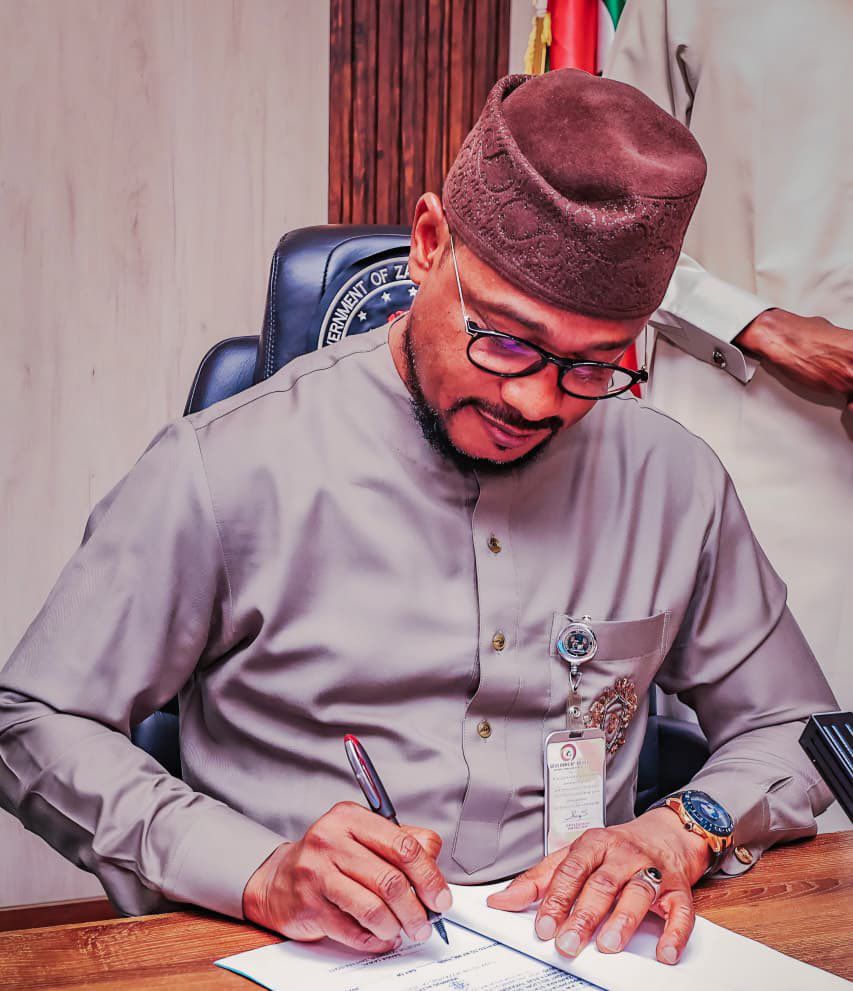
In a decisive move aimed at alleviating the economic burdens of retired public servants, Zamfara State Governor, Dr Dauda Lawal, has officially approved increased monthly pension payments for all former workers from both state and local government offices. The approval follows an extensive financial review of retirees’ living conditions, with particular attention to those in lower-income brackets who have been disproportionately affected by the prevailing cost-of-living crisis.The decision was precipitated by the findings and recommendations of a special committee empaneled to evaluate the welfare situation of pensioners across the state. The committee’s report highlighted acute financial distress among aging retirees and called for immediate remedial action. In response, the state government has authorized a substantive upward adjustment in monthly pension stipends.This increment aligns seamlessly with the Federal Government’s Minimum Wage Act of 2024, which explicitly recommended an additional monthly sum of at least N32,000 for pensioners. Governor Lawal has opted for full implementation of this advisory for all retired state and local government employees a policy intervention expected to benefit thousands of households across Zamfara. The state government has subsequently issued binding directives to all relevant agencies to ensure the expeditious and seamless disbursement of the enhanced payments without procedural delays.Speaking on the development, the Honorable Commissioner for Information and Culture, Mahmud Muhammad Dantawasa, characterized the policy as a tangible demonstration of Governor Lawal’s unwavering commitment to improving the quality of life for both active and former government workers. According to the Commissioner, the administration operates on the principle that dignified retirement includes access to basic necessities and financial comfort. Beneficiaries across all local government areas have been assured of prompt payment once implementation commences.
NEWS
Expert praises Trump’s US Security Strategy for Africa: Surgical strikes with local cooperation
Executive Producer of the Pan-African podcast Panel 54, Martin Minns, has thrown his weight behind US President Donald Trump’s short-term targeted campaigns and closer cooperation with local authorities in the fight against terrorism.In a statement endorsing the US Security Strategy for Africa, Minns described the approach as a sharp departure from past policies centred on long-term troop deployments and expansive nation-building efforts. He praised the new strategy for rejecting open-ended interventions and governance reconstruction in favour of a more focused counterterrorism model.Minns said the strategy adopts a surgical approach to counterterrorism worldwide, emphasising targeted campaigns with clear timelines and specific objectives. Under this model, US troop deployments will be tied to definite targets aimed at eliminating threats, followed by swift withdrawal.He explained: “In President Trump’s words, the policy marks ‘a return to commonsense and peace through strength’, while rebuilding bilateral counterterrorism relations with African governments.”Citing the strategy’s two clear goals, Minns noted: “One goal is to ensure no jihadist groups can establish bases of operation enabling them to plot and execute attacks against the United States or any US interests globally.” The second goal, he said, is “to protect Christians from attack by jihadist groups.” He added that the strategy also broadens the definition of “terror merchants” to include drug cartels and left-wing “anarchists.”The statement further highlighted that the US has directed its anti-terror operations in Africa primarily through US Africa Command (AFRICOM), based in Stuttgart, Germany. From there, it has supported the African Union forces in Somalia (AUSSOM) in collaboration with military forces from Kenya, Uganda, Ethiopia, and Djibouti through aerial raids backing ground operations against al-Shabaab.US officials have also intensified collaboration with Sahelian countries Burkina Faso, Mali, and Niger, which remain at the epicentre of extremist violence on the continent. Meanwhile, a recent surge of violence involving Russian mercenaries has prompted a renewal of ties with Washington. Warming relations have similarly been noted with Eritrea, given its strategic position in the Horn of Africa.The strategy states: “We will continue to work together with governments threatened by groups like ISIS and al-Qaeda affiliates who threaten us as well, and assist them with actionable intelligence and CT partner-force development until our shared foes no longer pose a serious threat to either them or us.”Outside Africa, the US policy accuses China, Russia, and Iran of sponsoring terrorism by aiding and abetting extremist groups in acquiring arms.In Nigeria, security challenges have escalated sharply. In November 2025, President Bola Tinubu declared a nationwide security emergency following a wave of mass kidnappings that saw hundreds of schoolchildren abducted in a single week. In February this year, he deployed an army battalion to the Kaiama district in Kwara State after suspected jihadist fighters killed 170 people in an attack on Woro village on the border with Niger.On March 17, triple suicide bombers believed to be Boko Haram militants killed 23 people and wounded more than 100 in a busy market in Maiduguri. Boko Haram and its rival, Islamic State West Africa Province (ISWAP), have intensified attacks in northeastern Nigeria. Their insurgency has killed over 40,000 people and displaced around two million.In February, The Economist reported that the United States had dispatched a counterterrorism team to Nigeria. Last week, Nigeria’s National Security Adviser, Mallam Nuhu Ribadu, concluded a three-day working visit to Washington, where he held meetings with senior US officials, including Vice President JD Vance and Secretary of State Marco Rubio.The official communiqué described the meetings as an opportunity to review Nigeria-US relations and strengthen collaboration in counterterrorism, defence, intelligence sharing, regional security, economic resilience, and democratic governance. Ribadu later emphasised the importance of sustained cooperation with the US and international partners to address security threats across West Africa and the Sahel.
NEWS
Ribadu’s talks with JD Vance, Rubio decisive for Nigeria’s counterterrorism fight – Security Expert
The visit by Nigeria’s National Security Adviser, Nuhu Ribadu to the United States where he held talks with Vice President JD Vance, and Secretary of State, Marco Rubio, has been described as a positive development for Nigeria’s fight against terrorism. A security analyst and columnist, Jas Keita, in a statement says that the meeting underscores the importance of the Nigerian/U. S security relationship. According to her, the meeting comes at an important time for Nigeria as it seeks to defeat terrorist groups that are seeking to undermine the government, destroying lives and livelihoods across the country. The statement reads in part: “Security cooperation between the United States and Nigeria were central to these discussions. This comes against the backdrop of escalating terrorist activity in Nigeria. Two weeks ago, ISIS militants killed at least 29 people in an attack in Guyaku, a village in Adamawa state, while Boko Haram killed 11 people during a raid on a village in Borno State. This escalation of violence and destruction poses a serious threat to the social and economic stability of Nigeria. Nigeria must do all it can to destroy the ability and operational capacity of groups such as ISIS or Boko Haram to wage war against its people.”Despite widespread commentary, driven often by foreign actors, the United States has remained a steadfast ally to Nigeria in its determination to destroy those groups who seek to destroy Nigeria. While some commentators seek to criticise the government for such visits, it’s clear that ordinary people whose lives and livelihoods are being destroyed by these groups, want to see immediate, urgent and effective action against these groups. Working with the United States to empower Nigerian Security forces is the quickest and most effective way to this result. “Of course, people will remember the 2025 Christmas day strikes where the U.S working with Nigerian security forces undertook a series of attacks against these terrorist groups. But that cooperation continued in the months following the attack. In February, a team of U.S. Special Forces personnel were deployed on the ground. Their mission was to provide direct technical and information support to Nigerian security forces. As well as training support, they have provided invaluable technical and strategic insight developed over decades of providing similar support across the globe.”This type of support cannot be underestimated. To see a contrast, one simply needs to look at events in Mali and the failure of Russia’s assistance to the government there. Empowering our security forces, ensuring they have the skills and insights is a critical element to ensuring we defeat terrorist groups.”One of the strands of commentary after the Christmas day strikes was if we even needed American support. Put simply, yes, we are facing a substantial threat from these terrorist groups. They are well armed, well organised and well financed. They are committed to destroying the legitimately elected government and imposing their own vision on our country. They have shown time and time again they have no interest in the welfare of our people, rather they will kill anyone who disagrees with them or simply is in the wrong place at the wrong time.”Nigeria is facing an existential threat from these terrorist groups. They do not care about our way of life or the welfare of our people. Nigeria cannot become prosperous unless it rids itself of these terrorist organisations. The ongoing security crisis creates an environment of instability and fear that means our people cannot expect to thrive. Nigeria has a prosperous economic future ahead and can create a brighter future for all its people, but this cannot happen without a stable and secure foundation. Defeating these groups not only protects the lives of our families but allows Nigeria to build a brighter economic future for all. “That is why these talks in Washington are so vital. Our country has a strong and committed ally in the United States. Despite what other foreign actors say, they have shown time and time again their willingness to expend resources to support our fight against terrorism. Strengthening and deepening this relationship must be a key strategic priority for our government and we must ensure it endures. Doing so, will ensure our own people have the skills, insights and resources to defeat these groups. Doing so, will provide the stability that will underpin our future economic and social growth.”
NEWS
Security expert hails US partnership to prevent terror bases in Africa using actionable intelligence
The US 2026 Counterterrorism Strategy has been commended for its focus on disrupting terrorist networks across Africa, especially in the Sahel. In a paper tilted: The US 2026 Counterterrorism Strategy and Its Implications for Nigeria and the Sahel, a security expert, Lieutenant Colonel Freddie Grounds (Retired), said the move represents a significant development in American security policy, reflecting both lessons learned from past interventions and the current and rapidly shifting geography of global extremist threats. He said rather than relying on previously favoured large-scale deployments, the revised U.S. strategy emphasises partnerships, intelligence-driven operations, and capacity-building. He stated: “Africa, particularly Nigeria and the Sahel, has emerged as a central focus, given the persistence of violent extremist organisations such as Boko Haram, Islamic State West Africa Province (ISWAP), and al-Qaeda affiliates that exploit fragile governance and porous borders across the region.”He said the US, in demonstrating its commitment to Africa, deployed in early 2026 some 200 U.S. military personnel to Nigeria to carry out intelligence sharing, training and advisory capacity building operations, under Nigerian command authority. He added: “In early May Nigeria’s National Security Adviser (NSA), Mallam Nuhu Ribadu, undertook a three-day working visit to the United States. During the visit the NSA held a series of high-level engagements with senior officials of the U.S. government, further reinforcing the partnership between the two nations. Meanwhile the three-weeks long ‘Exercise African Lion 2026’, an annual US led multinational military exercise in Africa, involving over 5,600 troops from more than 40 nations, including African partners, NATO allies, and US forces, focusing on multi-domain operations across North and West Africa, has recently concluded.”According to the expert, at the heart of the new US Counterterrorism Strategy is a deeper commitment to intelligence sharing and partner-force development. Hear him: “The US Government seeks to provide actionable intelligence to African governments, enabling them to disrupt extremist networks before they can establish operational bases in their countries. This approach reflects a recognition that local African ownership and sustainability are critical to long-term success. The US also pledges to protect vulnerable communities, including Christians and other groups frequently targeted by extremist violence, emphasising the critical but often overlooked human rights element of counterterrorism.”He said Nigeria occupies a pivotal role in this new strategy. “As a frontline state in the Lake Chad Basin, Nigeria faces persistent threats from Boko Haram and ISWAP, whose operations extend into Niger, Chad, and Cameroon. The US has deepened cooperation with Nigeria since 2025 as illustrated by recent high-level meetings between Nigerian officials and American leadership. This partnership has already produced measurable results, including US airstrikes against ISWAP in late December 2025 which was assessed to have killed between 150-200 militants and destroyed several Islamic State-linked camps in Sokoto State, and was acknowledged as the first American combat action inside Nigeria. Beyond military collaboration, Nigeria has adopted a whole-of-government approach, combining kinetic operations with community engagement, deradicalisation programs, and economic initiatives aimed at addressing the root causes of extremism.”Grounds said the Counterterrorism Strategy also links Nigeria’s efforts to the broader Sahel, where continued regional instability in Mali, Burkina Faso, and Niger has created fertile ground for extremist expansion. He commended the Nigeria-US Joint Working Group, a bilateral security and governance framework established in late 2025, which seeks to coordinate intelligence, border security, and counterterrorism aid across the region, recognizing that insurgencies in the Sahel and Lake Chad Basin are interconnected and that such extremist groups exploit weak governance, corruption, and marginalized communities, blurring the lines between terrorism and organized crime. He said this overlap with transnational crime, including arms trafficking and smuggling, complicates security responses and requires a regional approach.The paper reads: “The outcomes of the Africa Forward Summit 2026, which concluded in Kenya this week, provide an important complement to the new Counterterrorism Strategy. African leaders from across the continent pledged to intensify efforts against terrorism, cybercrime, arms trafficking, and organized crime, precisely the same threats which are identified in the US Strategy. The Summit’s emphasis on sustainable financing for AU peace operations and stronger UN-AU cooperation under Resolution 2719 aligns well with Washington’s push for burden-sharing and regional ownership. Calls for UN Security Council reform highlight Africa’s determination to shape global governance structures, ensuring that the continent’s counterterrorism strategies are not imposed by external actors but co-designed and implemented in partnership with African states.”Equally significant are African-led regional mechanisms such as the Nouakchott Process, launched in 2013, which has created a framework for intelligence-sharing and joint operations among Sahelian states, helping to counter cross-border extremist movements.”Similarly, the Accra Initiative in West Africa which has strengthened cooperation among coastal states like Ghana, Côte d’Ivoire, and Benin to prevent the spillover of Sahelian insurgencies. These initiatives clearly demonstrate Africa’s capacity to build its own security architecture, complementing US efforts and reinforcing the Africa Forward Summit’s call for African-led solutions.”Despite these advances, challenges remain. Analysts warn of sovereignty concerns, cautioning that Nigeria must balance cooperation with the US against risks of subordinating its strategic autonomy to US calculations. While American support strengthens Nigeria’s capacity, it also raises questions about dependency and the long-term sustainability of external assistance. Moreover, governance deficits across the Sahel undermine counterterrorism efforts and without reforms that enhance legitimacy, accountability, and resilience, military gains risk being temporary.”In summary, the US 2026 Counterterrorism Strategy represents a pragmatic, recalibrated approach to global security, recognising that instability in Nigeria and the Sahel carries consequences that extend far beyond the region, from refugee flows to the spread of extremist ideology. Emphasising intelligence, partnership-driven security, and local capacity-building, the strategy positions Nigeria as a frontline state central to stabilising West Africa, while acknowledging that the interconnected nature of Sahelian instability demands regional solutions. Its effectiveness will depend not only on military cooperation but also on governance reforms, sustainable financing, and the ability of local governments to deliver tangible improvements in security and development goals reinforced by the Africa Forward Summit outcomes and embedded within African-led frameworks such as the Nouakchott Process and Accra Initiative, which lend the strategy both depth and legitimacy.”
-
Banking and Finance7 hours agoFidelity Bank Extends Food Bank Initiative to Thousands in Surulere
-
Brand1 day agoNestlé Nigeria Concludes 15-Year Anniversary Celebration of its Technical Training Centre with 20 New Graduates from Abaji Factory
-
Cover6 hours agoAPC Primaries: How Primate Ayodele Foretold Ned Nwoko, Gbenga Daniel’s Loss (VIDEO)
-
NEWS9 hours agoRibadu’s talks with JD Vance, Rubio decisive for Nigeria’s counterterrorism fight – Security Expert
-
NEWS9 hours agoWema Bank Announces Last Call for Submission of Entries for One-Day MD/CEO Children’s Day Initiative
-
NEWS9 hours agoSecurity expert hails US partnership to prevent terror bases in Africa using actionable intelligence
-
Cover1 day agoHow Primate Ayodele Foretold Fresh Outbreak Of Ebola Virus In Africa (VIDEO)
-
Business and Brand3 hours agoQatar Airways to Enhance Operations in Africa