Connect with us

NEWS

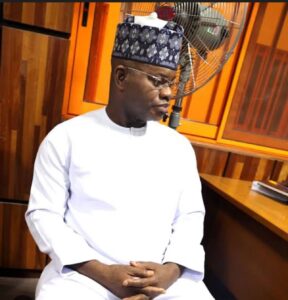
Meet Olakunle Abiodun Afolabi, the Defender of Justice and Architect of Legal Triumphs

Published

on

Justice doesn’t always work fairly when faced with power, bias, or red tape, but Barrister Olakunle Abiodun Afolabi stands out as a voice for those who aren’t heard. With ten years of court experience, Afolabi has become known for defending human rights, working with constitutional law, and giving hope to people caught in Nigeria’s complex legal system.
Afolabi’s path comes from hard work, not luck. He graduated with honours from Lagos State University with both his law degree and diploma, then trained at the Nigerian Law School before starting a career full of impressive legal achievements. Beyond his education, he has certificates from the Mandela Institute for death penalty defence and leadership training from Rise Networks, showing his dedication to justice and doing his best work.

But it is in the courtroom where Afolabi truly shines. Licensed to practice across all 36 states and the FCT, he has become synonymous with high-stakes litigation, defending clients in cases that test the very fabric of Nigeria’s legal and moral framework.

Afolabi’s portfolio reads like a chronicle of modern Nigeria’s legal battles. From securing the freedom of EndSARS protesters like Clement Igbudu and Adeniyi Adeyemi—wrongfully incarcerated for demanding accountability—to defending journalists under siege for upholding press freedom, his work transcends mere litigation; it is a crusade for societal equity.

In criminal defense, Afolabi’s prowess is unmatched. He has stood fearlessly against charges of murder, armed robbery, and cybercrimes, dismantling flimsy prosecutions with forensic precision. Take the case of Gabriel Sowunmi, accused of cybercrime and human trafficking: Afolabi’s meticulous dissection of evidence exposed procedural malpractices, leading to an acquittal that reverberated across Nigeria’s legal community.

His civil law victories are equally staggering. Representing giants like Huawei Technologies and MTN Nigeria, he navigates corporate labyrinths with ease, while his debt recovery triumphs for entities like Dangote Agrosacks, showcase his versatility. Yet, it is his pro bono work with Avocats Sans Frontières France (Lawyers Without Borders) that reveals his core: providing free legal aid to victims of torture by security agencies, ensuring accountability under Nigeria’s Anti-Torture Act 2017.

Afolabi’s specialization in human rights and constitutional law is not merely professional—it is personal. As the head of the ProCAT and eRIGHTS initiative in Lagos, he has spearheaded efforts to combat police brutality, secure reparations for survivors, and challenge systemic impunity. “The law is not a shield for the powerful,” he asserts. “It is a sword for the oppressed.”

His advocacy extends to labor rights, where he champions fair treatment for workers and trade unions, and media law, where he battles censorship to protect journalistic freedom. Each case he undertakes—whether defending a wrongfully accused individual or challenging unconstitutional policies—is a brick in the edifice of a more just Nigeria.

Afolabi’s success is rooted in an unshakable ethos: integrity, resilience, and an insatiable hunger for knowledge. A skilled draftsman and orator, he combines legal acumen with technological savvy—a rarity in a profession often resistant to change. His leadership at Kunle Afolabi LP, where he mentors young lawyers and oversees complex litigations, reflects his belief in nurturing the next generation of advocates.

Colleagues describe him as “a thinker who outworks everyone in the room” and “a strategist who turns legal battles into masterclasses.” Yet, beneath the accolades lies a man driven by empathy. “Every client’s freedom,” he says, “is a thread in the tapestry of justice we must weave for our nation.”

With a track record that includes appellate court victories and groundbreaking human rights rulings, Afolabi shows no signs of slowing down. His eyes are set on expanding access to justice through tech-driven legal solutions and deepening collaborations with global bodies like the African Bar Association.

As Nigeria grapples with challenges to democracy and human rights, Afolabi’s role as a legal sentinel becomes ever more critical. His journey—from the courtrooms of Lagos to international advocacy—hints at a future where his influence could reshape legislative frameworks or even ascend to the bench.

Olakunle Abiodun Afolabi is more than a lawyer; he is a institution. A defender of the marginalized, a corporate strategist, and a human rights icon, he embodies the rare brilliance that transcends legal practice to ignite societal change. With each case, he redefines what it means to wear the wig and gown.

As the sun sets over Lagos, casting long shadows over its crowded streets, one truth remains clear: the prospects of Olakunle Abiodun Afolabi are not just great—they are boundless. For in his hands, the law is not merely a profession. It is a revolution.

Contact Barrister Olakunle Abiodun Afolabi:

Phone: +234 8028300421, 07039900923 | Email: kunleafolabilp@gmail.com | Website: kunleafolabilp.com

Location: 49 Lawson Street, Onikan, Lagos Island, Lagos State.

Continue Reading
Click to comment

Leave a Reply

Your email address will not be published. Required fields are marked *

NEWS

Governor Dauda Lawal Approves ₦3.759 Billion For Gusau Water Supply Rehabilitation

Published

on

By

The Zamfara State Government, under the leadership of His Excellency, Governor Dauda Lawal, has approved the sum of ₦3,759,931,812.50 for the immediate rehabilitation of the Gusau Water Supply Scheme (Phase I). This forms part of the administration’s sustained efforts to address water scarcity and improve access to clean and safe water in the state capital.The approval was granted during a meeting of the State Executive Council following the submission of a memorandum by the Ministry of Works and Infrastructure, which sought urgent intervention on the deteriorating water supply system in the Gusau metropolis.The project is aimed at restoring efficient water production and distribution across the city, ensuring reliable service delivery to residents, and strengthening public health and sanitation standards.The State Government further reaffirmed that funding for the project has been duly captured in the 2026 Appropriation Law, reflecting its commitment to prioritizing critical infrastructure and improving the quality of life of citizens.Upon completion, the Zamfara State Water Corporation will oversee the operation and maintenance of the rehabilitated facilities to ensure sustainability and long-term service delivery.This initiative underscores the commitment of the administration of Governor Dauda Lawal to addressing key developmental challenges and fulfilling its promise to provide essential services to the people of Zamfara State.The government calls on residents to support ongoing efforts and cooperate with relevant authorities to ensure the successful execution of the project.

Continue Reading

NEWS

Zamfara APC Stakeholders Unanimously Endorse Tinubu, Lawal for Second Term

Published

on

By

Stakeholders of the All-Progressives Congress (APC) in Zamfara State have thrown their full weight behind President Bola Ahmed Tinubu and Governor Dauda Lawal for a second term in the 2027 general elections.

The endorsement came on Saturday, April 25, 2026, during a high-level stakeholders’ meeting convened at the Government House in Gusau. The gathering drew all four former governors of the state, elected officials, elders, and representatives of youth and women from all 14 local government areas.

Speaking at the event, Governor Lawal described the meeting as timely, noting that political activities ahead of the 2027 elections are about to intensify.

He explained that his decision to join the APC was not merely political but a strategic move to reposition Zamfara, strengthen collaboration with the federal government, and advance the Renewed Hope Agenda. He thanked stakeholders for their unwavering support throughout the transition process.

Lawal urged party leaders to manage public expectations with maturity and fairness, acknowledging that not all political aspirations can be met immediately. He stressed that leadership goes beyond positions and that political relevance comes from service and contribution to development.

He further assured that fairness, equity, and justice would guide his administration’s decisions, and called for discipline and loyalty to the party.

In a communiqué read by the Minister of State for Defence, Bello Mohammed Bello Matawalle, himself a former governor, the stakeholders declared their full support for President Tinubu and Governor Lawal. The communiqué also covered discussions on party unity, governance coordination, security challenges, and preparations for the 2027 elections.

All four former governors of Zamfara Ahmed Sani Yarima, Mahmuda Aliyu Shinkafi, Abdul’aziz Yari, and Bello Mohammed Matawalle were present and made clear commitments to the APC and the re-election bid of the president and the governor.

Continue Reading

NEWS

EXPLOSIVE: How Titan Trust Bank allegedly used Union Bank’s assets to secure $300m takeover deal

Published

on

By

What was sold to Nigerians in May 2022 as a clean and powerful takeover is now looking like something far more troubling. When Titan Trust Bank announced it had acquired Union Bank of Nigeria, a 100+ year-old institution, the story was simple: a young bank buying a legacy giant. But fresh documents are now pointing to a shocking twist that raises serious questions about how the deal was actually done.

According to findings, Titan Trust Bank allegedly secured a $300 million loan from African Export-Import Bank (Afreximbank) to fund the acquisition of Union Bank of Nigeria. On paper, Titan Trust Bank was the borrower. But in reality, the collateral reportedly included shares, treasury bills, and assets belonging to Union Bank itself.
 
Let that sink in: the bank being acquired was allegedly used to secure the loan that bought it. Titan Trust Bank—linked to Rahul Savara and Cornelius Vink— is believed to have engineered a scheme so bold it’s almost unbelievable. The plan? Have Union Bank allegedly repay the very illegal loan used to purchase it—using depositors’ funds! If allowed to succeed, the outcome is stark: TitanTrust Bank’s shareholders would end up owning one of Nigeria’s oldest banks for free!
 
Even more alarming is the alleged complicity of Godwin Emefiele, then Governor of the Central Bank of Nigeria (CBN), who is said to have turned a wilful blind eye to a deal that flew in the face of the CBN’s strict rules against using borrowed funds to acquire Nigerian banks.

It is unbelievable that Godwin Emefiele would allow an inconsequential bank like Titan Trust Bank to plunge a legacy and systemically important bank like Union Bank into a huge and needless debt – just to satisfy the greed of the owners of Titan Trust Bank.

The  Afreximbank loan is reportedly structured in a manner that will force Union Bank to keep using its depositors’ funds to repay the unlawful loan.

By the third quarter of 2025, the situation had reportedly worsened. Exchange rate shocks and rising interest costs pushed the total exposure to over ₦500 billion. What started as a $300 million facility ballooned into a massive financial burden.

It gets deeper. An audit later allegedly described the acquisition/loan arrangement as “unethical financial engineering.” The audit allegedly pointed to possible misuse of foreign loans, questionable financial reporting and improper withdrawals from customer funds.

The fallout has already begun. Following leadership changes at the CBN, the board and management of Union Bank were removed in January 2024. That decision is now being contested in court, adding another layer of controversy to an already explosive situation.

Behind the scenes, ownership of Titan Trust Bank also raises eyebrows. The bank, incorporated in 2018, is largely owned by Dubai-based firms linked to powerful business interests, including individuals such as Rahul Savara and Cornelius Vink.

This is no longer just a banking story. It is a test of transparency, regulation and accountability.
 
If these allegations hold true, then one question refuses to go away: Who really paid for the takeover of Union Bank and at what cost to depositors?

Continue Reading

Trending

Mega Awareness 2023