Business
Implications of the Startup Bill for digital businesses in Nigeria
There has been notable increase in the formation of startups over the past several years Nigeria launching the Startup Bill is the latest buzz that has brought excitement to many, including startup founders, employees, and graduates. On October 19, 2022, President Muhammadu Buhari officially signed the Startup Bill into law, creating the Startup Act 2022. The Nigeria […]
There has been notable increase in the formation of startups over the past several years
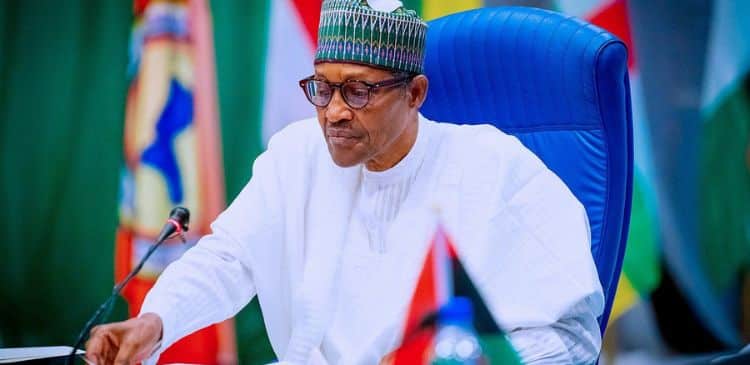
Nigeria launching the Startup Bill is the latest buzz that has brought excitement to many, including startup founders, employees, and graduates. On October 19, 2022, President Muhammadu Buhari officially signed the Startup Bill into law, creating the Startup Act 2022. The Nigeria Startup Bill (NSB) project is a collaboration between the Nigerian tech sector and the presidency with the goal of utilizing jointly developed rules to fully realize the potential of its digital economy. There is some relief in the industry as a result of this initiative to promote startups and rising digital businesses in Nigeria because there has been a need for a legal framework governing startup operations. The Startup Bill is intended to control how startups operate and to support businesses with investments and tax benefits.
A startup is a business that is just starting out and is frequently financed in its early stages by its intrepid founders. There has been a notable increase in the formation of startups during the past several years, particularly in Nigeria. Many of them operate in tech-related industries, including edtech, finance, insurtech, logistics, agriculture, and health. As of September 2022, over 481 startups were operating in Nigeria, and 383 of those raised more than $2 billion in just seven years.
The Startup Bill roadmap
Starting May 2021, the Startup Bill had been in process for over 17 months with its first draft published in June 2021. Decision makers of the presidency and the ecosystem reviewed the draft designing its components in July 2021. From August through September 2021, meetings for deliberations and validations were held until the final draft was released. From the latter part of 2021 to mid-2022, the Bill was submitted to the National Assembly where it was read and passed into law, then signed in October 2022.
NSB influencing digital businesses
It is anticipated that Nigeria Startup Bill (NSB) will significantly improve the business environment for startups in Nigeria, fostering their success. The bill makes provisions for tax and fiscal incentives, training and capacity building, startup labeling, accelerators and incubators, regulation support, etc. This note focuses on the Act’s degree of impact by implementation on digital businesses as explained below.
Business licensing and certification
With its enticing incentives for participating in the startup ecosystem, the Nigerian Startup Bill (NSB) appears to be promising. As a result, a large number of digital businesses would need to certify in order to benefit from the bill. To be eligible under the Act, the business must be a labeled startup operating for no more than ten years and registered as a limited liability company under the Companies and Allied Matters Act 2020.
Only a few businesses that have propelled the growth of startups in Nigeria are older than ten years as limited liability companies under the provisions of the bill. Viably, this appears to be unfavorable to both emerging and recent (less than ten years old) digital businesses.
Employee cap
According to the bill, a labeled startup is required to employ at least ten workers. A startup is a company that is in its infancy, which is sometimes referred to as the difficult years before stability. As the nation’s economy has rapidly declined, fewer digital businesses have had up to ten long-term employees over the years because so many people are employed seasonally or under contract due to their lack of expertise
or cheap pay.
Incompetence and output
Tax relief for new businesses sounds relieving and like a long-overdue chance to use those fractions to support business growth. Many people would like to avoid paying taxes if they could. It is encouraging to see NSB introduce tax breaks, which are deductions or tax exclusions that lessen a business tax burden. Except because of this clause, the labeled startup employee cap should be made up of 60% of people who graduated within the previous three years and have no prior work experience.
The expansion of digital businesses will be hampered by this, which at first glance appears to be battling unemployment. Evidently, production suffers when there are too many unqualified workers around – this is unhealthy for startups. Given tax relief is only available for a maximum of five years, startups would prefer to hire skilled workers and pay taxes while being productive rather than sacrifice their growth.
Conclusion
The objective of the presidency and NSB to promote a well-organized startup ecosystem and labeling process in Nigeria is commendable, but unrealistic parts of the law should be evaluated and changed accordingly for a more supportive environment. If otherwise, startups might be dissuaded from operating in Nigeria, leaving the sector to only optimism that it will adjust naturally in the future.
Business
Sterling Bank, One Foundation, Sunbeth, Partners Strengthen Climate Action With Nationwide Cleanup, Beach Adoption
In a bold move to strengthen environmental protection across Nigeria, Sterling Bank, in collaboration with Sterling One Foundation, Lagos Waste Management Authority, Sunbeth, community volunteers, and partner organizations, are set to launch The Great Nigeria Cleanup, a nationwide environmental movement taking place on April 25, 2026.Spanning all six geopolitical zones, and aligned with the United Nations Decade ofAction, this initiative will mobilize citizens across Lagos, Abuja, Ogun, Osun, Cross River, Delta, Bayelsa, Ebonyi, Abia, Enugu, Imo, Sokoto, Kano, Benue, Plateau, Kogi, and Katsina, reinforcing the urgency of sustained, community-led efforts to combat plastic and waste pollution and restore the health of Nigeria’s environment.Speaking on the initiative, Temitayo Adegoke, Chief Operating Officer of SterlingBank stated: “At Sterling, we believe that real impact happens when institutions and individuals come together with a shared purpose. The Great Nigeria Cleanup is our collective opportunity to not only clean our surroundings but to redefine how we care for our environment. This is about building a culture of responsibility and pridethat will outlive this moment.” Also commenting, Olapeju Ibekwe, CEO of Sterling One Foundation added: “Thefuture we want for Nigeria depends on the actions we take today. The Great NigeriaCleanup is about more than sanitation, it is about dignity, wellbeing, and shared responsibility.We are proud to be part of a movement that empowers people acrossthe country to take ownership of their environment.”As Nigeria continues to face growing environmental challenges, including wastemanagement and urban pollution, The Great Nigeria Cleanup stands as a timelyand urgent response, one that brings together government, private sector, andcitizens to drive meaningful, lasting change.
On April 25, Nigerians everywhere are encouraged to step out, show up, and be part of this historic movement. Because a cleaner Nigeria is not just a vision, it is a responsibility we all share. //Ends.About Sterling Bank LimitedSterling Bank is a full-service national commercial bank in Nigeria and a member ofSterling Financial Holdings Group. With a heritage of more than 60 years, the bankhas evolved from Nigeria’s pre-eminent investment banking institution to a trusted provider of retail, commercial, and corporate banking services.Sterling is a forward-thinking financial institution committed to transforming lives through innovative solutions, exceptional service, unwavering integrity, and a steadfast focus on its HEART strategy, which centers on Health, Education,Agriculture, Renewable Energy, and Transportation. As pioneers in digital banking and financial inclusion, Sterling continues to lead by example, showing how purpose-driven leadership can deliver transformative outcomes for individuals,businesses, and society at large.Guided by a culture of innovation and a passion for excellence, Sterling Bankremains dedicated to redefining the banking experience for millions of customers across Nigeria. For more information visit https://sterling.ng/About Sterling One Foundation (SOF) is a registered non-profit focused on tackling the root causes of poverty in Nigeria, and Africa through interventions and social impact programmes across three critical sectors namely: health, education and climate action & food security. Gender Equality and women empowerment are integrated as a cross-cutting priority across all our programming areas. The Foundation’s programmes adopt a central theme of prioritizing partnerships for the achievement of the Sustainable Development Goals (SDGs). For more information visit onefoundation.ng.
Business
When 8 million Customers Trust You, Safety Cannot Be an Afterthought
Nigeria’s digital banking revolution is raising the stakes for consumer trust.
The question is whether the industry is rising to meet them.
Nigeria’s relationship with digital banking has changed almost beyond recognition in a decade. Where cash once dominated every transaction, from the roadside market to the corporate boardroom, mobile apps, instant transfers and USSD codes have reshaped how tens of millions of Nigerians interact with their money every single day. The figures speak for themselves: point-of-sale transactions surged to a record N18 trillion in 2024, a 69 per cent increase from the year before, and the number of POS terminals in operation more than doubled to 5.5 million. Mobile banking is now the most widely used digital financial service in the country, with four in five users having accessed it within any given 90-day window.
This is, by any honest measure, an extraordinary story of financial inclusion and technological adoption. But it is an incomplete story if told without its other half.
Behind the growth curves and transaction volumes, a quieter and more troubling story has been unfolding. According to the 2024 Nigeria Consumer Protection Survey published by Innovations for Poverty Action, nearly one in four digital financial services users reported experiencing unexpected fees, charges or fraud attempts in the past year. Of those who encountered a problem, only half sought any form of formal redress. That silence is not apathy. It is the sound of eroded confidence: customers who have concluded that raising a complaint is unlikely to produce results.
The fraud data from the Nigeria Inter-Bank Settlement System tells the same story from a different angle. Actual losses to digital payment fraud rose to N52.26 billion in 2024, a figure inflated significantly by a single N31.1 billion incident involving one institution but still representing a 196 per cent increase in fraud losses over five years, even as the number of individual cases declined. The decline in case counts is not reassurance enough. It suggests that while fraudsters are making fewer attempts, they are making each one count considerably more.
By channel, e-commerce and internet banking remain the most exposed, followed by point-of-sale, mobile and web platforms. The most common technique is social engineering, which requires no sophisticated technology at all. It requires only a convincing conversation and a customer who does not know what to guard against. Insider abuse, where bank staff are complicit in fraud, is identified by NIBSS as the single greatest structural threat to the sector. That is a sobering finding, and one that no institution should read past quickly.
What this data collectively points to is a gap that the industry must confront honestly. Nigeria’s digital banking infrastructure has expanded at speed. The consumer protection architecture that should travel alongside it has not always kept pace. Convenience and safety are not natural enemies, but they require deliberate and sustained design to coexist. Left to grow at different speeds, they create precisely the conditions that fraudsters, rogue actors and complacent institutions exploit.
The encouraging news is that the gap is closing. Nigeria exited the Financial Action Task Force’s grey list in 2025, a signal that the country’s financial system has materially strengthened its safeguards. The CBN’s 2024 rollout of risk-based cybersecurity frameworks for deposit money banks formalised the standard of care that institutions are required to demonstrate. Regulatory enforcement actions in 2024, including reported industry penalties totalling over N15 billion, have underscored that consumer protection is a compliance obligation with real and immediate consequence. The industry is being held to a higher standard, and that is the right direction.
Within institutions themselves, the most effective safeguards are often the ones customers never see. The strongest security infrastructure operates silently in the background: monitoring account behaviour in real time, identifying anomalies before they become losses and intervening before a suspicious transaction completes rather than after. This is not glamorous work, but it is the work that matters most. A customer who never has to report a fraud incident has been protected more effectively than one who was offered a sympathetic apology after the damage was done.
Union Bank’s experience illustrates what this balance looks like in practice. Across its digital channels, including UnionMobile, the USSD platform (*826#) and the Union360 business banking suite, the bank’s full-year 2025 customer experience data reflects consistently strong satisfaction and loyalty scores. These are not outcomes that emerge from convenience alone. They reflect what customers value above all else when they transact digitally: the confidence that the experience will be safe, seamless and complete. That quality of outcome does not happen by accident. It is the product of sustained investment in backend security infrastructure that operates largely out of sight, proactive monitoring systems that identify and intercept anomalies before they become losses, and an institutional culture that treats customer protection as a core organisational value rather than a compliance line item. It is a culture Union Bank articulates through its ICARE values, where the commitment to being customer and community-focused is not a policy position but a founding principle, reinforced consistently from the moment any member of staff joins the bank.
In March, as institutions across Nigeria marked World Consumer Rights Day, Union Bank reaffirmed to its staff the responsibility that every individual within the organisation carries to uphold the rights and dignity of the customers it serves. It is the kind of internal commitment that rarely makes headlines, but it ultimately determines the quality of every customer interaction that does.
Trust is the only currency in banking that cannot be manufactured on demand. It is built over time, through consistent behaviour, through systems that protect customers before they know they need protecting, and through institutions willing to be accountable when they fall short. Nigeria’s digital banking revolution has done extraordinary things for financial access and economic participation. Its next chapter must be defined by what it does for financial safety. The two are not in competition. In the long run, they are, in every meaningful sense, the same thing.
#
Business
First Asset Management Announces Ratings Upgrade
Big news — our investment management rating just got an upgrade to ‘AA’ from ‘AA-’ by DataPro and affirmation of A+(IM) by Agusto & Co. This reflects how we are continuously improving to serve our investors better. Our funds levelled up too as Agusto & Co upgraded our First Asset Money Market Fund rating to A+ (f) (up from Aa (f)).So, what does that mean for YOU?It means you are investing with a firm that is getting stronger, smarter, and more disciplined. Our upgraded rating recognizes our solid performance track record, the strength of our parent financial group, and the systems we have put in place to manage investments responsibly.We have also improved our governance and decision-making structure, with experienced professionals leading well-defined investment and risk committees. Behind the scenes, our team of seasoned investment experts constantly monitor markets, manage risks, and position portfolios to navigate volatility and capture opportunities.At the same time, we have strengthened our risk management and compliance framework to ensure that everything we do meets global best practices. In simple terms, it means your money is being managed with discipline, transparency, and strong oversight.Independent rating agencies — Agusto & Co and DataPro Limited — recognize these improvements. Their ratings highlight our commitment to responsible asset management, strong governance, and operational systems designed to support stable long-term performance.But beyond the ratings, what really matters is helping you build wealth over time.That is why we offer a range of investment plans designed for different goals — whether you are just starting your investment journey, looking to grow your portfolio, or aiming to build long-term financial security.If you are part of the next generation of investors, this is your moment to start early and stay ahead. The earlier you begin investing, the more time your money has to grow.Jump on the First Asset investment journey. Explore our investment plans and start building your future with a firm that is getting stronger.Let us build wealth together.
-
Entertainment2 days agoMasterChef Nigeria Arrives And Sunday Nights on GOtv Just Got Better
-
Business and Brand2 days agoPlateau Grocery Seller Wins ₦5 Million as Golden Morn Golden Hunt Rewards Nigerians
-
NEWS1 day agoGovernor Dauda Lawal Approves ₦3.759 Billion For Gusau Water Supply Rehabilitation
-
Banking and Finance2 days agoFidelity Bank Extends “Give Her Power” Initiative to Ikorodu
-
Sports2 days agoUEFA Semi-Finals on SuperSport, as Europe’s Elite Face Defining First Legs
-
NEWS15 hours agoHow Governor Dauda Lawal Enhanced Agriculture and Food Security in Zamfara State in Under 3 Years