
Business
True Blue Development Seeks International Arbitration against Caribbean Nation of Grenada

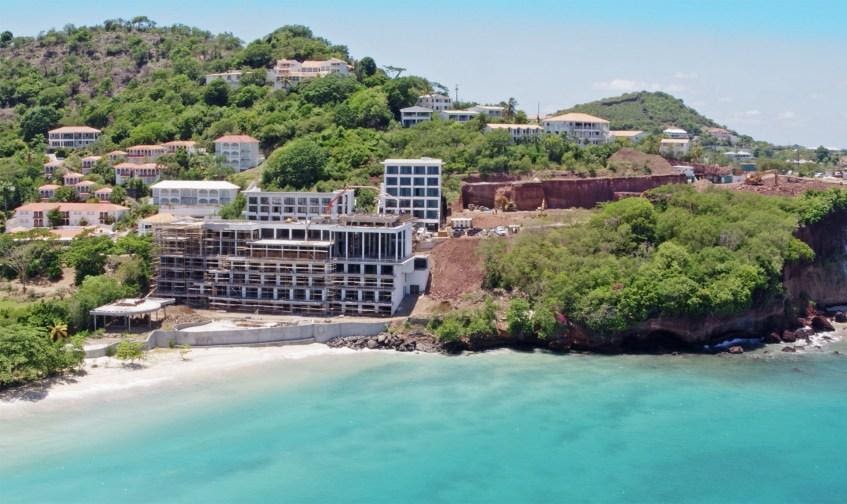
Hospitality Firm True Blue Development Seeks International Arbitration against Caribbean Nation of Grenada, Claiming Government Broke Investor Agreement to Complete 5-Star Kimpton Kawana Bay Resort on Island
True Blue claims nearly-finished luxury condo resort has been targeted by government to “squeeze the project into failure;” True Blue principal Warren Newfield resigned as Grenada’s ambassador-at-large and consul general in May, declaring country’s leadership had turned into an “anti-business regime;” claims to be heard by World Bank arm for investor-state disputes ICSID; True Blue and investors represented by law firm BakerHostetler
——————————————————————————————————————————–
WASHINGTON, DC (June 17, 2021) – Hospitality developer True Blue Development Limited has filed claims against the Government of Grenada at the International Centre for Settlement of Investment Disputes asserting that the Government has blocked True Blue’s efforts to complete the five-star luxury Kimpton Kawana Bay resort on the island. Washington-based ICSID is an arm of the World Bank devoted to resolving international investment disputes against sovereign states.
Here is link to notice of arbitration: www.kawanabay.com.
True Blue submits that the urgency of the ICSID filing reflects the essential need to protect investors in Kawana Bay from what claimants say is an obvious scheme by the Government of Grenada to thwart the successful completion of this world-class resort.
Three of the buildings at Kimpton Kawana Bay are largely finished, and some 92% of condos have been spoken for, either through outright purchase or by confirmed reservation. However, last December, the Government of Grenada started “a surreptitious, multi-front effort to squeeze the project into failure,” according to the ICSID notice for arbitration filed by True Blue and its investors.
Funding for the project primarily comes from private investors participating in Grenada’s Citizenship by Investment program (known as “CBI”), through which investors purchasing condos at Kawana Bay are able to gain citizenship. Grenadian citizenship affords visa-free travel to more than 140 nations worldwide. Owing to Grenada’s unique E2-Visa treaty with the United States, citizens are also eligible to invest in U.S. businesses and live there with their families.
Although funding did not come from government sources, True Blue alleges that the Government’s financial squeeze included revoking a 2017 approved project budget of US$99 million, imposing administrative rules that limit how the developer could use of investors’ money for the project, and ultimately halting approval of CBI applications that provide the principal source of capital.
The ICSID filing asserts that through its arbitrary and unlawful conduct, the Government of Grenada destroyed a successful project and inflicted damages on claimants, the CBI investors, and the economy of Grenada.
The arbitration request is made under the 1986 Treaty Between the United States and Grenada Concerning Reciprocal Encouragement and Protection of Investment. Claimants seek damages for their significant loss of investment principal and lost profits.
The investor group is represented by law firm BakerHostetler, led by head of its International Arbitration and Litigation team, Mark Cymrot, who has brought numerous investor-state disputes before ICSID.
“The issues raised by the CBI committee and Government are flimsy and easily disproven, in some instances by the Government’s own records,” Mr. Cymrot said. “We are deeply concerned that this slipshod attack against a reputable developer is politically motivated or has some other improper purpose. Unfortunately, the ultimate losers here are the Grenadian people who will now lose jobs and vital tourism revenue as travel and hospitality return to the Caribbean.”
The Luxury Resort
Kimpton Kawana Bay, ideally positioned on the island’s famed Grand Anse Beach, was set to become the newest five-star resort in Grenada and a jewel of the Caribbean. The project was initially approved by the Government of Grenada in 2016, and construction began in 2017 with a revised government-approved budget of US$99 million. The project, which is at an advanced stage of construction, employed local labor and drew on goods and services produced in Grenada. The impressive project has already won several awards for design and architecture.
Kimpton Hotels & Restaurants Group LLC, which has a successful track record operating boutique hotels internationally, signed on in 2017 to manage and brand the property after its completion.
Government’s Prior Support
In formally launching the project in early 2017, Grenada Prime Minister Keith Mitchell lauded the public-private collaboration underpinning the Kawana Bay development. “I believe that this country is on a path of serious growth and development,” he said at the ribbon-cutting ceremony, referencing the CBI Program. Grenadian media heralded the project as “a major addition to the tourism industry,” as well as a coup for the island’s economy.
As recently as October 2020, Grenada’s Prime Minister again visited the site and praised True Blue for the impressive progress of work, while stating that his administration looked forward to its official opening sometime in 2022.
As one media outlet reported, “Dr. Mitchell said: ‘I must commend the project developers and investors for creating this idea and executing it. We welcome the modifications made along the way to make this an even bigger project than was initially envisioned and we look forward to the end product – the completion of construction and the formal opening in 2022. We expect Grenada’s tourism product to be revived in the not-too-distant future and developments like these help to expand and improve our offering.”
The Squeeze
According to the ICSID notice, the government’s clandestine scheme appears to have begun in July 2020, with the Grenada CBI Committee informing True Blue that certain documents were missing from its files. True Blue resubmitted the previously approved application and the Grenada Cabinet reaffirmed the 2017 approved budget of US$99 million.
Shortly thereafter, the Committee arbitrarily withdrew reaffirmation of the 2017 budget and suggested in letters to the developer that the budget would need to be adjusted downward. Such a reversal of policy posed an existential threat to the project. Multiple letters to the Foreign Minister and Minister of Finance by True Blue principal Warren Newfield seeking clarification about the proposed withdrawal went unanswered.
Tellingly, these abrupt governmental decisions did not appear to apply to other CBI-funded projects in Grenada.
In December 2020 the CBI Committee’s chief executive Percival Clouden informed Mr. Newfield that the Committee’s August confirmation of the 2017 budget was “withdrawn,” due to “discrepancies.” An explanation of the “discrepancies” was promised but not given for five months. Subsequently, the Committee raised an issue around construction being done by a sister company of True Blue. This arrangement was well known to the government from the outset of the project. Thus, according to the ICSID filing, this so-called explanation was nothing but a poor excuse to cover the government’s clandestine motives.
Mr. Clouden advised True Blue that the government would hire an engineer to review and report on a requested budget expansions for the Kawana Bay project. However, the CBI Unit never provided a report to the developer. Shortly thereafter, Mr. Clouden resigned as head of the CBI Committee. In early 2021 the committee sought to impose unexplained changes to the escrow account True Blue maintains for CBI funds invested in the project. These changes would further restrict the use of the funds permitting them to be used only for construction.
The project is not funded by the government but by CBI investors who contract with True Blue for real estate interests in condominiums. Thus, the CBI Committee was prohibiting True Blue from properly using investor funds to complete the project. “In other words,” states the ICSID filing, “the CBI Committee was effectively further reducing funding to Kimpton Kawana Bay.”
In May, the CBI Committee Chair informed Mr. Newfield that it had halted all processing of CBI applications for Kimpton Kawana Bay, thus turning off funding for the project completely. Soon after, Mr. Newfield announced his resignation from two official diplomatic posts as Grenada’s ambassador-at-large and consul general in Miami. In tendering his resignation, he cited the government’s transformation into “an anti-business regime.”
“I am proud of the spirit with which we began our mission and of the progress we made in getting world-class investors and brands to see the best in Grenada,” Mr. Newfield said in a letter to the Grenadian Minister of Foreign Affairs, adding, “I can no longer serve in good conscience as Grenada’s business and diplomatic representative abroad.” Here is a link to his resignation letter.
Subsequently, the Permanent Secretary in the Ministry of Finance, now interim CBI Committee Chairman, along with the Attorney General, confirmed that CBI applications were being “processed.” However, more than 50 Kawana Bay CBI applications are currently on hold, half of which have been pending for over four months, despite CBI rules providing for decisions within 60 days. As a result of the government’s inaction, worsened by the Prime Minister’s public false allegations against the project and its principal, some investors have begun withdrawing their applications or signalling their intention to do so.
“The Project cannot move forward without the funding promised through the CBI Programme,” the ICSID filing states, “so the Grenadian Government’s actions are thwarting the Project after nearly five years and as it approaches completion.”
Request for International Arbitration
BakerHostetler’s Mr. Cymrot wrote in the demand for arbitration: “The Government of Grenada has not been candid about its motive for the senseless destruction of the five-star resort project that has been bringing substantial benefits to the Grenada economy. The Grenada Government has much it cannot explain.”
Mr. Newfield, an internationally prominent investor whose official roles for Grenada prior to his resignation included engaging with potential investors into the country’s economy, said, “As heartbreaking and perplexing as I find the government’s turnabout on Kimpton Kawana Bay, we have worked diligently to understand and resolve its sudden hostility. I underscore that our development group has diligently met all our obligations, while the government of Grenada has been deceitful. It is a disheartening end to what should be a jewel of a project for all of Grenada and the Caribbean.”


Business
Interswitch Calls for Greater Investment in Energy Infrastructure to Accelerate Financial Inclusion Across Africa

L-R: Engr. Deji Ojo, Assistant General Manager, Nigerian Independent System Operator (NISO); Jadesola Rawa, Senior Associate, Grants, All On; Dr. Oluwole Daniel Adeuyi, Group Chairman, Nigeria Energy Forum (NEF); Dr. Ibironke Oluwabamise, National Coordinator, GEF-SGP, UNDP Nigeria; Adeyinka Adekoya, Vice President, Energy Ecosystem, Interswitch; and Yemi Aje, Executive Director, Investment and Development, O’odua Group, during the 11th edition of the Nigeria Energy Forum (NEF), held recently in Lagos.
Lagos, Nigeria – July 01, 2026: Reinforcing its commitment to advancing inclusive growth and sustainable development across Africa, Interswitch, one of Africa’s leading integrated payments and digital commerce companies, has called for increased investment in energy infrastructure as a critical enabler of financial inclusion and sustainable economic growth across the continent. The call was made at the 11th edition of the Nigeria Energy Forum (NEF) 2026, held recently in Lagos, where the company underscored the inextricable link between reliable energy, digital infrastructure and inclusive prosperity. Representing Mitchell Elegbe, Founder and Group CEO, Interswitch, Adeyinka Adekoya, Vice President, Energy Ecosystem, delivered the keynote address titled “Rewiring Financial Inclusion, Infrastructure & Investments,” emphasising that reliable energy is the foundation upon which digital transformation, financial participation and inclusive economic development are built. Addressing policymakers, regulators, development partners, investors, private sector leaders and innovators, Adekoya observed that while Africa has made significant progress in expanding access to digital financial services, sustainable financial inclusion will remain out of reach for millions without reliable access to electricity. He explained that energy powers the digital infrastructure underpinning payments, commerce and financial services, making it indispensable to building resilient economies, expanding opportunities for underserved communities and enabling broader participation in the formal economy.”Financial inclusion extends beyond providing access to financial services. It is about creating the conditions that enable people and businesses to participate meaningfully in the economy. Energy is one of those critical conditions. Where energy is unavailable or unreliable, economic opportunities are constrained, digital services are limited, and financial exclusion persists. In many ways, energy poverty is financial exclusion in disguise,” Adekoya said. Highlighting the role of innovation in shaping Africa’s future, Adekoya also stressed the importance of empowering young people to develop solutions that address pressing societal challenges while creating sustainable economic value.”Africa’s greatest competitive advantage lies in the ingenuity of its young people. By creating an enabling environment where innovation solves real problems and attracts investment, we can accelerate inclusive development across the continent. The future is youth-driven, innovation-led and investment-enabled,” he added. For more than two decades, Interswitch has remained at the forefront of building payment infrastructure that powers commerce, expands financial access and accelerates digital transformation across Africa. Beyond enabling seamless payments, the company continues to invest in strategic partnerships and ecosystem collaborations that strengthen critical infrastructure, foster innovation and unlock shared value for businesses, governments and communities. As Africa’s economies become increasingly digital and interconnected, Interswitch believes that sustainable progress will depend on resilient infrastructure, forward-looking investments and strong cross-sector collaboration. Through platforms such as the Nigeria Energy Forum, the company continues to advocate for integrated solutions that connect energy, technology and finance, creating the conditions for broader financial inclusion and long-term economic growth. By enabling the infrastructure and partnerships that power opportunity, Interswitch remains committed to helping build a more inclusive, resilient and prosperous Africa.
Business
Shareholders back Access Holdings’ long-term value creation strategy-Investors confident of earnings outlook

Shareholders have expressed confidence in Access Holdings Plc’s long-term value creation strategy as Nigeria’s largest financial services group continues implementation of a deliberate plan to consolidate its pan-African and global investments into greater sustainable returns to investors.Speaking on the outcome of the group’s annual general meeting, shareholders, according to The Nation newspaper, said they were confident that Access Holdings has been well positioned for sustainable growth and high value-creation in the years ahead.They said the performance of the group in the past 15 months highlighted the fundamental strength of Access Holdings, which provides a strong reassurance on the current strategic shift from investments to value creation and shareholders’ return.With nearly one million shareholders, Access Holdings, according to The Nation newspaper, has one of the largest shareholders base across Africa. More than three-quarters of the shareholders are retail minority shareholders, making them significant stakeholders in the group. Domestic minority retail shareholders typically account for nearly half of transactions at the Nigerian stock market.Shareholders said they believed Access Holdings could translate its strong fundamentals into exciting returns while simultaneously building on the group’s vision of being Africa’s gateway to the global financial system.Founding Coordinator and Leader, Independent Shareholders Association of Nigeria (ISAN), Sir Sunny Nwosu, said shareholders have no fear about the future of Access Holdings having seen its historic transformation from a mid-tier bank to becoming Nigeria’s biggest bank in many parameters.He explained that the understanding shown by shareholders over the non-declaration of dividend for the 2025 business year was based on both past performance and future expectation.President, Association for the Advancement of Rights of Nigerian Shareholders (AARNS), Dr Faruk Umar, said Access Holdings has endeared itself to shareholders with its performance overtime.According to him, shareholders were looking at the bigger picture and were confident that the group would deliver impressive long-term values as outlined under its strategic plan.“We’ve no cause to worry about Access Holdings. True, dividend is important to us shareholders, but then, when you take everything together, you see that it’s like keeping your money in a compounding interest account, you’re going to get the bumper return at the end,” Umar said.National Chairman, New Dimension Shareholders Association, Mr. Patrick Ajudua said Access Holdings has experienced commendable growth, citing the group’s performance in 2025 when gross earnings rose to N5.53 trillion and total assets crossed N51.53 trillion.”As shareholders, we express our satisfaction with the company’s overall performance, particularly in the light of the decision not to distribute dividends this year. This decision was clarified as a necessary step to ensure compliance with Central Bank of Nigeria’s regulations,” Ajudua said.He said shareholders during the general meeting had underlined areas where they need the board and management to focus on, including the need to further address impairment charges on financial assets and cost optimisation.Chairman, Progressive Shareholders Association of Nigeria, Boniface Okezie, according to The Nation newspaper, said the overall assessment of Access Holdings’ performance was strong.According to him, while the absence of dividend payment is notable, it shouldn’t solely determine a company’s performance.He underlined that part of shareholders’ trust in the board was to entrust the directors with the discretion to declare or not to declare dividend.He said: “With earnings per share so impressive at N13.48, the company is certainly capable of rewarding its shareholders for even as much as N5 per share. We know that it’s CBN’s rules that posed challenges for dividend disbursement. As a holding company, the performance of the bank, which serves as its main subsidiary, significantly impacts the overall situation. If the bank doesn’t distribute dividends, it naturally limits the holding company’s ability to do so as well”.He urged regulators to consider the impact of their policies on investors, highlighting the importance of dividends in reflecting a company’s success.“When a company performs well, fulfilling the dividend expectation becomes crucial for maintaining investors’ satisfaction, especially for those who have supported the bank during challenging times,” Okezie said.Regarding future projections, he expressed confidence in the management’s projections for returns, noting the clarity of the company’s vision and growth strategy.He pointed out that setting clear goals is essential for growth while commending the board and management of the group for their painstaking efforts at carrying shareholders along in the company’s growth plan.He advised the board to maintain its focus and drive on business success, urging the directors to consider proposing an interim dividend by the end of this financial year or by September, to help address the impact of the previous non-payment on shareholders as well as reassure and align shareholders’ interests with the company’s overall performance.National Coordinator, Independent Shareholders Association of Nigeria (ISAN), Mr. Moses Igbrude, according to The Nation newspaper, expressed confidence in Access Holdings’ earnings outlook noting that the company stands out as a robust and well-structured financial institution poised to provide substantial value to its shareholders.He said shareholders were confident the management team possesses the necessary skills and expertise to effectively leverage the group’s assets and resources, ensuring that they meet their projections and fulfill the commitments made to investors.Access Holdings saw 16.2 per cent growth in pre-tax profit to N1.01 trillion in 2025, driving by impressive growth in core banking interest income, which rose to N1.36 trillion and a 41 per cent growth in net fees and commission incomes, which jumped to N585 billion. Operating income rose by 23.9 per cent to N3.17 trillion. Gross earnings had risen from N4.88 trillion in 2024 to N5.53 trillion in 2025.The group’s total assets expanded to N51.56 trillion while shareholders’ funds rose to N4.33 trillion by December 2025. Cost to income ratio improved from 56.7 per cent to 51.7 per cent. Return on Average Equity (ROAE) remained high at 18.4 per cent.With earnings per share at N13.48, shareholders however approved the board’s position to focus on structural realignment of the group’s foreign investments in compliance with domestic regulatory space, which necessitated non-declaration of dividend for the 2025 financial year.In first quarter 2026, pre-tax profit stood at N272.1 billion as against N222.78 billion recorded in comparable period of 2025, putting the group on a strong footing to surpass its N1 trillion profit mark. Total assets rose to N54.44 trillion while total equity improved to N4.4 trillion by March 2026.Speaking at the AGM in Lagos, Chairman, Access Holdings Plc, Aigboje Aig-Imoukhuede, reaffirmed the group’s strategic transition towards long-term value creation, balance sheet resilience, and disciplined growth, even as it navigates a dynamic and evolving operating environment.He said the group’s vision was anchored on the belief that the defining test of a financial institution is not merely its capacity for growth, but its ability to grow profitably, sustainably, and with discipline over time.“Periods of economic uncertainty often reveal more about an institution than periods of uninterrupted growth. Our focus remains on building a business that is not only growing, but improving in the quality, resilience, and sustainability of its earnings,” Aig-Imoukhuede said.He reiterated the strategic imperative underpinning the group’s next phase of growth.He said: “Our strategy, From Scale to Value, reflects the natural evolution of our journey. Scale created opportunity; value creation is how we fully realise it”.He noted that while the group continues to generate strong returns, ensuring that earnings per share consistently exceed the cost of capital remains central to unlocking sustainable shareholder value.He also acknowledged the significant unrealised value embedded within the group’s international subsidiaries and reiterated management’s focus on improving market recognition of that intrinsic value over time.“Our approach is clear: capital retained today must translate into greater value tomorrow and sustainable returns for our shareholders. Our responsibility is to justify the confidence of our shareholders by building an institution that endures, one defined by clarity of purpose, discipline of execution, and sustainable value creation over time,” Aig-Imoukhuede said.
Business
As Loan Defaults Rise, VeendHQ Says AI Recovered ₦69 Million from Delinquent Borrowers – Business
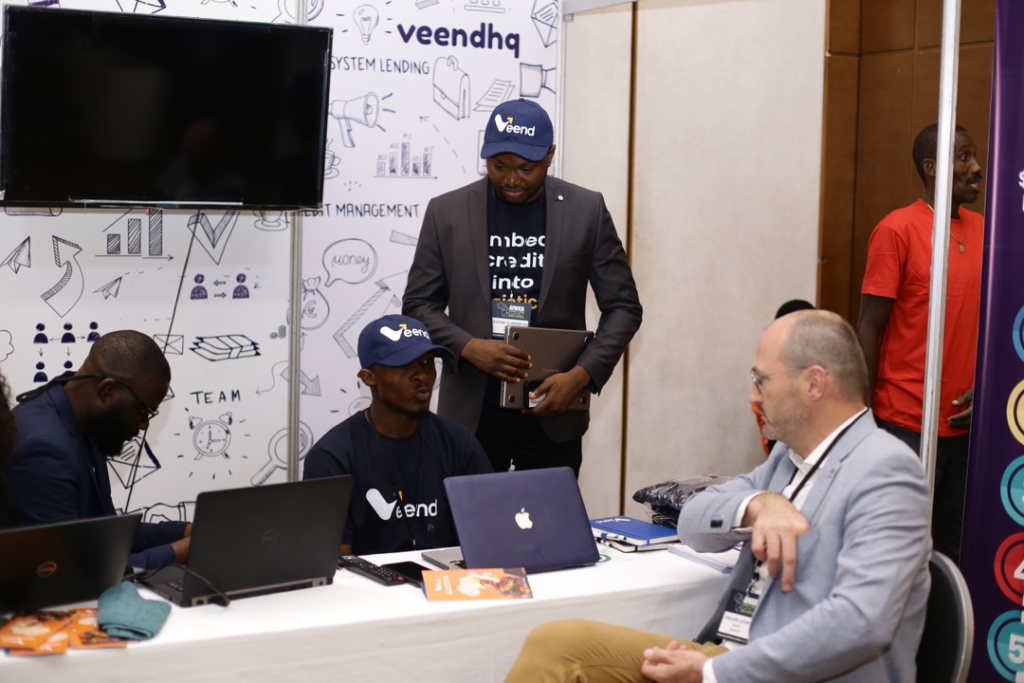
VeendHQ says its AI-powered credit platform, Vida AI, helped recover ₦69 million from a ₦172.5 million portfolio of loans that were more than 90 days overdue, in a pilot that highlights the growing role of technology in loan recovery and portfolio management.The result comes at a time when lenders are under increasing pressure to improve recovery outcomes while managing the cost, reputational risk, and operational burden associated with overdue loans. For many credit providers, the challenge is no longer only how quickly loans can be approved, but how effectively repayment can be monitored and delinquent loans can be recovered after disbursement.According to VeendHQ, the pilot delivered a 40 percent recovery rate on the overdue loan portfolio. The company said the result significantly outperformed traditional recovery benchmarks, where a five percent recovery rate on a similar loan book would amount to about ₦8.6 million.VeendHQ said the pilot demonstrates how Vida AI can support lenders beyond credit assessment, extending into repayment monitoring, collections, and recovery.“Credit access is only one side of lending. The bigger challenge for many lenders is what happens after disbursement,” said Olufemi Olanipekun, Co-founder and CEO of VeendHQ. “Vida AI helps lenders make smarter decisions across the credit lifecycle, from approval to repayment and recovery.”VeendHQ, a Nigerian fintech company building digital credit infrastructure, developed Vida AI as an artificial intelligence-powered platform for lenders, merchants, and financial institutions. The platform supports credit assessment, identity verification, repayment collections, and loan management workflows.With the recovery pilot, the company is positioning Vida AI beyond loan origination, as a tool for lenders seeking to improve repayment performance and manage overdue portfolios more efficiently.Delinquent loans remain a major cash-flow challenge for lenders. Once loans exceed 60 to 90 days past due, recovery becomes more difficult, expensive, and unpredictable. Traditional approaches such as manual calls, recovery agents, and legal escalation often increase costs without significantly improving recovery rates.VeendHQ said Vida AI’s recovery workflow enables lenders to upload overdue loan records, verify borrower information, assess repayment capacity, and trigger automated recovery actions. This gives lenders better visibility after disbursement and allows recovery teams to prioritize overdue portfolios more effectively.“If lenders cannot recover efficiently, they become more conservative with lending. That affects consumers, small businesses, and the wider credit market,” Olanipekun said. “Better recovery infrastructure gives lenders more confidence to lend, manage risk, and keep credit flowing.”The company said the recovery use case is especially relevant for banks, microfinance institutions, digital lenders, cooperatives, and merchants managing loans that are 60 to 180 days past due. It added that it plans to deepen Vida AI’s recovery capabilities for credit providers seeking to improve recovery performance without relying solely on manual methods.“As lending expands across Nigeria and Africa, recovery infrastructure is becoming as critical as origination,” Olanipekun said. “Tools that improve both will define which lenders can scale sustainably.”The pilot, VeendHQ says, points to a broader shift in the credit market: approval speed alone is no longer enough. Increasingly, lenders will be defined by how effectively they monitor repayment, recover overdue loans, and manage portfolio risk over time.


Governor Dauda Lawal Joins President Tinubu at Historic Press Corps Dinner

MTN CEO Discusses Unlimited Data Comments, Clarifies Data Usage, Tariff Outlook

How Primate Ayodele Warned Femi Gbajabiamila Against Scandal In 2025 (VIDEO)
Regberegbe 1986, 87 and 88 Appoints Deputy Speaker As Adviser Okunrin

9mobile, Kantar Discuss Building Impactful Brands for the Future
dLocal Enables Payments from Verve Cards and Tokens for Global Merchants
-

 NEWS2 days ago
Governor Dauda Lawal Distributes 50 Subsidised Buses, Commissions Fire Trucks for Swift Emergency Response
-
 NEWS2 days ago
Governor Dauda Lawal Joins President Tinubu at Historic Press Corps Dinner
-

 Sports2 days ago
Bayern sign Germany defender Brown on six-year deal
-
 Business and Brand2 days ago
MTN CEO Discusses Unlimited Data Comments, Clarifies Data Usage, Tariff Outlook
-

 NEWS2 days ago
South African Investment Banker Richard Simanga Ngwenya Arrested in Alleged Fraud Investigation.
-
 Cover2 days ago
How Primate Ayodele Warned Femi Gbajabiamila Against Scandal In 2025 (VIDEO)
-

 Cover2 days ago
50 Newly Fulfilled Prophecies Of Primate Elijah Ayodele