Connect with us

Politics

Political Earthquake in Kano: How, Senator Rabiu Musa Kwankwaso, Nasiru Gawuna’s Move to ADC Reshapes North-West Politics
Published

on

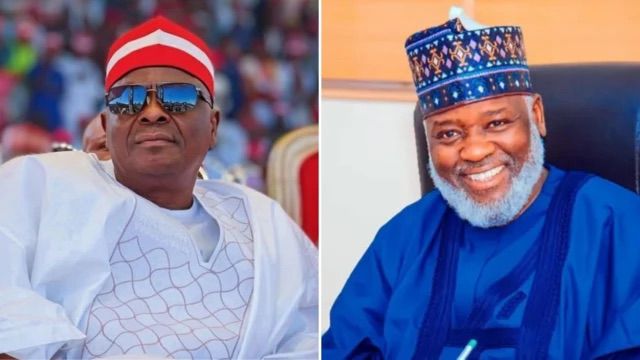
The political atmosphere of Nigeria’s North-West was fundamentally altered on a sweltering afternoon in 2026 after Senator Rabiu Musa Kwankwaso former Governor of Kano State and Former Minister for Defence who is also the “Grand Commander” of the Red-Cap revolution, finalized a move that many viewed as the ultimate masterstroke of his political career. By transitioning from the NNPP to the African Democratic Congress (ADC), Kwankwaso did more than change platforms; he effectively reset the coordinates of the nation’s largest voting bloc.

Senator Kwankwaso’s pedigree is defined by a singular devotion to human capital development and an almost mythical grassroots loyalty preceded him. He turned a local movement, the Kwankwasiyya, into a disciplined, ideological army that transcends traditional party structures. His entry into the ADC instantly transformed a secondary party into a formidable fortress, signaling to the ruling elite that the North-West is no longer a monolith under their control.

The gravity of this shift is most profound in Kano, the heartbeat of Northern commerce. For years, the state was a polarized battlefield between the Kwankwasiyya and established conservative wings. However, the entry of Nasiru Yusuf Gawuna into the same ADC orbit has created a “Kano Super-Alliance” that was previously unthinkable. Kwankwaso, the visionary architect who sent thousands of Kano’s children to global universities, now finds his populist ideology merging with Gawuna’s administrative steadiness and deep-rooted institutional connections.

This synergy is a seismic departure from the politics of “zero-sum” rivalry; it is a calculated fusion of mass appeal and the strategic machinery required to protect and deliver votes.
This move reshuffles the entire North-West deck. As Kwankwaso plants the ADC flag across the region, he is attracting a wave of heavyweights from Kaduna to Sokoto who feel marginalized by the status quo. His political pedigree allows him to speak with a regional authority that others lack, positioning himself as a protector during a time of economic uncertainty. By bringing Gawuna into this fold, the dynamics of Kano politics have shifted from a war of attrition to a coalition of necessity. This alliance creates a “Third Way” that bypasses the failures of the old guard, promising a return to the rapid growth that defined the Kwankwaso years, but with a broader, more inclusive base that could dictate the occupant of Aso Rock in 2027.

Kwankwaso’s career has always been defined by a uniquely personal brand of power. From 1999 to 2015, he served two terms as Governor of Kano State, in addition to roles as Minister of Defence and Senator. While many were surprised by his recent maneuvers; especially following closed-door meetings with President Bola Tinubu, he chose the emerging ADC over the ruling APC.

In the high-stakes theater of Nigerian politics, few events have jolted the region quite like the defection of Nasiru Yusuf Gawuna from the APC to the ADC on March 31, 2026. Coming just twenty-four hours after Kwankwaso’s move, Gawuna’s transition fundamentally has also altered the political calculus in Kano. What makes this moment remarkable is the sheer drama of the reversal. Gawuna’s political journey has been a steady, calculated ascent through Kano’s establishment. He first shot to prominence as Commissioner of Agriculture under Governor Abdullahi Umar Ganduje, earning a reputation for hands-on management in a state where farming is the economic backbone. He eventually rose to Deputy Governor, serving for nearly six years and gaining invaluable executive experience. Beyond partisan politics, Gawuna distinguished himself as Chairman of the Governing Council of Bayero University and, most recently, as Chairman of the Federal Mortgage Bank of Nigeria (FMBN). He resigned from the FMBN on March 27, 2026, citing compliance with presidential directives regarding political appointees.

A look back at the 2023 gubernatorial election reveals just how significant Gawuna is. Running under the APC, he polled over 890,000 votes against the formidable Kwankwasiyya machine. This proved that he is one of the few politicians in Kano who can genuinely compete with Kwankwaso’s electoral machinery. His strength is threefold: he appeals to the youth, the religious establishment (Ulama), and the business community; he has the capacity to split the APC vote; and he has demonstrated he can deliver votes independently of a larger party wave. To understand the magnitude of this defection, one must appreciate the complete inversion of alliances since 2023. Back then, Governor Abba Kabir Yusuf ran on the NNPP ticket with Kwankwaso’s backing, while Gawuna carried the APC banner with Ganduje’s support. By 2027, the roles will likely reverse: Governor Yusuf is positioned to run under the APC with Ganduje’s blessing, while Gawuna is poised to run under the ADC with Kwankwaso’s endorsement.

From the perspective of the Kwankwasiyya movement, Gawuna’s arrival is a “return” rather than a “recruitment,” as he was part of the movement’s pioneer cohort. This narrative neutralizes accusations of opportunism. For his part, Gawuna framed his move in terms of service and divine guidance, with sources indicating he felt marginalized within the APC after his 2023 defeat.

The reaction from within the APC has been one of worry and regret. President Tinubu, recognizing the stakes, reportedly directed party leaders to prevent Gawuna’s move, even offering him an automatic Senatorial ticket for 2027. The failure of this pressure campaign, Gawuna reportedly placed his phone on “Do Not Disturb” and traveled abroad to avoid lobbyists represents a significant defeat for the presidency’s political management. This crisis prompted emergency meetings between President Tinubu, Dr. Ganduje, and Badaru Abubakar at the Presidential Villa to reorganize their strategy.

The long-term implication is the potential break of the APC-PDP duopoly. The ADC is now positioning itself as a genuine “third force” in the North-West. The defection of high-profile figures like Senator Ahmed Babba-Kaita, Senator Aishatu “Binani” Ahmed, and former Justice Minister Abubakar Malami suggests a coordinated realignment. This competition could force more substantive policy debates and reduce the “zero-sum” intensity of regional elections.

The projected 2027 gubernatorial rematch between Gawuna (ADC) and Governor Yusuf (APC) will be a battle between two men with established records. Voters will have a genuine choice between performance and platform rather than just shifting loyalties. As Gawuna put it: “Allah gives power to whom He wants and when He wants.” While the 2027 elections will reveal where that power flows, it is already clear that the political landscape of the North-West will never look the same again.

Continue Reading
Click to comment

Leave a Reply

Your email address will not be published. Required fields are marked *

Politics

Rescue Mission 2.0: Why Zamfara Must Return Governor Dauda Lawal in 2027

Published

on

By

Oladapo Sofowora

The scorching sun rises over Gusau, Zamfara State, casting golden rays of light on a city that once knew only bleak shadows. Construction cranes, heavy-duty lifting machines adorn the skyline like mechanical giraffes, their arms dangling gracefully as they lift heavy steel and pour concrete into place. The rhythmic sound of hammers, rammers, and drilling machines, and the steady hum of generators fill the air; the unmistakable symphony of a state being reborn becomes all too visible. This is the vivid picture of the Zamfara of today made possible by the Chief Rescuer; Governor Dauda Lawal. As Machiavelli said; “Whoever wishes to foresee the future must consult the past; for human events ever resemble those of preceding times.” But to understand where it is going, one must first understand where it has been. Just over three years ago, Zamfara State was bleeding dry from every deep cut one can ever imagine. Schools were roofless shells where children sat on bare floors, their dreams of education slowly suffocating under the weight of total neglect. Hospitals were little more than abandoned buildings, their empty beds and peeling paint serving as grim monuments to a government that had abandoned its people. Bandits roamed freely across the state, burning villages, kidnapping children and killing with sheer impunity. Civil servants hadn’t been paid in months and retirees from as far back as 2011 were still waiting for their hard-earned gratuities. Clean portable water became a luxury. There was no ray of hope in the distance. Zamfara had become a byword for failure, poor, a cautionary tale whispered across Nigeria about what happens when governance collapses. Like the true messiah, God’s gift to the state Governor Dauda Lawal came into the picture to rewrite the story of the state.When he took office on May 29, 2023, Governor Lawal inherited a state in ruins, people in despair and a system that had ceased to function. But rather than tiptoe around the crisis by offering empty promises, he knew he couldn’t keep, he did something unprecedented. He declared states of emergency on all aspects of the nonfunctional state. On November 14, 2023, he declared a State of Emergency in Education. On January 30, 2024, he declared a State of Emergency in Health. Some called it drastic. He called it the necessary action.Across the length and breadth of Zamfara State, a revolution began. In the dusty villages of Bukkuyum, in the crowded neighbourhoods of Gusau, in the remote hamlets of Maru and Anka, the governor’s rescue mission began to take shape. Over eight hundred schools have been rebuilt or renovated, their fresh paint and new roofs standing as defiant statements that education matters in Zamfara. The Adolescent Girls Initiative for Learning and Empowerment project alone has renovated 174 schools in its first phase, with forty more already approved for intervention. Solar-powered boreholes now provide clean water in 115 schools, liberating children from the burden of walking miles to fetch water before class. Seven hundred and fifty new toilet units have been constructed, restoring dignity to students who once had no choice but to relieve themselves in the open. Nearly ten thousand three-seater desks have been provided to children who once sat on cold, hard floors. When his administration discovered that WAEC results from 2018 to 2022 had been withheld because the government hadn’t paid examination fees, he authorised the immediate release of N1.4 billion to clear those debts. Results were released. Futures were restored. Young people who had given up on their dreams of higher education suddenly saw those dreams within reach again. NECO fees were paid for every public-school candidate. Children who had been written off by a failed system were given a second chance.No achievement has resonated more deeply with Zamfara’s people than the governor’s handling of security. For years, bandits held the state hostage, their reign of terror so complete that entire communities were reduced to ghost towns. Villages burned. Children were abducted from their schools, farmers deserted their farmlands and traders couldn’t trade. The government seemed powerless, reduced to negotiating with terrorists and paying ransoms that only emboldened the criminals more until Governor Lawal took a different approach stating boldly that his administration would never enter into peace deals with terrorists. “We will never negotiate with bandits. We will hunt them down. We will dismantle their networks and we will restore peace to Zamfara.” He said in one of his briefings. Reiterating his commitment to securing the lives and properties of his people as the Chief Security Officer of the State. In a series of coordinated operations that demonstrated both strategic brilliance and unwavering resolve, security forces neutralised some of the most notorious bandit kingpins in the state and by extension the region. Habibu Sububu, the kingpin who terrorised the entire North West, was eliminated. Kachalla Ali Kawaje, who abducted students from Federal University Gusau, met his Waterloo. Kachalla Jafaru, Kachalla Barume, Yellow Sirajo, Isyaka Gwarnon Daji among others had their reign of terror ended by Governor Lawal’s administration. The governor also invested heavily in security infrastructure, handing over 140 operational vehicles to security agencies and establishing the Community Protection Guards, a volunteer force of local hunters and vigilantes who were trained, equipped and integrated into the security architecture. Weekly Security Council meetings ensured that intelligence was shared, strategies were coordinated and action was swift. For the first time in years, Zamfara’s farmers are returning to their farmland, markets are reopening and children are walking to school without fear of being attacked.The health sector has undergone an unprecedented transformation. In Maradun, a once-neglected town where the general hospital had become a death trap with its leaky roofs, broken equipment and complete absence of medicines, the facility now stands as a modern healthcare centre where mothers give birth safely and children receive treatment for diseases that once killed them. Maradun is not an isolated case. Hospitals in Maru, Kauran Namoda, Gusau and Anka have all been renovated and upgraded with state-of-the-art equipment. Their pharmacies have been restocked as health workers are being recruited and trained to meet the teeming demands of the state. Medications are now available to the dispensed while lives are being saved daily. Governor Lawal’s vision extends beyond bricks and mortar. The Huriyya Dauda Lawal Sexual Assault Referral Centre, an initiative by the First Lady of Zamfara State; the first of its kind in Zamfara, now provides medical care, counseling and support to victims of gender-based violence. Through partnerships with UNFPA, eighty women have been trained in vocational skills, gaining economic independence and dignity.Gusau itself is almost unrecognisable from what it was three years ago. New roads cut through the city like arteries of progress. Streetlights brighten neighbourhoods that were once dark and dangerous, where residents lived in constant fear of nighttime attacks. The JB Yakubu State Secretariat gleams with fresh paint and thorough renovations. The Sardauna Memorial Stadium has been restored to its former glory, a source of pride for a state that had forgotten what pride felt like. Clean, potable water flows from taps in communities that had been forced to drink from rivers, their children suffering from waterborne diseases that should have been eradicated decades ago. The Broadcasting Organisations of Nigeria recognised Governor Lawal as Infrastructure Governor of the Year for this transformative work, but for the governor, the award is secondary to the impact on people’s lives.The governor also tackled the water crisis head-on, building solar-powered boreholes in five communities and constructing earth dams for irrigation. The government invested in mechanised farming and agro-processing, creating jobs and improving food security in a state where hunger had become a weapon of mass destruction. But perhaps most importantly, Governor Lawal demonstrated that governance could be efficient and accountable. He inherited a bloated bureaucracy that was draining the state’s resources without delivering services and he acted decisively, reducing ministries from twenty-eight to sixteen and permanent secretaries from forty-eight to twenty-three. The savings were redirected to the people. Four months of salary arrears were cleared for state and local government workers. Thirteen billion naira in outstanding gratuities was paid to retirees who had been waiting since 2011. Civil servants received a leave grant of ten per cent of their annual salary during Ramadan 2024, a first in Zamfara’s history.Governor Lawal’s vision is not limited to his current term. He has unveiled a comprehensive ten-year development plan, a roadmap for Zamfara’s transformation built on six pillars: economy, infrastructure, social welfare, human capital, governance and environmental sustainability. The plan has attracted international attention and support, with representatives from the African Development Bank expressing confidence that Zamfara is poised to become a benchmark for transformative economic growth in Nigeria and across Africa. The state is harnessing its potential in agriculture and natural resources leveraging mechanised farming, agro-processing and its value chains to create more jobs, improve food security and reduce poverty-driven insecurity to ensure generational transformation.In May 2026, APC stakeholders in Zamfara endorsed Governor Dauda Lawal as their consensus candidate for the 2027 governorship election. The endorsement was not a rubber stamp nor a political calculation, but a recognition of the governor’s unprecedented performance and the urgent need for unhindered continuity.The rescue mission is underway, but it is far from complete. The foundations have been laid, the seeds have been planted, the first fruits have been harvested, but the harvest is not yet fully gathered. Zamfara needs time to consolidate the gains, to build on the progress, to ensure that the transformation is irreversible. Governor Lawal himself makes no apologies for seeking a second term. He has started a rescue mission where he has rebuilt over eight hundred schools, renovated hospitals, restored water, neutralised bandit kingpins, paid salaries and restored dignity. But the job is not done yet, the foundation has been laid, it’s time to build the house. The seeds have been planted, harvest needs time. The race has started, but the finish line is yet to be crossed. The people of Zamfara have seen what is possible. They have witnessed a governor who keeps his promises, who works tirelessly, who governs with integrity and vision. They have experienced the difference between a leader who serves and a leader who rules. When they go to the polls in 2027, they will not be voting for a man. They will be voting for a shared future, continuity, progress and for Zamfara. Governor Dauda Lawal has already proven himself worthy of their trust. Now it is time for them to allow him to complete the good work he has started. The rescue mission continues; with Governor Dauda Lawal at the helm, Zamfara will continue to rise.

Continue Reading

Politics

Lagos Majority Leader Alleges Plans To Manipulate Primary Election Results

Published

on

By

The majority leader of the Lagos House of Assembly, Noheem Adams, on Friday raised alarm over alleged plans by some people to manipulate the result of the primary election that produced him as a candidate of the All Progressives Congress (APC).

Adams reportedly won the primary election of the party to produce a candidate for the House of Assembly in Eti-Osa Constituency 1 on Wednesday after polling 7,638 against his opponent’s 1225 votes.

Speaking to thousands of APC supporters during a Victory March, Adams said accused a top monarch (name withheld) in Eti-Osa of being behind the plan to doctor the result in favour of Saheed Adesegun Bankole, who was defeated in the election.

“I want you all very much for the love and passion you have for me and APC. Today is what we call victory walk. We started from VGC with over 4000 APC members. Even inside the rain you stood your ground and you are here to protect your mandate.

“Thank you very much for voting for me. I won the election throughout our wards and the INEC officials, DSS and police personnel were there and even the agents of our opponent were there as well.

“Let me put it on record that his agents and the police signed that the election was free and fair and they took all the results to the local government collation centre.

“When they got there, they presented all the results to the DSS, INEC officials and also to the returning officer and he collected everything and announced that Adams was the winner of the election.

“We believe in this party. The only crime I have committed was during the impeachment of the Speaker; that I did not follow them and did not stand against the Speaker of the Lagos State House of Assembly,” he alleged.

He said being a politician, he understood “loyalty and how to always be loyal. That is the only crime I committed and today, I’m calling on the President of the Federal Republic of Nigeria to caution the Oba.

“The Oba is the reason why we lost the presidential election in 2023 in the constituency and he is the reason why we lost the House of Representatives seat. He lost in his own kingdom and the results are there at the INEC for all to see.

“I’m calling on the Inspector General of Police that if anything happens to me, he should hold the Oba responsible. And in 2027, if we lose the presidential election in the local government, the President should hold him responsible. We have assured the President that we are going to vote for him and he will win.”

He urged his loyalists and supporters to remain calm as he trusts the party enough to resolve the issue.

President of the Lekki Residents and Stakeholders Association, Sulyman Bello, also thanked the supporters for having faith in Adams.

“On behalf of all of all the estates from 1004 and across the entire Lekki peninsula, we thank all the APC members for standing by our friend, brother, father Hon. Noheem Adams.

“If all the estates in Eti -Osa Osa, call on him at the same time, he will respond. We also thank God that he got over 7,000 votes and his opponent a little above 1,000 votes. The winning margin is above 90%.

“We thank all those of you that voted and also thank President Ahmed Tinubu for his leadership. We extend our gratitude to the APC leaders in Lagos state. If it is not Noheem, it is not Noheem,” he said.

Continue Reading

Politics

Governor Dauda Lawal Emerges APC Consensus Governorship Candidate for Zamfara 2027 Election

Published

on

By

Governor Dauda Lawal Ph.d has officially emerged as the governorship candidate of the All Progressives Congress (APC) for the 2027 election in Zamfara State, following a consensus arrangement adopted by the party for its primaries.The governor secured the ticket after party members and supporters gathered across various wards to endorse him as the APC’s flagbearer for the forthcoming election. The consensus model, which allowed party stakeholders to unite behind a single candidate, was embraced as a strategy to avoid a contentious primary and strengthen internal cohesion ahead of the 2027 polls.Speaking with journalists shortly after the exercise, Governor Lawal expressed profound gratitude to party members for the confidence reposed in him. He reaffirmed his commitment to the people of Zamfara, pledging to consolidate ongoing developmental projects aimed at improving the lives of residents across the state.“I am deeply honored by the trust and support of our party faithful,” Lawal said. “We will not relent in our efforts to deliver meaningful development, enhance security, and create opportunities for all citizens of Zamfara State.”His emergence underscores the party’s push to build continuity and strong leadership in the northwest region.Political analysts note that the adoption of consensus candidate signals the APC’s preference for unity and reduced internal friction as the party prepares for the next electoral cycle.

Continue Reading

Trending

Mega Awareness 2023