NEWS
INSECURITY: Zamfara State Adopts Colombia’s Strategic Model to Tackle Insurgency and Banditry
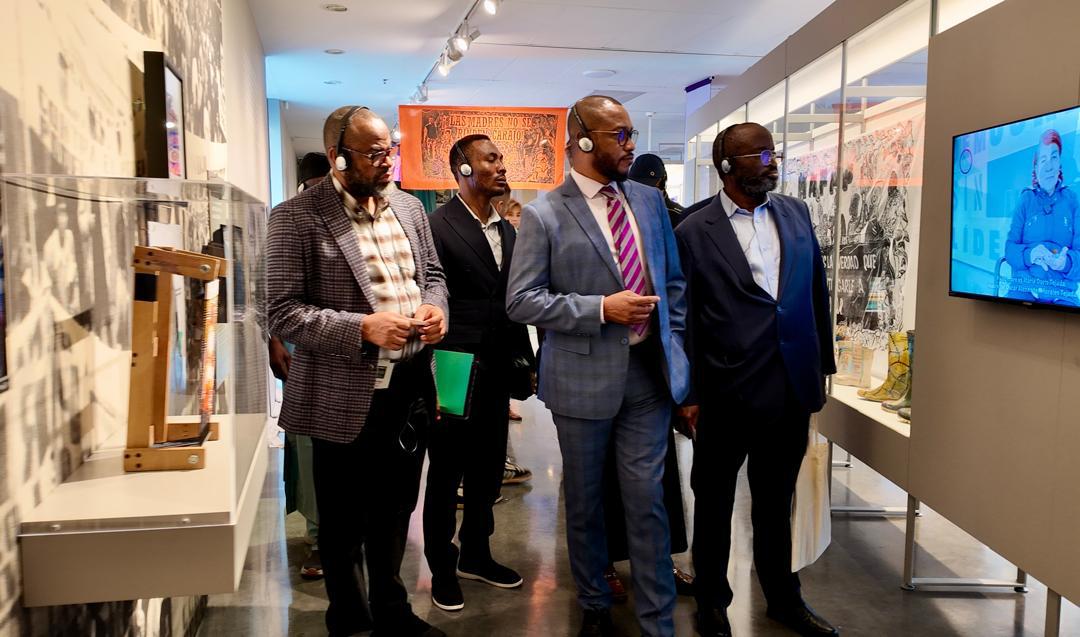
In a significant move to address rampant terrorism, insurgency, and banditry, the Zamfara State Government has completed a thorough examination of Colombia’s strategic communication framework, particularly its non-kinetic approaches to conflict resolution. This initiative aims to adapt successful strategies from Colombia to the specific security challenges faced in Zamfara.
A delegation, led by Governor Dauda Lawal, recently returned from an exchange program in Bogotá, Colombia, where they focused on the demobilization strategy employed during the conflict with the Revolutionary Armed Forces of Colombia (FARC). The goal of this initiative is to harness lessons learned from Colombia’s experiences to restore economic stability in Zamfara and promote safe, unhindered movement for its citizens.
Governor Lawal emphasized that the Colombian model presents an adaptable framework suitable for addressing multifaceted security threats. It highlighted that relying solely on kinetic military operations is inadequate for achieving enduring peace. Colombian authorities utilized extensive media campaigns that treated communication with as much gravity as military action itself. The integration of radio, television, and localized community messaging effectively built credible alternative pathways for peace, rather than resorting to propaganda.
One cornerstone of Colombia’s success was its use of testimonials from demobilized combatants. These former guerrillas shared their personal journeys tales filled with disillusionment, fear, and a longing for family either anonymously or openly, demonstrating the tangible benefits of embracing peace. Such human narratives struck a deep chord with active combatants contemplating their futures, providing a powerful counter-narrative to abstract governmental messages.
The Colombian strategy was meticulously crafted to deliver targeted messages to diverse audiences. Active fighters were informed about demobilization procedures and available reintegration programs, while families received emotionally resonant appeals concerning separation and reunion. Communities were prepared to accept former combatants, and the general public was engaged with collective narratives that framed peace as a national endeavor.
In regions of rural Colombia, where state presence was minimal, community radio stations broadcasting in local dialects became pivotal for disseminating messages of peace. The Colombian government recognized the importance of amplifying the voices of influential figures such as religious leaders, respected community elders, and former combatants effectively overcoming the trust deficit that often undermines state-led messaging in conflict zones.
Governor Lawal recognizes that while the Colombian model offers valuable insights, it cannot be adopted without modification. The banditry in Zamfara is characterized by diffuse, loosely connected groups with varied motivations, including economic survival, revenge, and criminal enterprise. Consequently, media strategies must be finely tailored to resonate with these distinct segments of the population.
In light of the challenges posed by limited literacy and infrastructural gaps in various parts of Zamfara, the government is considering primary communication channels that are accessible to the community. These might include local FM radio broadcasts, announcements made in mosques, megaphones in markets, and audio messages via WhatsApp. Where trust in the state is lacking, the most effective messengers might be former bandits who have renounced violence, along with revered Islamic scholars, traditional leaders, and respected community elders whose voices carry weight and credibility.
Furthermore, the Colombian experience illustrates the potential of media to counteract recruitment efforts by showcasing positive alternatives. By highlighting successful youth, vocational training programs, and stories of hope, campaigns in Zamfara aim to outshine the narratives portrayed by armed groups. Such initiatives must confront the allure of banditry by honestly portraying the fear, trauma, and ultimately tragic outcomes associated with a life of violence.
As Governor Lawal aptly stated, “The Colombian strategy reveals that communication is not merely soft power; it is a crucial component of hard strategy. A bullet can end a fighter’s life; a well-crafted message can create a pathway to peace for countless individuals.”
In our ongoing battle against banditry, media campaigns represent a means to connect with those who cannot be reached through force alone individuals caught in conflict, those coerced into violence, and disillusioned youth who joined armed groups not out of conviction but circumstance.
The Zamfara Government is committed to adapting these valuable lessons into local languages and cultural contexts, with the intent of protecting its citizens and fostering long-lasting peace throughout the state.
NEWS
Governor Dauda Lawal Approves 120-Day Rapid Intervention Plan to Revamp Zamfara’s Educational Sector
Governor Dauda Lawal has approved a 120-day Rapid Intervention Action Plan aimed at addressing systemic failures in Zamfara State’s education sector.
The Governor presided over the State Executive Council meeting on Monday at the Government House in Gusau, where key decisions were taken.
During deliberations at the 65th Council meeting, issues related to education, health, works, and other sectors were discussed and approved.
The Council endorsed a 120-day rapid intervention plan built on prior diagnostic activities conducted by the Ministry of Education and the Education Quality Assurance Agency (EQAA). The plan, presented by the overseeing Commissioner for Education, Abdulmalik Abubakar Gajam, includes payroll audits, school mapping exercises, and infrastructure assessments. It proposes targeted, time-bound interventions across governance, infrastructure, digital transformation, teacher development, and student welfare.
The Council also approved the formation of a joint committee to immediately assess all illegal or unapproved structures built around schools in the state, with a view to relocating them and securing school environments. The committee will be led by the Ministry of Education, Science and Technology (MOEST).
Additionally, the Council approved a single, unified Education Sector Bill (covering Early Childhood Care Development Education to Tertiary level), to be developed in consultation with stakeholders including agencies, institutions, civil society, traditional rulers, and development partners. A draft bill will be presented to the State House of Assembly for enactment within the emergency timeframe.
The Governor further approved the transfer of non-teaching staff—such as messengers, labourers, gardeners, cooks, guards, drivers, health workers, and artisans—from the Ministry’s payroll to appropriate MDAs (CPG, MoH, Establishment) or private firms.
Among other important issues, the Council approved the composition of the Zamfara State Steering Committee on the State of Emergency on Education and authorised the Committee to constitute a Technical Working Group (TWG) and co-opt stakeholders including the NUT, UNICEF, UBEC, traditional and religious leaders, private school proprietors, and CSOs.
NEWS
GOV. LAWAL MOURNS VICTIMS OF BANDITS’ ATTACK IN BUKKUYUM
Governor Dauda Lawal has expressed profound grief and deep sorrow over the tragic bandits’ attack on communities in Bukkuyum Local Government Area, which claimed innocent lives and left many others injured.
The Governor described the night assault on Bunkasau, Yar Galma (Zarumai Ward), and Dogon Daji (Adabka Ward) as a heartbreaking and senseless act of violence against defenceless citizens.
He extends his heartfelt condolences to the bereaved families, sharing in their pain and grief at this moment of immense loss and devastation.
Governor Lawal has directed the immediate deployment of a high-level delegation led by the Deputy Governor to convey condolences, provide support to affected families, and ensure prompt medical attention for the injured.
He reassures the people of Zamfara State of the government’s resolve to intensify efforts to safeguard lives and restore peace across all communities.
NEWS
Ifako Mini Stadium, Temitope Adewale And His Result-Oriented Youth Development
By Oluwatosin John
At last, the long awaited remodelling of Ifako Mini Stadium is coming to fruition, we say a ‘big kudos’ to Hon. Adewale Temitope Adedeji, OON, member representing Ifako-Ijaiye Constituency I at the Lagos State House of Assembly.
The Ifako Mini Stadium is the only sporting facility that serves over one million residents of Ifako-Ijaiye Local Government and environs including several youths in neighbouring communities in Ogun State. Since its demolition and approval for renovation, standard sporting activities had been put to halt.
The development and growing impact of the Ifako Mini Stadium is now being widely recognised as a significant step toward advancing grassroots sports and youth empowerment within the community.
Facilitated by Hon. Adewale and constructed by the Governor of Lagos State, Mr. Babajide Olusola Sanwo-Olu, the modern sporting facility is designed to provide accessible and functional infrastructure for recreational and competitive activities. It will also serve as a hub for youth engagement, talent discovery, and community development.
The initiative, according to residents who would benefit from it, reflects a broader commitment to addressing the challenges faced by young people, particularly the lack of structured recreational spaces and opportunities for personal growth.
The stadium features a beautiful standard football pitch, spectator seating area, floodlighting for evening activities as well as essential amenities such as world class changing rooms, restrooms, and administrative spaces. These features position the complex as a suitable venue for tournaments, training programmes and community events.
For emphasis and the purpose of appreciation, it is noted again that central to the success and visibility of this initiative is Hon. Temitope Adewale, a son of Ifako-Ijaiye whose continued commitment to youth development and community advancement has been instrumental in promoting projects that directly impact the lives of residents in the area.
This lawmaker’s dedication underscores the importance of leadership that prioritizes sustainable development through investments in young people and community infrastructure. His education initiatives have catapulted Ifako-Ijaiye from the bottom to the top.
“The Ifako Mini Stadium represents more than just a place for sports—it is a foundation for opportunity, growth, and the future of our youth,” Mr. Johnson Oredolu, a community representative, said about the facility and he is right.
Before now, sporting activities in the constituency and its neighbourhood had been reduced to streets and school compounds leaving no room for professional experiences and exposures to expert connections. The youth are now excitedly optimistic believing that these challenges will become ‘a thing of the past’.
The Ifako Mini Stadium will surely create opportunities for local coaches, sports organisers, and small businesses to benefit from activities hosted at the venue.
Residents and observers note that the stadium has the potential to serve as a pipeline for discovering and nurturing future professional athletes while also strengthening community ties through regular sporting and social events.
As Lagos State continues to expand its investment in grassroots sports infrastructure, the Ifako Mini Stadium stands out as a model of how targeted initiatives can drive meaningful change at the community level.
With sustained support, effective management, and active community participation, the facility is expected to remain a cornerstone for youth empowerment and sports development in Ifako-Ijaiye for years to come. The long awaited JAHrity Cup, a novel football competition to combine sports and charity will be unveiled soon at the stadium.
The enormous value of this infrastructure will remain unquantifiable as it will attract sports enthusiasts from around the state and beyond to experience classical games at a standard-class facility, thus putting Ifako-Ijaiye in the spotlight as a destination for sports lovers.
With the continued efforts of this worthy legislator, our own Hon. Adewale Temitope Adedeji, OON, the future of sports in Ifako-Ijaiye can only be more experienced than imagined.
-
NEWS1 day agoGovernor Dauda Lawal Approves 120-Day Rapid Intervention Plan to Revamp Zamfara’s Educational Sector
-
Brand1 day agoQuest Merchant Bank Limited Unveils New Brand Identity, Signalling Next Phase of Strategic Growth
-
Banking and Finance15 hours agoFidelity Bank Takes Lead in Banking Recapitalisation Drive
-
Entertainment1 day agoPress Play on Nostalgia: Papa Ajasco, Superstory and More Return on GOtv
-
Banking and Finance15 hours agoPolaris Bank celebrates 58 New Hires from its flagship PGIT, PTIP as CEO charge them to Keep Learning, Keep Evolving
-
Cover9 hours agoPrimate Ayodele’s Prophecies On Elections In Benin Republic, Djibouti Fulfilled
-
Cover5 hours agoPFL AFRICA TO BRING THE LARGEST MMA EVENT TO WEST AFRICA WITH HISTORIC NIGERIA DEBUT IN LAGOS ON JUNE 13
-
Entertainment5 hours agoDividends: A Must-Watch Series on Africa Magic