Rufai Oseni And His Brazen Style Of Journalism
Rufai Oseni And His Brazen Style Of Journalism
By Lukmon Akintola
Growing up, I watched a lot of television. It was an era when access was largely limited to NTA, with television stations opening around 4pm and closing at about 10pm.
Those days in Minna, Niger State, we looked forward to watching the state-owned NTA, but we were even more intrigued by the NTA Network service because it featured a crop of broadcasters who, to a young boy like me, seemed almost heavenly.
My late father would call me and my late elder sister to come and watch the network news with him. Afterwards, he would ask us what we had heard—a review session of sorts. As we took turns repeating what we had learnt, we were more captivated by the professionalism exhibited by the broadcasters.
There was Eugenia Abu, the renowned broadcaster and writer known for anchoring the Network News; Frank Olize, the famous anchor of the popular Sunday night programme, “Newsline”, Bimbo Oloyede, who was also prominent on television; and Ruth Benamaisia-Opia, another shining light on NTA Network News.
There were also Siene Allwell-Brown, Modele Sarafa-Yusuf, Ronke Ayuba and Abike Dabiri-Erewa, then simply known as Abike Dabiri.
These broadcasters understood what it meant to be on air, the responsibility they carried, the purpose they served and the professionalism expected of them. Whenever they appeared on television, they were professional, courteous and engaging.
They interviewed and grilled guests without necessarily insulting or embarrassing them. Guests did not have to walk off the set. Their spoken English was impeccable, and they became a delight to both their guests and viewers at home.
At the end of an interview, it was not unusual to hear a guest genuinely say, with satisfaction and honesty, “It was a pleasure being here.”
That, to me, was broadcasting in its golden era, particularly between the 1980s and 1990s.
Today, as a grown man and a father, I have encountered several A-list broadcasters, including Seun Okinbaloye, host of the heated political programme “Politics Today” on Channels Television; Maupe Ogun-Yusuf, co-host of “Sunrise Daily”; Chamberlain Usoh; and Ayo Mairo-Ese.
I recently became a fan of Mairo-Ese for professionally cutting short an interview with Lere Olayinka, media aide to the FCT Minister, Nyesom Wike, after Olayinka said he would not take questions from her co-anchor, Rufai Oseni.
It was not necessarily because I support Oseni’s style of journalism. Rather, I appreciated how Mairo-Ese professionally and effortlessly moved on from Olayinka’s remark and continued the programme, thereby avoiding what could have degenerated into an embarrassing on-air exchange.
I must also acknowledge that the generation of broadcasters I have mentioned continues to hold its own whenever they come on air. Their incisive discussions, in-depth analyses and on-the-spot questioning demonstrate that they understand their responsibilities as trained broadcasters.
Like their older colleagues, they do their jobs without necessarily having to embarrass their guests.
However, one name stands out—not necessarily for quality journalism or anything close to it, but for what I consider a recurring pattern on Arise Television.
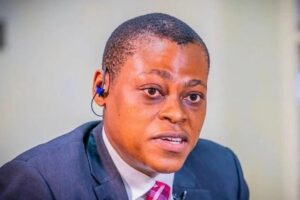
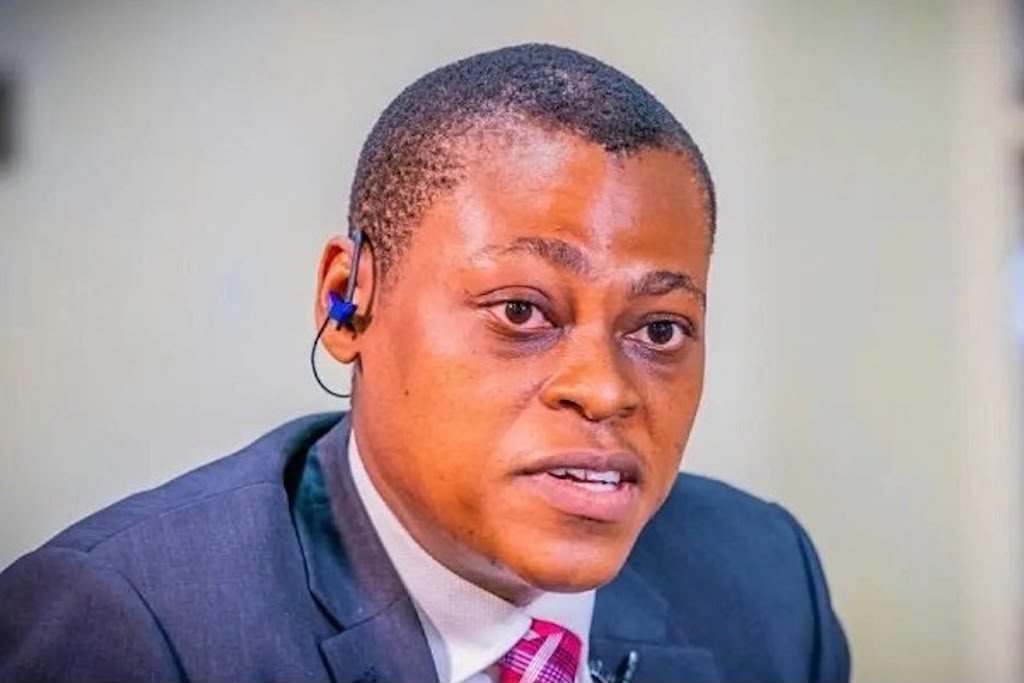
That name is Rufai Oseni, co-anchor of “The Morning Show”.
In recent years, I have watched what appears to me to be a recurring tendency by Oseni to deliberately embarrass and rubbish some of his guests on national television.
Beyond talking down to guests, Oseni has, on occasions, called them names, including “Gbewudani,” a Yoruba expression often used to describe someone regarded as a placeholder or person without substantive relevance.
Only recently, I came across a cutaway video of Oseni interviewing Hon. Abimbola (Bimbo) Adekanmbi, the Allied Peoples Movement (APM) governorship candidate for Oyo State in the 2027 election.
During the interview, Adekanmbi was discussing his vision for Oyo State and his relationship with Governor Seyi Makinde when Oseni told him that Makinde was bankrolling his campaign.
When Adekanmbi disagreed, Oseni asked whether he had made enough millions to finance his campaign. Adekanmbi answered in the affirmative, but Oseni still insisted that Makinde would ultimately pick the bills.
The certainty with which Oseni made the assertion was striking. He spoke as though he had personally been in a meeting with Makinde where such an arrangement had been disclosed.
Adekanmbi, who appeared on the programme on September 15, 2026, endured the exchange on national television without losing his composure.
Another cutaway video involving Oseni and Primate Elijah Ayodele recently circulated on social media. I was particularly taken aback by some of the words used by Oseni during the exchange.
“Who is Primate Ayodele when I am talking?” was one of the questions Oseni directed at his co-anchor when she attempted to caution him and explain who the cleric was.
What had Ayodele said? He had urged President Bola Tinubu to do everything possible to ensure that his record in America was not made public.
One may disagree with such a statement, and I can understand why a journalist would question it, particularly coming from a religious figure. But disagreeing with a guest does not, in my view, give an interviewer licence to rubbish or belittle that person.
While Oseni is focusing on and condemning Primate Ayodele over this single call, I am sure he is not aware of the countless times the man of God has called out and condemned the President, either personally or over his policies.
I am also sure that Oseni is not aware that Primate Ayodele’s voice was one of the loudest when students and teachers were kidnapped in Orire Local Government Area of Oyo State, when nobody was commenting on the incident, not even the Presidency.
Oseni should also understand that Ayodele, like every other Nigerian, has a constitutional right to freedom of expression. Whether one agrees with what he says or not is another matter.
With his supposedly assertive and confrontational approach, Oseni sometimes appears less interested in interviewing his guests than in establishing his dominance over them.
That, to me, is not journalism.
And I believe my broadcast journalist lecturer while I was in school, Mr Segun Ashade, would agree that such an approach should not be the standard for broadcast journalism.
The list of personalities who have had confrontational exchanges with Oseni includes David Umahi, the Minister of Works. During one exchange, Oseni was reported to have told the minister to “keep quiet.”
Just imagine that.
Oseni has also clashed with Daniel Bwala, during which Bwala accused the anchor of speaking down to him. Others who have had heated exchanges with Oseni include Jesutega Onokpasa, Ayodele Fayose and several others.
Truth be told, Oseni needs to tread carefully.
He may enjoy his style of journalism, and some viewers may even find it refreshing or entertaining. But he should also consider the possibility that repeatedly turning interviews into confrontational exchanges could damage the reputation of the platform he represents.
You can interview a guest on television and still allow room for a logical conversation.
An interview should not become a contest of who can shout the loudest or dominate the conversation.
Any session that gives the anchor the sole right to ask questions without giving the guest sufficient opportunity to convincingly and freely express his or her thoughts can hardly be described as a meaningful interview.
Fact-based and hardball questions are certainly part of journalism. An interviewer has every right to challenge a guest, demand clarification, point out inconsistencies and insist on answers.
But an interview should not be deliberately turned into an embarrassing spectacle.
The job of the interviewer is to put the facts on the table, allow the guest to defend himself or herself and give viewers the opportunity to make their own judgment.
Let viewers decide whether the guest has spoken the truth, contradicted himself, embarrassed himself or failed to answer the questions.
It is not the responsibility of the interviewer to deliberately set out to humiliate the guest.
This is why I believe there is a need for greater restraint in the way Oseni conducts some of his interviews.
The need to put Oseni on a leash while he is on air cannot, in my view, be overemphasised. Otherwise, someday—and perhaps sooner than expected—guest-invited programmes on Arise Television could increasingly become anchor-dominated programmes where the guest is merely present to receive questions and accusations.
After all, nobody likes being embarrassed on national television.
Lukmon Akintola, a journalist, writes from Lagos.
About The Author