Connect with us

Banking and Finance

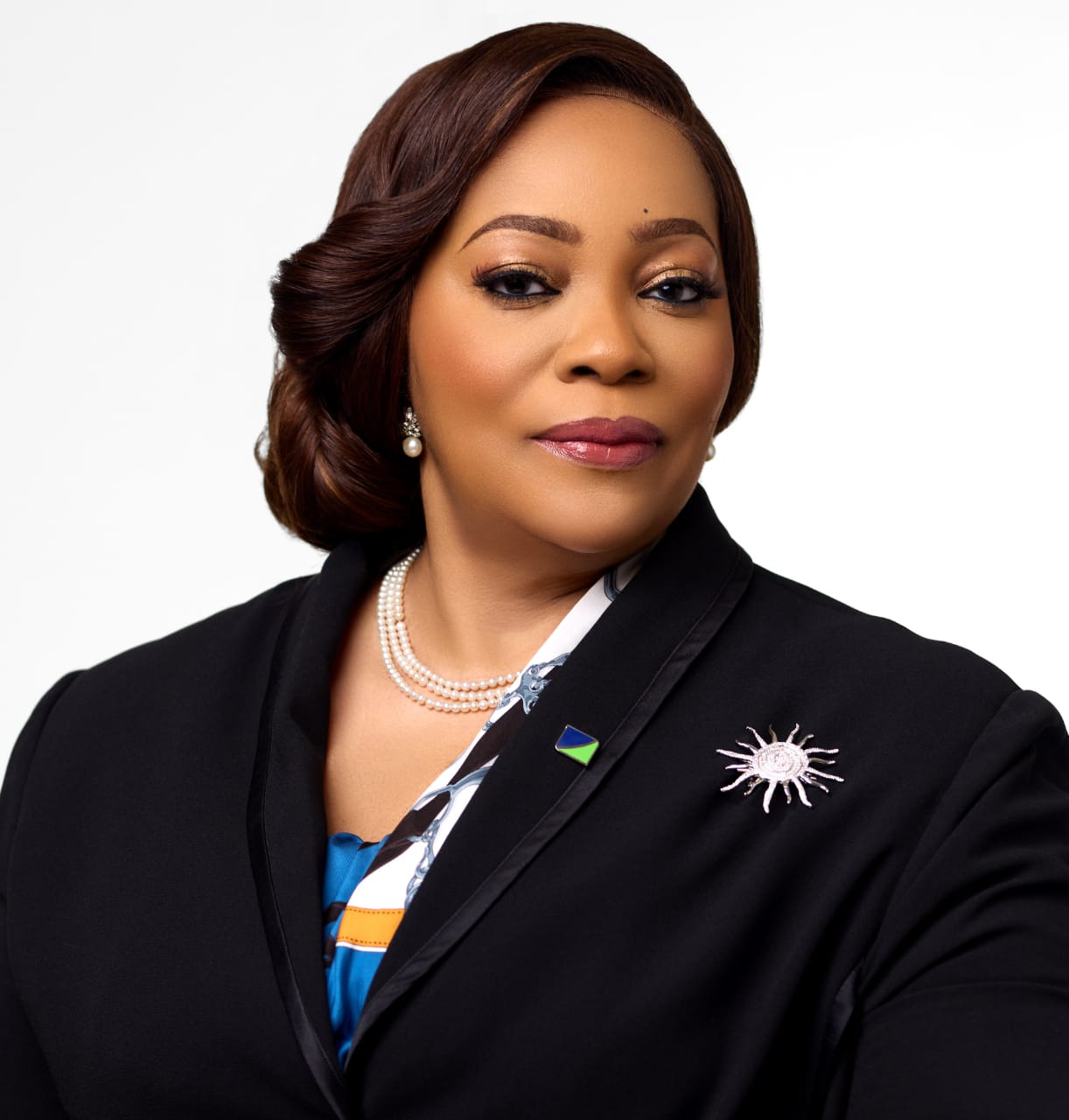
Fidelity Bank Chairman Amaka Onwughalu wins “Women on Bank Boards” at AWBFA 2026
Published

on

Mrs. Amaka Onwughalu, Chairman of the Board of Directors of Fidelity Bank Plc, has emerged winner in the “Women on Bank Boards” category at the Africa Women in Banking and Finance Conference and Awards (AWBFA 2026).The event, themed “Redefining Women’s Leadership in African Finance”, held at the Lagos Marriott Hotel Ikeja on Friday, 8 May 2026, is a platform established to celebrate women driving leadership and impact across Africa’s financial services ecosystem. It also spotlights professionals whose contributions are often overlooked, while advancing visibility for women shaping banking and finance.In her acceptance remarks, delivered through Ezinwa Unuigboje, Company Secretary, Fidelity Bank Plc, Onwughalu described the recognition as a timely reminder of the role inclusion plays in strengthening board effectiveness and corporate governance.“This recognition matters because inclusion at board level strengthens governance,” she said, noting that when diverse perspectives are represented, “oversight is sharper, risk conversations are richer, and strategy is tested more thoroughly.”She added that inclusive leadership sends an important signal to the market and the next generation of leaders, emphasising that boardrooms should reflect “competence, experience, and the society the financial system serves.”For Fidelity Bank, the Chairman linked the award to the institution’s governance priorities and growth trajectory. She noted that strong governance aligns with the bank’s consolidation of “key milestones in capital strengthening, international expansion, and sustained business growth.”She also highlighted the wider benefits for the Nigerian banking industry, noting that inclusive boards support stability and trust, improve decision quality, and help institutions remain responsive to customers, communities, and an evolving regulatory environment. She said the honour was accepted “with gratitude, and with renewed commitment to champion inclusive leadership at the highest level.” Organisers have positioned AWBFA 2026 as more than a conference, describing it as a movement focused on celebrating excellence, driving inclusion, and strengthening leadership pipelines for women across Africa’s financial ecosystem.

Continue Reading
Click to comment

Leave a Reply

Your email address will not be published. Required fields are marked *

Banking and Finance

Union Bank Backs Nigerian Teachers as Maltina Teacher of the Year Competition Marks 12th Edition

Published

on

By


Lagos, Nigeria – June 8, 2026
Union Bank of Nigeria has reaffirmed its commitment to Nigerian teachers and the wider education sector at the flag off of the 12th edition of the Maltina Teacher of the Year Competition (MTOTY), held today in Lagos.
Now in its third consecutive year as a partner, the Bank joined organisers Nigerian Breweries Plc and the Felix Ohiwerei Education Trust Fund, alongside educators and sector stakeholders, for a panel session on how educational support can enhance learning outcomes for teachers and students.
Speaking on behalf of Union Bank, Chief Brand and Marketing Officer, Olufunmilola Aluko, positioned education as central to the Bank’s purpose rather than a peripheral cause.
“At Union Bank, we believe education is not a social obligation. It is a strategic investment,” she said. “A nation that does not invest in its teachers and its learners is borrowing from its own future, and we are in the business of building futures, not mortgaging them.”
She pointed to Edu360, the Bank’s flagship education initiative under the UnionCares platform, as the practical expression of that conviction. Edu360 spans the full education value chain, from widening access for children in underserved communities and investing in the teachers who multiply learning outcomes, to building digital literacy and STEM capability, and preparing young people for employment or enterprise.
On the role of the financial sector, Aluko challenged her peers to think differently. “Financial institutions need to stop thinking of ourselves as donors and start thinking of ourselves as ecosystem builders,” she said. “We can embed financial literacy into school curricula, design products that help parents save for their children’s education, and convene policymakers, educators and the private sector around shared goals. Above all, we can show up consistently, not only when it suits our brand calendars.”
She noted that lasting change requires sustained collaboration between the public and private sectors, and pointed to the strength of the signal sent when institutions commit to teachers at scale, citing the competition’s ₦100 million grand prize. With twelve editions and more than three hundred teachers recognised to date, she described MTOTY as a model of the consistency Union Bank embodies through Edu360.
Her closing message was directed at educators across the country. “To every teacher in this country, what you do is not small,” she said. “Your story deserves to be told, and Nigeria needs to know your name.”
Union Bank’s participation aligns with United Nations Sustainable Development Goal 4 on inclusive and equitable quality education, and reflects the Bank’s broader commitment to social impact and sustainable development across the communities it serves.

#

Note to Editors:
About Union Bank of Nigeria Plc’s
Established in 1917, Union Bank is a leading provider of financial services in Nigeria, renowned for its “Simpler, Smarter Banking” philosophy. With a nationwide network and a strong focus on digital innovation, Union Bank continues to empower individuals, businesses, and the public sector to achieve lasting success.
The Bank is a trusted and recognisable brand with an extensive network of over 300 branches across Nigeria. The Bank offers a range of banking services to individual and corporate clients, including current, savings, and deposit account services, funds transfer, foreign currency domiciliation, loans, overdrafts, equipment leasing, and trade finance. The Bank also offers customers convenient electronic banking channels and products, including Online Banking, Mobile Banking, Debit Cards, ATMs, and POS Systems.
More information can be found at: www.unionbankng.com

Media Enquiries:
Olufisayo Adelekun
+234 (0) 201 271 6800
mediarelations@unionbankng.com

Continue Reading

Banking and Finance

Stewardship, Not Seizure: What the Union Bank Case Is Really About

Published

on

By

There is a particular genre of financial commentary that mistakes legal process fora factual verdict. A court delivers a first-instance ruling, procedural questions areraised, and before the ink is dry on the appeal filing, the narrative has alreadyhardened: the regulator overreached, investor confidence is shattered, andNigeria’s financial governance is on trial before the world. Much of thecommentary currently circulating about Union Bank of Nigeria belongs to thatgenre. It is not without merit on certain procedural questions. But it is, at its core,incomplete — and incompleteness in financial journalism carries costs that runwell beyond the column.The Acquisition That Started EverythingIn 2022, Titan Trust Bank Limited, then chaired by Mr Tunde Lemo, acquiredapproximately 94 per cent of Union Bank of Nigeria through two Dubai-registeredentities: Luxis International DMCC, promoted by Mr Rahul Savara, and MrCornelius Vink’s Magna International DMCC, both linked to the Tropical GeneralInvestments (TGI) Group. The US$300 million transaction was financedpredominantly through an Afreximbank facility. The CBN’s policy is unambiguous:borrowed funds may not be used to acquire shares in a licensed financialinstitution. That principle exists because debt-funded acquisitions hollow out thevery capital base they purport to build.That is precisely what happened. A forensic audit found that the Afreximbank loanwas ultimately reflected in Union Bank’s own books, with no hedgingarrangements against naira depreciation. As the currency weakened, revaluationlosses intensified, the capital adequacy ratio deteriorated into negative territory,non-performing loan exposure increased significantly, and a substantial capitalshortfall emerged. Critically, as stated in the Bank’s own Notice of Appeal, aspecial examination was conducted, and its findings were formally presented toformer Managing Director Mudassir Amray and the board then chaired by FaroukGumel, who were confronted with the institution’s grave financial condition andcontinuing regulatory infractions. The claim that the CBN acted without evidencebefore dissolving the board is, on the record, simply not accurate.The Legal PictureThe CBN acted under Section 34 of BOFIA 2020 and Section 52 of the CBN Act2007 — broad discretionary executive powers that do not require a specialexamination as a condition precedent. The Federal High Court’s characterisationof those powers as quasi-judicial is itself among the central questions now onappeal. Both the CBN and Union Bank have filed formal appeals. Union Bank’sown Notice of Appeal, filed the day after judgment on thirteen grounds and arguedby Olaniwun Ajayi LP, challenges the ruling on several fronts: that therespondents may never have had locus standi to sue in the first place, under therule in Foss v. Harbottle; that the application was filed nearly two years after theJanuary 2024 events, well outside the prescribed three-month limitation window;and that the CBN-supervised recapitalisation exercise, mandated under Section 9of BOFIA, cannot constitute evidence of bad faith. These are not technicalities.They are substantive questions of law that the Court of Appeal must nowdetermine. The Human Stakes and the Real QuestionBehind the legal arguments sit approximately 7.8 million depositors and around6,450 employees across 281 branches. Union Bank’s own affidavit describes it as asystemically important institution in a precarious financial situation, continuing torely on CBN forbearance for its existence — a frank admission that validates,rather than undermines, the case for intervention. Meanwhile, critics argue thedispute damages investor confidence. The wider evidence does not support thatconclusion. By April 2026, thirty-three Nigerian banks had raised N4.65 trillionunder the CBN’s recapitalisation framework — over ten times the 2004 to 2005consolidation figure. The Nigerian Exchange All-Share Index rose approximately29 per cent in the first quarter of 2026 alone. The market has read the CBN’sresolve as stability, not recklessness. Conflating this case with a systemicconfidence crisis runs the risk of misleading the very international investors thecommentary claims to be protecting.The structural vulnerability at the centre of this dispute originates not with theregulator but with an acquisition financed with borrowed funds, loaded onto theacquired institution’s balance sheet, and left unhedged against exchange-raterisk. When the CBN stepped in, it was doing what central banks everywhere areexpected to do. When Union Bank’s own legally constituted board subsequentlyfiled its own appeal, it was signalling what a properly constituted governancestructure recognises as being in the institution’s best interests. Nigeria’sappellate courts — not the court of commentary — are the appropriate arena forresolution.Union Bank of Nigeria is a 109-year-old institution serving nearly eight milliondepositors. It is not being dismantled. It is being stabilised under active regulatorysupervision, with operations intact and depositors protected. In the language ofinstitutional governance, that is called stewardship. The commentary thatmistakes it for anything else does the institution, its depositors, and Nigeria’sfinancial governance narrative a disservice that will outlast the headlines.*Bala Rabiu, writes from Kano

Continue Reading

Banking and Finance

Fidelity Bank Extends Food Bank Initiative to Thousands in Surulere

Published

on

By

Photo caption:L-R: Team Lead, Corporate Social Responsibility (CSR), Fidelity Bank Plc, Victoria Abuka; Personal Assistant to the President on Constituency Affairs, Hon. Khadijat Kareem Omotayo; Branch Leader, Adeola Odeku Branch, Fidelity Bank Plc, Ifeyinwa Asomugha; Surulere Local Government Executive, Anthonia Adenike Adjivon; and First Vice Chairman, Community Development Committee (CDC), Surulere Local Government, Adebayo Odukoya; during the Fidelity Food Bank outreach in Surulere, Lagos recently.

Leading financial institution, Fidelity Bank Plc, has reinforced its commitment to community welfare and sustainable development with the distribution of food packs to over 1,500 residents in Surulere, Lagos state.The outreach, executed under the Bank’s Fidelity Food Bank initiative, was carried out in partnership with the Office of the Personal Assistant to the President on Constituency Affairs and the Sodiq Abiodun Ogundare (SAO) Foundation.Speaking during the event, Regional Bank Head, Victoria Island/Lekki, Fidelity Bank Plc, Nnamdi Edekobi, represented by the Branch Leader, Adeola Odeku Branch, Fidelity Bank Plc, Ifeyinwa Asomugha, described the initiative as a reflection of Fidelity Bank’s unwavering dedication to improving the wellbeing of its host communities.“Today goes beyond the distribution of food items; it is about uplifting lives, creating opportunities, and strengthening our commitment to the wellbeing of families in this community.” he said.He disclosed that since inception, the initiative has distributed more than 150,000 food packs across Nigeria’s six geopolitical zones, positively impacting hundreds of communities nationwide. “Today’s outreach has provided over 1,500 beneficiaries with essential feeding supplies that will help address hunger, support healthy living, and improve the overall wellbeing of families. This initiative also aligns with the United Nations Sustainable Development Goal 2, which focuses on achieving Zero Hunger,” he added.Edekobi further commended the Personal Assistant to the President on Constituency Affairs, Hon. Khadijat Kareem Omotayo for supporting the initiative and fostering impactful partnerships that benefit underserved communities.Also speaking at the event, Hon. Khadijat Kareem Omotayo praised Fidelity Bank and the SAO Foundation for bringing meaningful support to residents of Surulere.“I am very happy that the foundation is growing. Fidelity Bank are our people and I appreciate this collaboration that has brought this massive opportunity to our people in Surulere Constituency 1,” she stated.She expressed optimism about sustaining future partnerships with the Bank to continue improving the lives and livelihoods of Nigerians.It would be recalled that the bank was recently recognized as the CSR Champion of the year at the 2025 Independent Newspaper Awards for its Food Bank initiative. The outreach to Surulere continues a legacy of impact, attracting community leaders, residents, and food bank partners, many of whom described the intervention as a timely boost amid prevailing economic challenges.Ranked among the best banks in Nigeria, Fidelity Bank Plc is a full-fledged Commercial Deposit Money Bank serving over 10 million customers through digital banking channels, its 255 business offices in Nigeria and United Kingdom subsidiary, FidBank UK Limited.The Bank is a recipient of multiple local and international Awards, including the 2024 Excellence in Digital Transformation & MSME Banking Award by BusinessDay Banks and Financial Institutions (BAFI) Awards; the 2024 Most Innovative Mobile Banking Application award for its Fidelity Mobile App by Global Business Outlook, and the 2024 Most Innovative Investment Banking Service Provider award by Global Brands Magazine. Additionally, the Bank was recognized as the Best Bank for SMEs in Nigeria by the Euromoney Awards for Excellence and as the Export Financing Bank of the Year by the BusinessDay Banks and Financial Institutions (BAFI) Awards.

Continue Reading

Trending

Mega Awareness 2023