Connect with us

Agriculture

Boosting Food Security: Governor Lawal Launches Distribution of Fertilizers and Farm Inputs for Zamfara Dry Season Farmers

Published

on

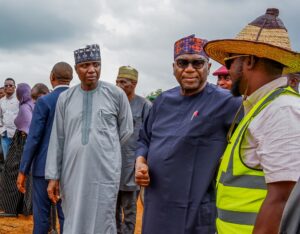
In a decisive effort to enhance agricultural productivity and strengthen food security across Zamfara State, Governor Dauda Lawal has officially initiated the distribution of thousands of bags of fertilizers and other essential farming inputs aimed at supporting local farmers during the dry season.

The launch took place yesterday Thursday at the Fadama III facility of the Ministry of Agriculture in Gusau, which served as a symbolic venue for the Governor’s commitment to empowering local farmers and invigorating the agricultural sector an industry he described as the cornerstone of the state’s economy.

During the event, attendees witnessed the distribution of a comprehensive array of agricultural resources, comprising thousands of bags of fertilizers, herbicides, and insecticides. A statement from the Governor’s spokesperson, Sulaiman Bala Idris, outlined that this initiative is strategically designed to significantly boost crop yields, reduce post-harvest losses, and promote sustainable farming practices, particularly among smallholder farmers who play a critical role in the local economy.

The Comprehensive Support Package and farm inputs made available for distribution include:

-3,920 bags of NPK fertilizer: This balanced formulation is essential for promoting growth, enhancing root development, and improving overall crop yield.

1,956 bags of Urea fertilizer: Known for its high nitrogen content, Urea will be pivotal in optimizing protein synthesis in crops, thereby increasing yields.

3,920 liters of herbicide: These will aid in controlling weeds, allowing crops to access essential nutrients and sunlight without competition.

1,956 liters of insecticide: These are crucial for protecting crops from pest infestations that could threaten harvests.

3,920 sachets of seed-dressing chemicals: These will enhance seed viability and encourage strong plant development from the onset.

In his address to the beneficiaries, Governor Lawal reiterated that this initiative represents a fundamental element of a broader strategy aimed at transforming the state’s agricultural landscape. “Farming is not just a livelihood; it is the backbone of our economy,” he stated with conviction. “We have a responsibility to provide our farmers with the tools and resources they need to flourish.” He emphasized that the distribution of fertilizers and farm inputs is particularly targeted toward enhancing dry-season farming throughout Zamfara State.

A significant aspect of the Governor’s address was the recognition of the NG-CARES (Nigeria COVID-19 Action Recovery and Economic Stimulus) programme, which he identified as a foundational pillar supporting these agricultural initiatives. He highlighted the success of similar input support programs over the years that have benefitted tens of thousands of smallholder farmers by providing them with improved seeds, agrochemicals, and crucial agronomic knowledge.

“Through the NG-CARES programs, we have laid the groundwork for achieving remarkable improvements in the agricultural sector,” Lawal explained. “Combining these inputs with behavioral enablers—such as seed adoption, advisory services, and peer learning—has markedly elevated crop yields, increased farmers’ incomes, and enhanced food security within our communities.”

Acknowledging the various challenges that farmers face in the region, particularly those posed by insecurity, Governor Lawal assured the agricultural community that his administration is committed to a holistic approach to development. “It’s widely recognized that today’s challenges are heavily intertwined with security issues,” he remarked. “While we equip farmers with necessary inputs, we are also focused on fortifying the security infrastructures within our communities to ensure sustainable agricultural practices.”

He called for a collaborative spirit between the government and the citizens, urging farmers to fully exploit the opportunity presented by this initiative while remaining vigilant. “We must unite to secure our surroundings, cultivate our lands, and harvest bountifully to foster a prosperous Zamfara State,” he urged.

The Governor positioned this initiative within the larger framework of national development, expressing optimism that it would deliver the momentum needed for sustainable agricultural growth, not just in Zamfara, but as a replicable model for other regions of Nigeria. He stressed the importance of increasing local food production to diminish Nigeria’s current heavy reliance on food imports.

“We remain dedicated to leveraging these programs to sustainably produce food and mitigate our reliance on imports,” Lawal asserted. “Our administration is committed to collaborating with our development partners and the Federal Government to ensure the effective implementation of these developmental strategies for the comprehensive advancement of our beloved state.”

At the conclusion of the event, beneficiaries expressed their optimism that the timely provision of these essential farm inputs would enable them to maximize their harvests during the dry season, thus generating critical income for their families and contributing significantly to the regional food supply chain.

Continue Reading
Click to comment

Leave a Reply

Your email address will not be published. Required fields are marked *

Agriculture

Agricultural Productivity: Nirsal Plc Empowers Over 2,000 Farmers In 4 States

Published

on

By

August 7, 2024, Owerri – NIRSAL Plc has completed a midyear training programme for lead farmers and extension agents in the Aquaculture and Cassava value chains across locations in Imo, Sokoto, Kwara, and Oyo States. The programme, aimed at boosting farmers’ capacities to access and repay commercial loans, had over 2,000 participants, with state government representatives also in attendance.

As it continues to promote the Agro Geo-Cooperative® approach to primary production, NIRSAL primarily targets lead farmers with the experience and skill to share new knowledge with members of their various cooperatives for its training programmes.

In Imo State, where no less than 500 participants assembled in two locations—one urban and one rural, the focus was on efficient models for fish production. It was the same in Sokoto State, while the Oyo and Kwara outings focused on cassava. 

Mr. Uche Agabige, Imo State House Committee Chairman on Agriculture, lauded NIRSAL for including Imo in this round of the capacity building programme, with the belief that it would complement local efforts aimed at boosting agricultural productivity in the state. 

Head of Value Chain Capacity Development at NIRSAL Plc, Mr. Ibrahim Suleiman, said that the capacity development programme, which is part of the Technical Assistance offered by NIRSAL to agricultural value chain actors under its Technical Assistance pillar, was happening simultaneously in three other states spanning four Geo-political zones.

According to Mr. Suleiman, lead farmers and extension agents in aquaculture and cassava were similarly gathered at two urban and rural locations in Sokoto, Oyo, and Kwara States, and they are expected to cascade the training to an estimated 6,000 farmers across the states.

The NIRSAL teams received warm reception and commendations in locations, including from the Commissioner for Agriculture and Rural Development and the Akinyele Local Government Chairman in Oyo State, and the Special Adviser to the Kwara State Governor on Farmers’ Interventions, among others.

In addition to the formation of functional cooperatives with proper governance structures, the training programme also discussed readiness for possible protocol breaches and early warning systems. Participants who spoke after the lectures said that they were delighted at the new insights they gained, pledging to share same with members of their various cooperatives.

NIRSAL Plc is an initiative of the Central Bank of Nigeria (CBN) established to de-risk agriculture and agribusiness financing in Nigeria, with a view to stimulating the flow of finance and investment into the Agricultural Value Chain from multiple sources. Logic for the Imo training exercise is provided by one of the five pillars of NIRSAL—Technical Assistance, under which value chain fixing initiatives are researched, developed, and promoted.

Continue Reading

Agriculture

Gov Abdulrazaq inspects youth farm, says food security a priority

Published

on

By

  • Govt cultivating over 3,000 hectares for soya bean
  • Govt giving seedlings, fertilisers, other inputs to 10,000 farmers

Food security remains a top priority for the Kwara government as billions of naira are invested in different agricultural initiatives this year, Governor Abdulrahman Abdulrazaq said on Wednesday.

Abdulrazaq spoke at the government-enabled Kwara Youth Farm in Malete, Moro local government, where at least 1,500 hectares of land are being cultivated for soya bean production this farming season, while over 1,500 hectares more are to be farmed in the coming seasons.

The Governor was taken round the huge farm by Arowojobe Tolulope, the project manager, and Ibrahim Tunji Mukaila, the farm manager at the Malete Youth Farm.

“Apart from many other initiatives, this is to deepen our resolve on food security. I am here to see things for myself and to make sure that the right investments are put in place. I am on site to see that our investment programmes (in agric) are being implemented, and to see the challenges we are facing,” he told reporters on the sideline of the visit.

“I’m impressed with what I’ve seen; it’s very good. We need to do more, and we will continue to do more. This will lead us to a bumper harvest at the end of the season and prepare us for the dry season farming, during which we will certainly escalate things.”

The Governor’s tour of the Malete Farm comes as the administration escalates its support for farmers across the state.

The Ministry of Agriculture and Rural Development is currently distributing seedlings, fertilisers, and other farm inputs to at least 10,000 farmers.

Recently, the state executive council approved N2.9bn worth of support for farmers — a few weeks after the Governor on June 26 launched the distribution of the fourth phase of agricultural and infrastructural assets under the Nigeria COVID-19 Action Recovery Stimulus (NG-CARES) programme, targeting over 600,000 beneficiaries across different categories in the 16 local government areas.

Continue Reading

Agriculture

Kwara Govt To Flag-off Distribution of Farm Inputs To Rice, Maize Farmers

Published

on

By

•Agric Ministry Commences Verification of Farmers’ Data

All is set for the official flag-off and distribution of farm inputs to rice and maize farmers across the 16 Local Government Areas of the State.

The State Commissioner for Agriculture and Rural Development, Mrs. Oloruntoyosi Thomas gave this indication during a working visit to some of the farm cluster groups in Edu Local Government Area.

Mrs. Thomas re-emphasized the state government’s determination to consistently work with the real farmers in its efforts to be self-sufficient in food production in order to expand the revenue generation capacity of the State.

The Commissioner, who was in the company of Officers of the Ministry and the Chief Executive Officer (CEO), Harvest Value Chain, Mr. Charles Adetola disclosed further that the team was in the state on a verification mission of the captured farmers for the 2024 wet season farming.

“The present government is intentional about working with real farmers only, we are back again to verify the farmers that have been captured in the list, we have our partner from Harvest Value Chain Limited, they are private sector and are on the field to verify farmers’ details with a view to providing meaningful intervention to our farmers”, She explained.

In his remarks, the CEO, Harvest Value Chain Limited, Mr. Charles Adetola appreciated the state government for the opportunity given to his company, adding that the process would give equal opportunity to the targeted beneficiaries.

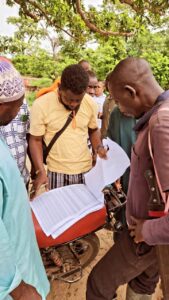
Explaining the process further, Adetola said they started the process by ensuring collection of data base of all farmers which includes, Names, BVN, and Phone Numbers, pointing out that what is being done now is a follow up on the verification process by tagging each farmer to their farm land.

Also speaking on behalf of the farmers in Yelwa village, Tsaragi Ward II, Mrs. Aminat Mahmud expressed appreciation to the state government for the opportunity extended to the real farmers.

Continue Reading

Trending

Mega Awareness 2023