Connect with us

NEWS

2027 General Elections: investigate retired Senior Civil Servants, Public Office Holders – Ndarani
Published

on

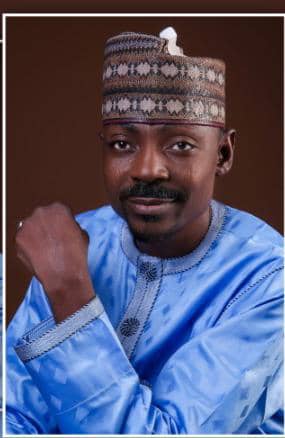
Abuja, Oct.15, 2025 (NAN) A Senior Advocate of Nigeria, Mohamed Ndarani, SAN has called for the investigation of all retired Chief Executive Officers and Directors in MDAs as well as public office holders ahead of the 2027 general elections.

Ndarani who made the call at a news briefing on Wednesday in Abuja said the call was necessary as another set of elections and the accompanying electioneering campaigning are practically around already.

He suggested that retired civil servants should be barred from contesting for any elective positions for at least one year to give the anti-corruption agencies the opportunity to investigate them.

“People with political ambitions are already beginning to throw their hats into the ring all the way from the local government tier to the presidency.

“Among those expected to emerge as political gladiators are retired civil servants, or those who resigned from public service or political appointments.

“A most instructive question here however is, after they leave the service, what happens? Do they routinely get investigated with their post-service assets by the anti-corruption agencies juxtaposed with what they had when they joined public service?

He said it is mandatory for public servants to declare their assets under the Code of Conduct Bureau (CCB) but sadly, this is hardly the case, except there is reason to investigate the individual.

“In the first instance there are laws under the Electoral Act 2022 guiding the financing of election campaigns which has never been followed in Nigeria.

“Section 88(2-7) stipulates the limits allowed for election expenses. Everybody just pays lip service to this veritable check and potential block to the activities of corrupt officials.

“This explains the main reason why many of them while in public service, line their pockets by every possible means, in anticipation of their making a foray into politics.

“It is cause for great concern that we hardly ever hear of politicians being sanctioned for running foul of the provisions of the said section 88(2-7)’’.

He frowned at the reluctance and at times outright refusal by public officials to publicly declare and submit their Asset declaration Forms.

The learned silk argued that non-compliance with the provisions of the CCB is responsible for the high level of corruption in the public service of Nigeria.

“Sadly, our politicians have been known to flout these laws with total impunity. They spend humongous amounts of money and in the process, stand the rest of the electoral laws on their heads.

“The tendency for public servants in Nigeria to plunder the nation’s treasury with shocking impunity during their employment is alarming and this is because they want to contest for political offices after retirement.

“This gets progressively worse as the date of their disengagement approaches, they do this to amass vast amounts of money with which to fund their election campaigns.

“These elections usually see them work their way into lofty political positions that would further enhance their ability to further milk the nation, often with little or no accountability’’.

He said these politicians go into the political office with little or nothing to their names but they come out with huge assets and monstrous amounts of money stashed away.

“When the work their way into office, they plunder the treasury and divert money meant for constituency projects and other development projects into their personal accounts.

“This has to stop if Nigeria must make progress,’’ he advised.

He reiterated that all political office holders should also be investigated, whether they are coming back for second tenure or not to learn the sources of their current assets and incomes.

“This is especially necessary when they are found to have inexplicably amassed unusually huge amounts of funds and assets which could not possibly have accrued from gainful, legitimate endeavours.

“So anyone who retires from public service and almost right away jumps unto into partisan politics, deserves forensic examination.

“Although the Code of Conduct was put in place to checkmate the tendency for public office holders to loot the public treasury while in office, sadly, that doesn’t seem to have been effective enough’’.

He added that all heads of MDAs that are retired, or have been relieved of their jobs should also be investigated whether they are contesting or not.

“Corruption remains one of the greatest obstacles to Nigeria’s development. It calls for stronger accountability measures to ensure that public resources are not wasted or diverted into a few private pockets.

“Nigerians deserve leaders who live modestly; account for every naira spent, and put the nation’s welfare above personal gain’’.

He advised Nigerians to play their part by holding leaders accountable and participating actively in civic life.

“We are now getting ready for the 2027 general elections. Anti-Graft agencies and INEC have enough time to investigate all the above mentioned interest groups, to curb corruption during and after elections.

“I humbly urge President Bola Ahmed Tinubu to apply the provision of section 315 of 1999 of the constitution (as amended) to reflect all my above legal opinion.

“This will save Nigeria from electing bad and corrupt leaders into political offices come 2027.

“I equally advise our president to create an enabling platform that will prevent retired public office holders from being able to use looted funds to contest elections,’’ he concluded.

Continue Reading
Click to comment

Leave a Reply

Your email address will not be published. Required fields are marked *

NEWS

Expert praises Trump’s US Security Strategy for Africa: Surgical strikes with local cooperation

Published

on

By

Executive Producer of the Pan-African podcast Panel 54, Martin Minns, has thrown his weight behind US President Donald Trump’s short-term targeted campaigns and closer cooperation with local authorities in the fight against terrorism.In a statement endorsing the US Security Strategy for Africa, Minns described the approach as a sharp departure from past policies centred on long-term troop deployments and expansive nation-building efforts. He praised the new strategy for rejecting open-ended interventions and governance reconstruction in favour of a more focused counterterrorism model.Minns said the strategy adopts a surgical approach to counterterrorism worldwide, emphasising targeted campaigns with clear timelines and specific objectives. Under this model, US troop deployments will be tied to definite targets aimed at eliminating threats, followed by swift withdrawal.He explained: “In President Trump’s words, the policy marks ‘a return to commonsense and peace through strength’, while rebuilding bilateral counterterrorism relations with African governments.”Citing the strategy’s two clear goals, Minns noted: “One goal is to ensure no jihadist groups can establish bases of operation enabling them to plot and execute attacks against the United States or any US interests globally.” The second goal, he said, is “to protect Christians from attack by jihadist groups.” He added that the strategy also broadens the definition of “terror merchants” to include drug cartels and left-wing “anarchists.”The statement further highlighted that the US has directed its anti-terror operations in Africa primarily through US Africa Command (AFRICOM), based in Stuttgart, Germany. From there, it has supported the African Union forces in Somalia (AUSSOM) in collaboration with military forces from Kenya, Uganda, Ethiopia, and Djibouti through aerial raids backing ground operations against al-Shabaab.US officials have also intensified collaboration with Sahelian countries Burkina Faso, Mali, and Niger, which remain at the epicentre of extremist violence on the continent. Meanwhile, a recent surge of violence involving Russian mercenaries has prompted a renewal of ties with Washington. Warming relations have similarly been noted with Eritrea, given its strategic position in the Horn of Africa.The strategy states: “We will continue to work together with governments threatened by groups like ISIS and al-Qaeda affiliates who threaten us as well, and assist them with actionable intelligence and CT partner-force development until our shared foes no longer pose a serious threat to either them or us.”Outside Africa, the US policy accuses China, Russia, and Iran of sponsoring terrorism by aiding and abetting extremist groups in acquiring arms.In Nigeria, security challenges have escalated sharply. In November 2025, President Bola Tinubu declared a nationwide security emergency following a wave of mass kidnappings that saw hundreds of schoolchildren abducted in a single week. In February this year, he deployed an army battalion to the Kaiama district in Kwara State after suspected jihadist fighters killed 170 people in an attack on Woro village on the border with Niger.On March 17, triple suicide bombers believed to be Boko Haram militants killed 23 people and wounded more than 100 in a busy market in Maiduguri. Boko Haram and its rival, Islamic State West Africa Province (ISWAP), have intensified attacks in northeastern Nigeria. Their insurgency has killed over 40,000 people and displaced around two million.In February, The Economist reported that the United States had dispatched a counterterrorism team to Nigeria. Last week, Nigeria’s National Security Adviser, Mallam Nuhu Ribadu, concluded a three-day working visit to Washington, where he held meetings with senior US officials, including Vice President JD Vance and Secretary of State Marco Rubio.The official communiqué described the meetings as an opportunity to review Nigeria-US relations and strengthen collaboration in counterterrorism, defence, intelligence sharing, regional security, economic resilience, and democratic governance. Ribadu later emphasised the importance of sustained cooperation with the US and international partners to address security threats across West Africa and the Sahel.

Continue Reading

NEWS

Ribadu’s talks with JD Vance, Rubio decisive for Nigeria’s counterterrorism fight – Security Expert

Published

on

By

The visit by Nigeria’s National Security Adviser, Nuhu Ribadu to the United States where he held talks with Vice President JD Vance, and Secretary of State, Marco Rubio, has been described as a positive development for Nigeria’s fight against terrorism. A security analyst and columnist, Jas Keita, in a statement says that the meeting underscores the importance of the Nigerian/U. S security relationship. According to her, the meeting comes at an important time for Nigeria as it seeks to defeat terrorist groups that are seeking to undermine the government, destroying lives and livelihoods across the country. The statement reads in part: “Security cooperation between the United States and Nigeria were central to these discussions. This comes against the backdrop of escalating terrorist activity in Nigeria. Two weeks ago, ISIS militants killed at least 29 people in an attack in Guyaku, a village in Adamawa state, while Boko Haram killed 11 people during a raid on a village in Borno State. This escalation of violence and destruction poses a serious threat to the social and economic stability of Nigeria. Nigeria must do all it can to destroy the ability and operational capacity of groups such as ISIS or Boko Haram to wage war against its people.”Despite widespread commentary, driven often by foreign actors, the United States has remained a steadfast ally to Nigeria in its determination to destroy those groups who seek to destroy Nigeria. While some commentators seek to criticise the government for such visits, it’s clear that ordinary people whose lives and livelihoods are being destroyed by these groups, want to see immediate, urgent and effective action against these groups. Working with the United States to empower Nigerian Security forces is the quickest and most effective way to this result. “Of course, people will remember the 2025 Christmas day strikes where the U.S working with Nigerian security forces undertook a series of attacks against these terrorist groups. But that cooperation continued in the months following the attack. In February, a team of U.S. Special Forces personnel were deployed on the ground. Their mission was to provide direct technical and information support to Nigerian security forces. As well as training support, they have provided invaluable technical and strategic insight developed over decades of providing similar support across the globe.”This type of support cannot be underestimated. To see a contrast, one simply needs to look at events in Mali and the failure of Russia’s assistance to the government there. Empowering our security forces, ensuring they have the skills and insights is a critical element to ensuring we defeat terrorist groups.”One of the strands of commentary after the Christmas day strikes was if we even needed American support. Put simply, yes, we are facing a substantial threat from these terrorist groups. They are well armed, well organised and well financed. They are committed to destroying the legitimately elected government and imposing their own vision on our country. They have shown time and time again they have no interest in the welfare of our people, rather they will kill anyone who disagrees with them or simply is in the wrong place at the wrong time.”Nigeria is facing an existential threat from these terrorist groups. They do not care about our way of life or the welfare of our people. Nigeria cannot become prosperous unless it rids itself of these terrorist organisations. The ongoing security crisis creates an environment of instability and fear that means our people cannot expect to thrive. Nigeria has a prosperous economic future ahead and can create a brighter future for all its people, but this cannot happen without a stable and secure foundation. Defeating these groups not only protects the lives of our families but allows Nigeria to build a brighter economic future for all. “That is why these talks in Washington are so vital. Our country has a strong and committed ally in the United States. Despite what other foreign actors say, they have shown time and time again their willingness to expend resources to support our fight against terrorism.  Strengthening and deepening this relationship must be a key strategic priority for our government and we must ensure it endures. Doing so, will ensure our own people have the skills, insights and resources to defeat these groups. Doing so, will provide the stability that will underpin our future economic and social growth.”

Continue Reading

NEWS

Security expert hails US partnership to prevent terror bases in Africa using actionable intelligence

Published

on

By

The US 2026 Counterterrorism Strategy has been commended for its focus on disrupting terrorist networks across Africa, especially in the Sahel. In a paper tilted: The US 2026 Counterterrorism Strategy and Its Implications for Nigeria and the Sahel, a security expert, Lieutenant Colonel Freddie Grounds (Retired), said the move represents a significant development in American security policy, reflecting both lessons learned from past interventions and the current and rapidly shifting geography of global extremist threats.  He said rather than relying on previously favoured large-scale deployments, the revised U.S. strategy emphasises partnerships, intelligence-driven operations, and capacity-building.  He stated: “Africa, particularly Nigeria and the Sahel, has emerged as a central focus, given the persistence of violent extremist organisations such as Boko Haram, Islamic State West Africa Province (ISWAP), and al-Qaeda affiliates that exploit fragile governance and porous borders across the region.”He said the US, in demonstrating its commitment to Africa, deployed in early 2026 some 200 U.S. military personnel to Nigeria to carry out intelligence sharing, training and advisory capacity building operations, under Nigerian command authority.  He added: “In early May Nigeria’s National Security Adviser (NSA), Mallam Nuhu Ribadu, undertook a three-day working visit to the United States.  During the visit the NSA held a series of high-level engagements with senior officials of the U.S. government, further reinforcing the partnership between the two nations.  Meanwhile the three-weeks long ‘Exercise African Lion 2026’, an annual US led multinational military exercise in Africa, involving over 5,600 troops from more than 40 nations, including African partners, NATO allies, and US forces, focusing on multi-domain operations across North and West Africa, has recently concluded.”According to the expert, at the heart of the new US Counterterrorism Strategy is a deeper commitment to intelligence sharing and partner-force development. Hear him: “The US Government seeks to provide actionable intelligence to African governments, enabling them to disrupt extremist networks before they can establish operational bases in their countries.  This approach reflects a recognition that local African ownership and sustainability are critical to long-term success.  The US also pledges to protect vulnerable communities, including Christians and other groups frequently targeted by extremist violence, emphasising the critical but often overlooked human rights element of counterterrorism.”He said Nigeria occupies a pivotal role in this new strategy. “As a frontline state in the Lake Chad Basin, Nigeria faces persistent threats from Boko Haram and ISWAP, whose operations extend into Niger, Chad, and Cameroon. The US has deepened cooperation with Nigeria since 2025 as illustrated by recent high-level meetings between Nigerian officials and American leadership.  This partnership has already produced measurable results, including US airstrikes against ISWAP in late December 2025 which was assessed to have killed between 150-200 militants and destroyed several Islamic State-linked camps in Sokoto State, and was acknowledged as the first American combat action inside Nigeria. Beyond military collaboration, Nigeria has adopted a whole-of-government approach, combining kinetic operations with community engagement, deradicalisation programs, and economic initiatives aimed at addressing the root causes of extremism.”Grounds said the Counterterrorism Strategy also links Nigeria’s efforts to the broader Sahel, where continued regional instability in Mali, Burkina Faso, and Niger has created fertile ground for extremist expansion.  He commended the Nigeria-US Joint Working Group, a bilateral security and governance framework established in late 2025, which seeks to coordinate intelligence, border security, and counterterrorism aid across the region, recognizing that insurgencies in the Sahel and Lake Chad Basin are interconnected and that such extremist groups exploit weak governance, corruption, and marginalized communities, blurring the lines between terrorism and organized crime. He said this overlap with transnational crime, including arms trafficking and smuggling, complicates security responses and requires a regional approach.The paper reads: “The outcomes of the Africa Forward Summit 2026, which concluded in Kenya this week, provide an important complement to the new Counterterrorism Strategy.  African leaders from across the continent pledged to intensify efforts against terrorism, cybercrime, arms trafficking, and organized crime, precisely the same threats which are identified in the US Strategy.  The Summit’s emphasis on sustainable financing for AU peace operations and stronger UN-AU cooperation under Resolution 2719 aligns well with Washington’s push for burden-sharing and regional ownership. Calls for UN Security Council reform highlight Africa’s determination to shape global governance structures, ensuring that the continent’s counterterrorism strategies are not imposed by external actors but co-designed and implemented in partnership with African states.”Equally significant are African-led regional mechanisms such as the Nouakchott Process, launched in 2013, which has created a framework for intelligence-sharing and joint operations among Sahelian states, helping to counter cross-border extremist movements.”Similarly, the Accra Initiative in West Africa which has strengthened cooperation among coastal states like Ghana, Côte d’Ivoire, and Benin to prevent the spillover of Sahelian insurgencies.  These initiatives clearly demonstrate Africa’s capacity to build its own security architecture, complementing US efforts and reinforcing the Africa Forward Summit’s call for African-led solutions.”Despite these advances, challenges remain. Analysts warn of sovereignty concerns, cautioning that Nigeria must balance cooperation with the US against risks of subordinating its strategic autonomy to US calculations.  While American support strengthens Nigeria’s capacity, it also raises questions about dependency and the long-term sustainability of external assistance.  Moreover, governance deficits across the Sahel undermine counterterrorism efforts and without reforms that enhance legitimacy, accountability, and resilience, military gains risk being temporary.”In summary, the US 2026 Counterterrorism Strategy represents a pragmatic, recalibrated approach to global security, recognising that instability in Nigeria and the Sahel carries consequences that extend far beyond the region, from refugee flows to the spread of extremist ideology. Emphasising intelligence, partnership-driven security, and local capacity-building, the strategy positions Nigeria as a frontline state central to stabilising West Africa, while acknowledging that the interconnected nature of Sahelian instability demands regional solutions. Its effectiveness will depend not only on military cooperation but also on governance reforms, sustainable financing, and the ability of local governments to deliver tangible improvements in security and development goals reinforced by the Africa Forward Summit outcomes and embedded within African-led frameworks such as the Nouakchott Process and Accra Initiative, which lend the strategy both depth and legitimacy.”

Continue Reading

Trending

Mega Awareness 2023