Cover
Rebuilding the Nigerian Dream: How NOA is Forging a New Social Contract
By Victor Benjamin, West/South South Director of YP4T
For years, a pervasive sense of disillusionment has shadowed the vibrant spirit of Nigeria. Eroding trust in governance, fueled by misinformation and a disconnect between policy and public understanding, has cast a long shadow over national progress. However, a significant shift is underway, spearheaded by the National Orientation Agency (NOA). Under the astute leadership of Mallam Lanre Issa-Onilu, NOA is actively working to mend these fractures, acting as a crucial bridge between government aspirations and the people’s commitment. This vital mission aligns seamlessly with President Bola Tinubu’s administration, which profoundly recognizes that the success of any government policy ultimately hinges on the psychological and emotional investment of its citizens.The Tinubu government isn’t merely observing NOA’s efforts; it’s actively championing them. The administration understands that Nigeria’s journey towards prosperity isn’t solely about economic reforms or administrative directives. It’s fundamentally about fostering a collective embrace of national values and civic duties by every Nigerian. This holistic approach forms the bedrock of a renewed national consciousness, aiming to ignite a sense of ownership and shared responsibility for the country’s destiny.A cornerstone of this ambitious agenda is the forthcoming National Values Charter, an initiative poised to redefine the relationship between the government and its citizens. Expected to be formally unveiled by President Bola Tinubu himself, this Charter is designed as a foundational social contract. It will meticulously articulate the responsibilities of both the government and its citizens in the arduous yet rewarding task of nation-building.The Charter will enshrine the “Nigerian Promise”—the government’s unwavering commitment to core principles such as equality, democracy, entrepreneurship, peace, inclusivity, freedom, and meritocracy. This promise outlines the vision for a just and equitable society where opportunities abound for all. Complementing this, the Charter will also introduce a comprehensive “Citizen’s Code.” This code will serve as a clarion call to all Nigerians, urging them to embrace fundamental virtues like discipline, duty of care, tolerance, ethical leadership, accountability, environmental awareness, and resilience. By clearly defining both rights and responsibilities, this comprehensive approach aims to cultivate a deeper sense of belonging and dignity among Nigerians, fostering a citizenry that is not only aware of its entitlements but also deeply committed to its obligations.In direct support of President Tinubu’s audacious economic reforms and the overarching “Renewed Hope Agenda,” NOA has rolled out several impactful initiatives, designed to demystify complex policies and showcase tangible progress.One such crucial initiative is The Explainer. Launched in early 2024, this weekly policy-focused publication serves as an invaluable tool for simplifying complex economic shifts. It breaks down intricate topics such as the fuel subsidy removal and exchange rate unification, translating economic jargon into accessible language. The Explainer illuminates how these market-driven reforms are strategically designed to stimulate national productivity, unlock doors for private investment, and enhance Nigeria’s global competitiveness. It clarifies the potential long-term benefits for ordinary Nigerians, including job creation, increased investor confidence, and improved public services. Crucially, the publication also proactively addresses public concerns and immediate challenges, countering the pervasive tide of misinformation and building a much-needed bridge of understanding between the government and its citizens.Beyond explanation, NOA is diligently working to showcase tangible progress and flip the narrative of cynicism that often plagues public discourse. The agency actively promotes positive stories of ordinary Nigerians who are directly benefiting from recent reforms. This includes heartwarming examples such as students accessing loans from the Nigeria Education Loan Fund, a critical initiative that restores hope and dignity to countless families striving for educational advancement. It also highlights vehicle owners successfully transitioning to Compressed Natural Gas (CNG) as a more affordable and sustainable energy source, and small business owners securing vital loans from the Bank of Industry to fuel their entrepreneurial dreams. NOA emphasizes consistent and transparent communication to counter negativity, demonstrating that “Hope Renewed” is not merely a slogan but is backed by concrete results, including vital improved infrastructure and a commitment to transparent governance through the discontinuation of opaque oil subsidy regimes.NOA’s efforts extend far beyond direct policy explanations. The agency employs a wide and innovative array of channels to instill a profound sense of ownership and responsibility within the Nigerian populace.In the digital realm, NOA leverages cutting-edge tools to enhance citizen engagement. The Mobiliser app, for instance, incorporates a vital “Say Something” feature that enables anonymous crime reporting, empowering citizens to contribute to public safety without fear. Furthermore, CLHEEAN, an innovative AI platform, provides real-time, accurate information on critical national issues, notably in local languages, making vital data accessible to a broader audience. CLHEEAN also facilitates anonymous reporting of criminal activities, reinforcing the commitment to a safer society. An interactive, AI-powered website with intelligent chat assistants and an AI engine dubbed “The Curator” further engages citizens, addressing their policy questions and providing access to national data, fostering an informed and participatory citizenry.Complementing its digital outreach, NOA conducts extensive on-the-ground sensitisation campaigns nationwide. Dedicated NOA teams traverse the country, engaging communities on diverse issues ranging from human rights and tax reform to crucial security awareness and flood prevention. These campaigns utilize dynamic approaches such as roadshows, community forums, and interactive school sessions, ensuring that essential messages resonate and reach every segment of society, from bustling urban centers to remote rural communities.Strategic partnerships form another critical pillar of NOA’s multi-faceted approach. The agency actively collaborates with the education sector to embed citizenship studies directly into the school curriculum, aiming to instill national values and civic pride in children from a tender age. This foundational approach seeks to mold future generations into responsible and patriotic citizens. NOA also partners with the Voice of Nigeria (VON) to combat the proliferation of misinformation and promote authentic Nigerian narratives, safeguarding the integrity of public discourse. Furthermore, a crucial partnership with the Economic and Financial Crimes Commission (EFCC) facilitates nationwide campaigns against cybercrime, promoting financial literacy and ethical entrepreneurship, particularly among vulnerable youth who are often susceptible to such illicit activities.Through these comprehensive and multi-faceted approaches, the National Orientation Agency is not just informing Nigerians; it is striving to ensure they are emotionally and intellectually invested in the country’s growth. By fostering a culture of excellence, patriotism, and civic responsibility, NOA is fundamentally transforming how the government communicates with its people. Its ultimate aspiration is to build a just, united, and value-driven Nigeria—a nation built on shared purpose, collective agreement, and a renewed sense of hope.
Cover
Building Systems that outlive Founders – Bidemi Oke
There is a quiet misconception in many growing companies that vision alone is enough to sustain momentum. Founders are often the engine because they are decisive, driven and deeply involved. But what happens when the engine steps back?That question is where real companies are separated from fragile ones. Building something that outlives a founder is not about removing their influence; rather, it is about translating that influence into systems, repeatable, observable and transferable structures that do not rely on constant presence. Without this, growth becomes personality-dependent, and scale becomes inconsistent.At the early stage, founder-led execution works. Decisions are faster, direction is clearer, and there is less friction. But as the company grows, that same model becomes a bottleneck. Every approval, every escalation, every strategic shift begins to orbit one person. The business does not slow down because of external pressure; it slows down because its internal architecture cannot carry its own weight.Usually, “system” is often misunderstood. It is not just about tools, dashboards or policies. It is about designing how decisions are made, how information flows and how accountability is structured. It is about making sure that the logic behind actions is visible, not assumed.For example, a strong system answers questions before they become problems. What triggers a decision? Who owns it? What data informs it? What happens if it goes wrong?When these are unclear, teams default to escalation. When they are clear, teams operate with autonomy.This is where many founders hesitate. System-building feels like losing control. In reality, it is the only way to extend control without being physically present. It shifts leadership from being reactive to being embedded.One of the most overlooked aspects of building enduring systems is Documentation.Now, not as a formality but as a strategic asset. Decisions that are not documented become opinions. Processes that are not documented become inconsistent.Over time, this creates invisible friction. Teams solve the same problems repeatedly but differently each time.Documentation, when done well, becomes institutional memory. It ensures that the company remembers even when individuals move on.Another critical layer is Feedback Loops. Systems should not be static; they must evolve with the business. This requires structured ways to capture what is working, what is failing and what needs refinement. Without feedback loops, systems become outdated. With them, systems become adaptive.There is also a cultural dimension to it. Systems do not operate in isolation; people execute them. If the culture rewards speed over clarity, systems will be bypassed. If the culture values accountability, systems will be strengthened. The goal is alignment where systems reinforce behaviour and behaviour reinforces systems.In fast-moving industries, this becomes even more important, take fintech, for instance. The pace of regulatory change, market volatility and user expectations demands consistency under pressure.Companies that rely solely on founder instinct struggle to keep up, while those that invest in structured decision-making, risk management frameworks, and operational clarity are better positioned to adapt.This is something we are increasingly seeing in companies like FlashChange, where the focus is not just on growth, but on building operational resilience. The emphasis is shifting from “who is making the decision” to “how decisions are made.” That shift, while subtle, is very powerful. It creates a foundation that can support scale without losing direction.Ultimately, building systems that outlive founders is about redefining leadership. It is not measured by how many decisions a founder makes, but by how many decisions the organisation can make without them.The strongest companies are not those where the founder is always present. They are the ones where the founder’s thinking is quietly embedded, shaping actions, guiding priorities and influencing outcomes, even in their absence. That is how legacies are built.Not through constant control, but through systems that carry intent forward.About the AuthorBidemi Oke is the Chief Executive Officer of FlashChange, a fintech platform focused on secure digital asset exchange. He is an entrepreneur and vibrant leader, recognised for driving innovation and redefining access in the financial technology industry.
Cover
PFL AFRICA TO BRING THE LARGEST MMA EVENT TO WEST AFRICA WITH HISTORIC NIGERIA DEBUT IN LAGOS ON JUNE 13
Nigeria’s Wasi Adeshina to Headline Historic Nigeria Event against Ignacio Campos
Patrick Ocheme Faces Octave Ayinda in Lightweight First Round Co-Main Event
The Professional Fighters League today announced the first pair of bouts as PFL Africa heads to Nigeria for the first time at the Eko Convention Center in Lagos on Saturday, June 13, 2026. The event will mark the largest MMA event in West African history, featuring the opening round of the PFL Africa bantamweight and lightweight tournaments, alongside showcase bouts highlighting top regional talent.
Headlining the event will be a featherweight Showcase Bout featuring Nigeria’s Wasi “The Nigerian Jaguar” Adeshina (10-3), who will compete in front of a home crowd in the main event against Spanish star Ignacio “Nacho” Campos (7-2). Adeshina enters as one of the notable local athletes on the card and will look to deliver a strong performance as PFL Africa lands in Nigeria for the first time. Campos, on the other hand, is coming off a big win over Mathys Duragrin at PFL Madrid last month.
The co-main event will feature a lightweight first round tournament bout between Nigeria’s Patrick “Star Boi” Ocheme (8-1) and Cameroon’s Octave “The Bantu Warrior” Ayinda (7-1). Ocheme will look to capitalize on the home advantage as he begins his tournament campaign, while Ayinda enters as a challenger aiming to secure a statement victory in the opening round.
“Making our West African debut in Lagos is a major milestone for PFL Africa, and one we’re incredibly excited about,” said Elias Schulze, General Manager of PFL Africa. “Nigeria brings incredible passion, culture, and talent, and Lagos is the perfect stage for this moment. The energy from the fans, the depth of local talent, and the opportunity to showcase it all on a global platform make this event truly special. We’re bringing elite competition to one of the most vibrant cities in the world, and highlighting the pride, colour, and intensity that define African MMA.”
Additional bouts for the PFL Africa: Nigeria – First Round card will be announced in the coming weeks.
PFL Africa: Nigeria – First Round card:
SuperSport (Africa – English) | Canal+ (Africa – French)
Saturday, June 13
Featherweight Showcase Main Event: Wasi Adeshina (10-3) vs. Ignacio Campos (7-2)
Lightweight Tournament First Round: Patrick Ocheme (7-1) vs. Octave Ayinda (8-1)
ABOUT PROFESSIONAL FIGHTERS LEAGUE
The Professional Fighters League (PFL) is a global mixed martial arts organization and one of the world’s leading combat sports properties. PFL produces live, premium MMA events broadcast and streamed to fans in more than 170 countries through an extensive network of international media partners. The organisation features a roster of professional fighters representing the highest levels of international mixed martial arts competition.
Headquartered in the United States, PFL holds events across North America, Europe, the Middle East, and Africa, with continued global expansion underway. PFL is backed by leading institutional investors and professional sports team owners, reflecting the accelerating growth of MMA as a mainstream global sport.
For more information, visit PFLmma.com and follow PFL at Facebook.com/PFLmma and @PFLMMA on X, Instagram, and TikTok.
Cover
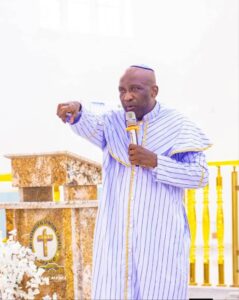
Primate Ayodele’s Prophecies On Elections In Benin Republic, Djibouti Fulfilled
Nigerian prophet, Primate Elijah Ayodele, who is the leader of INRI Evangelical Spiritual Church, has definitely grown his influence beyond the shores of his country; his prophetic influence has traveled round the whole of the African continent.
As he is known in Nigeria as a man of God who says a thing and it definitely comes to pass, so he is known in other countries as that foreign voice that reveals things to come; that lonely voice that prophesies a thing and it surely comes to pass.
His prophecies on the presidential elections in the Benin Republic and Djibouti have further proven that Primate Ayodele is a true man of God who doesn’t base his prophecies on hearsay or already established information but through the word of God.
For several years, Primate Ayodele has been talking about the presidential election in the Benin Republic, stating repeatedly that the opposition will be handicapped by the president in the country and that the president’s candidate would eventually emerge as the next leader of the country.
In one of his most recent prophecies about the election, Primate Ayodele made it known that the next president of the country would be the finance minister who was endorsed by the incumbent president to succeed him.
These were his words:
“The next president of Benin Republic is the present minister of finance.”
In fulfilment of the prophecy, Benin’s Minister of Finance Romuald Wadagni has secured a landslide victory in the country’s presidential election with more than 94 percent of the votes, according to provisional results.
Sacca Lafia, head of the country’s independent electoral commission, announced on national television late on Monday night that the result was based on more than 90 per cent of votes counted, highlighting Wadagni’s unassailable lead.
This isn’t the first time Primate Ayodele’s prophecy has had a great impact in Benin Republic. Months earlier, he had foretold an attempted coup against the president of the country, and this came to pass exactly as he had mentioned.
In the same vein, Primate Ayodele had said the president of Djibouti would be elected for a sixth term in the country.
“There is going to be an election in Djibouti, the incumbent president will win again”
In fulfilment of his prophecy, Djibouti’s President Ismail Omar Guelleh has won an election with 97.8% of the vote, keeping him at the helm of the strategically-placed Horn of Africa nation for a sixth term, preliminary official results show.
The 78-year-old’s sole challenger, Mohamed Farah Samatar got 2.19% of the vote, in a poll boycotted by most of the opposition.
In power for 27 years, Guelleh had promised to step down, but ran for re-election after the constitution was amended in November to remove the upper age limit of 75 for presidential candidates.
-
NEWS1 day agoGovernor Dauda Lawal Receives Nigerian Air Force Delegation in Gusau to Strengthen Security, Combat Terrorism
-
Brand2 days agoInterswitchSPAK National Science Competition: A Life-Changing Opportunity for Nigerian Students
-
Banking and Finance2 days agoFidelity Bank Extends “Give Her Power” Initiative to Ogun State, Empowers 100 Women with Vocational Tools
-
Brand1 day agoOne Universe Launches to Redefine How People Find and Pay for Trusted Services
-
Cover10 hours agoBuilding Systems that outlive Founders – Bidemi Oke
-
NEWS10 hours agoAfrica Caught Off-guard as Idris Elba Stuns with FIFA World Cup Message
-
Brand9 hours agoFidelity Bank Advocates for Inmates’ welfare with donation to Enugu Custodial Centre