
NEWS
NNPCL/Dangote: Fresh dispute emerges over supply volume


By Udeme Akpan, Energy Editor, Obas Esiedesa and Ediri EjohLAGOS — More controversy has emerged in the execution of a sale-purchase deal on premium motor spirit, otherwise known as petrol, between the Nigerian National Petroleum Company Limited, NNPCL, and Dangote Refinery.
Findings by Vanguard yesterday indicated that while the NNPCL believes Dangote cannot supply an adequate quantity of the product, Dangote told Vanguard it had already delivered 111 million litres of the product within three days (last Sunday to yesterday), adding that loading was still ongoing steadily.NNPCL last weekend said Dangote could only deliver 16.8 million litres out of the 25 million litres it initially agreed with NNPC.
A source at the NNPCL also told Vanguard, yesterday that the refinery is struggling to deliver the 16.8 million litres it promised.But with the latest delivery figure it disclosed, Dangote must have significantly surpassed its promised delivery as well as the national demand put at over 40 million litres per day.This also means that Dangote can make further petrol importation unnecessary.But against the backdrop of this latest development, Vanguard learned that importation by NNPCL may have intensified with several consignments, totalling over 135 million litres, within three weeks from September 27, 2024, with the latest import arriving Friday.
This also implies a sudden excess supply of petrol barely a few days after the country was suffocated by acute shortage of the product, resulting in a sharp rise in the price.Speaking to Vanguard on the development, the Group Chief Branding and Communications Officer of Dangote Refinery, Anthony Chiejina, stated: “We have already loaded 111 million litres of petrol and the exercise is ongoing.“We are refining and have no reason not to load. So, loading is ongoing and we would continue to provide the product to the market.”
However, Motor Tanker Vessels Report, sighted by Vanguard, yesterday, indicated as of September 13, 2024, vessels such as Mia Grace, Valle Azzurra, Hafina Lioness and Clean Justice brought in 37,000 metric tonnes, 37,234 metric tonnes, 24,352 metric tonnes and 36, 934 metric tonnes of imported petrol into Nigeria for the government.
Also, another vessel, known as Savanna, brought in 20,000 metric tonnes of import petrol through Mainland for distribution in Calabar while Mycroft brought in another 20,000 metric tonnes of diesel for Total Oil for distribution in Port Harcourt, Rivers State.
NNPCL urges fair reportage amid supply issues, refinery delaysTwo vessels – Ostria and Moriarity – brought in 15,000 metric tonnes each through Taurus and Awariste for distribution in the Warri, while Bedford brought in 12,000 metric tonnes of diesel.Also Zonda and Capt. Gregory brought in 15,000 metric tonnes of petrol and diesel for Nepal and Awariste respectively, while Matrix Pride and Stellar also brought in 15,000 metric tonnes of petrol.NNPCL did not respondEfforts to get NNPCL to officially comment on the latest delivery figures from Dangote failed as the Chief Corporate Communications Officer of NNPCL, Mr. Olufemi Soneye, did not respond to questions from our reporter.But in its earlier statement, the company had stated that 16.8million were available for loading from the refinery to its filling stations.
Why marketers can’t import petrol, lift from Dangote — NNPCLMeanwhile, the Executive Vice-President, Downstream at NNPC, Adedapo Segun, said oil marketers have not been able to import petrol, despite the import permits granted them.
He said: “When the marketers go to NNPC to get the permit or licence to get the import, typically they will say they want to import amount of automotive gas oil (AGO), aviation turbine kerosene (ATK), and some of them actually include petroleum motor spirit (PMS).“They then go to market, check the market indices and say to themselves: PMS is still being sold below cost; if I bring it in, I’ll make a loss.“Now they have approval to bring in ATK, AGO, and PMS, but they end up bringing only AGO and ATK.“They do not bring in that PMS because the market is still not right for them. So, it is not because NNPC wants to be the sole importer or provider of PMS, it is because the other marketers won’t do it if it’s not profitable.”
Segun, who said marketers could also not purchase petrol directly from Dangote refinery, stated: “That is the same thing happening with Dangote. I said earlier that Dangote is a company and it is going to sell at market price.“Basically, the situation has not changed there. So, NNPC off-taking is only because the others would not buy at the price Dangote will be willing to sell, which is reasonable. As soon as the price allows for it, you will see the marketers go to Dangote and buy.“So, instead of saying NNPC is the only off-taker, let’s put it this way: NNPC is the only entity that is willing to off-take because NNPC has a role under law to be the energy provider of resort.”
FG should provide welfare packages — CPPEReacting to the development yesterday, the Chief Executive Officer, Centre for the Promotion of Private Enterprise, CPPE, Dr Muda Yusuf, said the recent upward review of petrol price has worsened the plights of most Nigerians and, of course, businesses.“I think we need to go back to the drawing board, the social safety net in Nigeria is exclusively very weak, the people are suffering seriously and there is a limit to what they can absorb in terms of the pains of all these policies
“The government should wade into this and see how they can restore normalcy as the citizens should not be exposed to commercial pricing of petroleum products.“The citizens are not finding it easy at all. Most recent increases have even further fuelled inflation as many citizens are trekking to places where they would have taken buses and so on. So, we are praying for an urgent intervention from the presidency on this matter.”
Vanguard
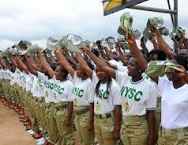
The Federal Executive Council has approved a comprehensive overhaul of the National Youth Service Corps, marking the first major restructuring of the scheme since it was established 53 years ago.The reforms, approved at the FEC meeting in Abuja on Monday, are aimed at repositioning the NYSC into a skills-focused, productivity-driven institution aligned with the Federal Government’s economic agenda.A key aspect of the reform is a change in the leadership structure of the scheme, with the NYSC set to be headed by a civilian, while the military will continue to provide security for corps members nationwide.The council also directed the Attorney-General of the Federation and the Federal Ministry of Youth Development to amend the NYSC Act and relevant regulations to provide legal backing for the approved changes and enable their implementation.
Announcing the approval on X, the Minister of Youth Development, Ayodele Olawande, described the reforms as the first holistic review of the scheme in its 53-year history.He said, “We are transforming the Scheme into a platform that not only unites Nigeria but also equips our young people with the skills, experience and opportunities they need to thrive in a fast-changing world.”
Olawande said the approved reforms would reposition the scheme as “a skills-driven, productivity-focused and youth-empowering institution that aligns with President Bola Tinubu’s vision of building a $1 trillion economy.”
According to him, the reforms include “a technology-driven call-up process, risk-sensitive deployment to better protect corps members, a redesigned six-week orientation programme with stronger focus on leadership, entrepreneurship, digital skills and specialised career streams, skills-based primary assignments aligned with academic background and career pathways, modern governance with civilian operational leadership while the military continues to provide security support, improved camp standards through a national grading and certification system, and a new graduation ceremony to replace the Passing Out Parade, alongside a redesigned NYSC uniform that reflects professionalism and national pride.”Olawande said the reform process began in 2025 through a broad-based review involving the Federal Ministry of Youth Development, the Federal Ministry of Education and the Office of the Special Adviser to the President on Policy and Coordination before receiving FEC approval.He added, “This is more than a reform of an institution. It is an investment in Nigeria’s greatest asset, our young people. The future of the NYSC begins now, and it is brighter, more relevant and more impactful than ever.”Established in 1973 following the Nigerian Civil War, the NYSC was created to promote national unity by deploying graduates to states outside their regions of origin for one year of compulsory national service.The latest reforms represent the first comprehensive review of the scheme since its creation, with the Federal Government saying the changes are designed to make the institution more relevant to Nigeria’s contemporary economic and youth development needs.
Punch
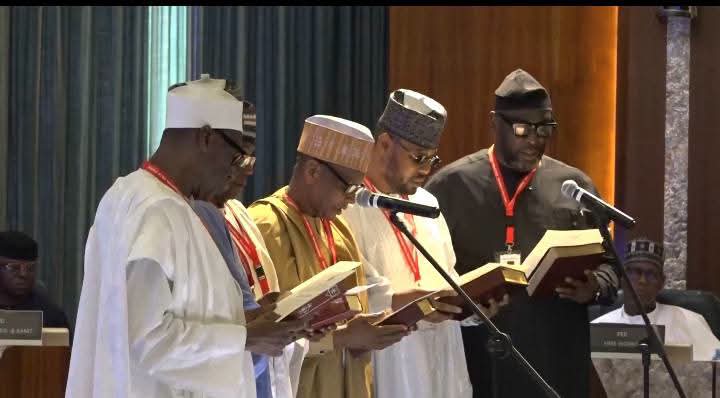
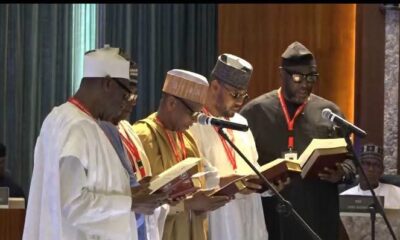
President Bola Tinubu has sworn in new Commissioners for the National Population Commission (NPC) and the Revenue Mobilization Allocation and Fiscal Commission (RMAFC).The ceremony took place before the commencement of the Federal Executive Council meeting, this Monday. Former chairman, National Hajj Commission, Abdullahi Mukhtar Mohammed from Kaduna state and Amina Gamawa representing Bauchi took oath of office as federal commissioners for the revenue commission. Six new Commissioners were inaugurated for the population commissioner. They are Kolawole Oladipupo Alabi – Ekiti State, Nasiru Mu’azu – Zamfara State, Isaka Alada Yahaya – Kwara State, Prof. Sadiq Isah Radda – Katsina State, Suleiman Umar – Jigawa State and Chiso Abdullahi Dattijo from Sokoto State.
NEWS
Governor Dauda Lawal Chairs Security Council Meeting, Vows Unprecedented Support for Frontline Troops
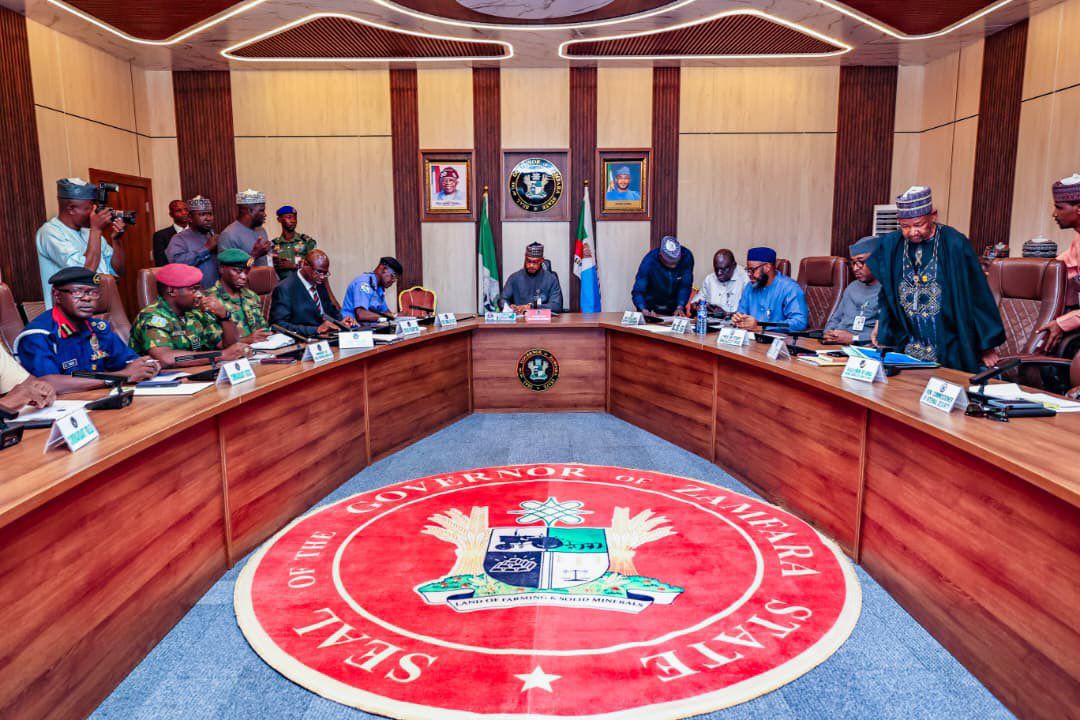
Governor Dauda Lawal of Zamfara State has reaffirmed his administration’s unwavering resolve to back security forces in the ongoing campaign against insurgency, banditry and other violent crimes plaguing the state.Presiding over the weekly State Security Council meeting on Thursday, June 25, at the Government House in Gusau, the governor convened the state’s top security brass for a high-level strategic session aimed at recalibrating the state’s counter-insurgency approach.In a terse but firm statement, Governor Lawal disclosed that deliberations centered on reinforcing troop deployments in high-risk zones, fast-tracking intelligence-sharing mechanisms and overhauling rapid-response protocols to better safeguard civilian populations.”I want to make it clear to every service commander in this room; the welfare and operational readiness of our troops remain non-negotiable. My administration stands ready to authorize every required resource logistical, material and otherwise to ensure they operate at full capacity,” Lawal declared.The governor underscored that his foremost priority remains the restoration of lasting peace across Zamfara and he assured security chiefs of his open-door policy, urging them to channel operational needs directly to his office without bureaucratic bottlenecks.With the meeting concluding, sources indicate that concrete action plans are being finalized to boost joint task force patrols and community intelligence networks, signaling a renewed offensive push in the coming weeks.


FG reforms NYSC, replaces military leadership, redesigns uniform

26th MILO School Basketball Championship Brings Nigeria’s Best Young Talent to the National Finals

PRESIDENT SWEARS IN NEW COMMISSIONERS FOR RMAFC, NPC
Regberegbe 1986, 87 and 88 Appoints Deputy Speaker As Adviser Okunrin

9mobile, Kantar Discuss Building Impactful Brands for the Future
dLocal Enables Payments from Verve Cards and Tokens for Global Merchants
-
 Cover2 days ago
Primate Ayodele to Launch 32nd Edition of Prophecy Book ‘Warnings to the Nations’ in Jul
-
NEWS9 hours ago
FG reforms NYSC, replaces military leadership, redesigns uniform
-

 Cover15 hours ago
Primate Ayodele Gives Out Fully Furnished House, Seven Vehicles to Church Members
-
 Uncategorized15 hours ago
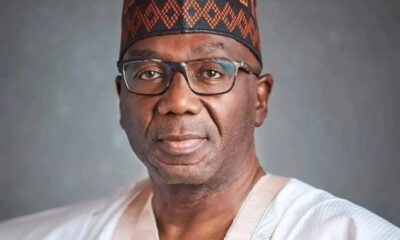
Kwara effects minor cabinet reshuffle as Gov Abdulrazaq thanks affected appointees for selfless service
-

 Banking and Finance15 hours ago
Union Bank Calls for Collaborative Advocacy at NCF World Environment Day Symposium
-
 Sports12 hours ago
26th MILO School Basketball Championship Brings Nigeria’s Best Young Talent to the National Finals
-
 NEWS12 hours ago
PRESIDENT SWEARS IN NEW COMMISSIONERS FOR RMAFC, NPC