
NEWS
Content Piracy is a Real Threat to Africa’s Creative Economy


The adverse effect of intellectual property theft was on the front burner at the 2024 edition of MIP Africa, held recently in Cape Town, South Africa. The annual trade show and conference, which focuses on the television and media market in Africa, featured an extensive discussion session dedicated to the spiral effects of piracy on African creatives.
The session, moderated by MultiChoice Group Channel Director: Premium Channels Waldimar Pelser, also offered insights from Chola Makgamathe, Chairperson of the Copyright Coalition of South Africa, Thandi Ramathesele, MD at Izwi Multimedia, and Tobias Maja, Senior Anti-Piracy Manager at Irdeto.
Speaking at the session, Ramathesele noted that “Piracy affects the entire film & television production chain, from executive producers to directors, writers, cast and crew – the perception that it’s okay to pirate content because big broadcasters have plenty of money is a complete misnomer.” According to her, stealing content affects our culture, our society and mutes our voices. “It’s not about taking money from big broadcasters – it takes food out of the mouths of our creatives – how many of our artists die without a cent to their name?,” Ramathesele added.
Makgamathe pointed out that piracy has a wide-ranging effect on entire creative industries because there’s still a perception that ‘being creative’ isn’t a ‘serious job’ like law or medicine. “The most recent figures I can access show that the cultural creative industries across various sectors in South Africa contribute at least 3% of South Africa’s Gross Domestic Product (GDP) – R161 billion, which is equivalent to what the agriculture industry contributes,” she explained.
On his part, Maja said that content piracy across our continent is rife, largely because of outdated laws that aren’t fit to protect content in the digital age. “Outdated law makes it hard to prosecute people for piracy – and if they are prosecuted, the fine amounts to a slap on the wrist,” he says. “In many jurisdictions, law enforcement and even the judiciary don’t fully grasp that piracy is a criminal industry both making huge profits for itself and destroying the industries which help creatives pay the bills”.
He also disclosed that Irdeto had taken down 40 000 streaming links in 2024, adding that “We need everyone on board – including Internet Service Providers (ISPs) to help us take down sites. We can only tackle this if we work in a multi-layered, interdisciplinary way – together”.
The experts also stressed the need for a massive education drive and collaboration between the production industry, broadcasters, the legal fraternity, businesses, advertisers, and marketing entities. They submitted that partnerships are critical in helping raise awareness about piracy while urging the audience to pay for content to encourage creativity.
“On one hand, it’s heartwarming to know that your content is being appreciated by viewers on the other side of the world, if there’s no benefit to the people who created it, there’s no industry – and no more content to come. We love that viewers love our content and that’s why we make it – but having content stolen from us creates unemployment, impacts youth development and destroys the value chain. People will start to notice that the content they consume to relax or be entertained, isn’t there anymore – and it’ll be too late,” said Ramathesele.
The Africa-wide multi-stakeholder initiative, Partners Against Piracy (PAP), of which MultiChoice is a partner across our continent, is working alongside local governments and prosecutors to actively address the issue of copyright infringement. The initiative aims to strengthen government agencies through collaboration to facilitate information sharing, enforce IP laws more strongly and combat privacy.
MultiChoice South Africa signed a Memorandum of Understanding (MoU) with the Department of Justice and Correctional Services on 7 March 2024 that reflects the South African Government’s commitment to fight broadcast and content piracy, which continues to drain the fiscus of billions of Rands, annually. This agreement was the first of its kind on the African continent and marks a line in the sand between those who pirate content and those who create and disseminate it.
Content piracy involves the unauthorised acquisition, use, sharing or selling of copyrighted content. Put simply, piracy is stealing. If you are aware of any individuals or organisations involved in piracy, you can report them anonymously at +27 11 289 2684 or piracy@multichoice.co.za.
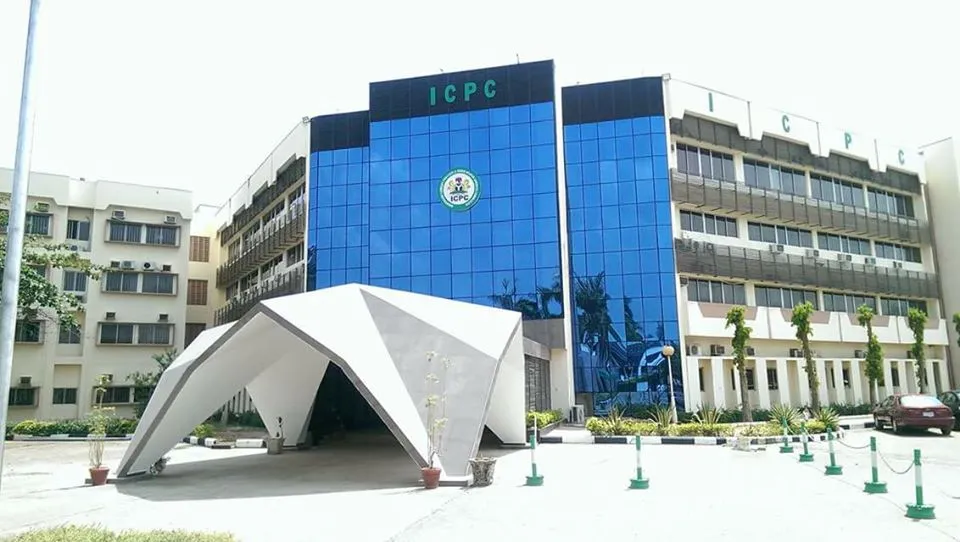
The Independent Corrupt Practices and Other Related Offences Commission and the National Pension Commission have recovered over N3bn in unremitted pension contributions from defaulting employers as both agencies intensified efforts to enforce compliance with the Pension Reform Act 2014.The recovery was disclosed in a statement issued by the National Pension Commission on Wednesday, which said the funds had been fully remitted into the Retirement Savings Accounts of affected employees.According to the commission, the recovery was achieved through a joint ICPC-PenCom enforcement initiative designed to address pension contribution defaults and protect workers’ retirement savings.It stated, “The Independent Corrupt Practices and Other Related Offences Commission and the National Pension Commission have recovered over N3bn in unremitted pension contributions from employers.”
PenCom explained that the recovered funds were obtained from defaulting employers in the electricity sector and credited to the respective Retirement Savings Accounts of affected workers in line with the Pension Reform Act 2014.“The recovered funds, obtained from defaulting employers in the electricity sector, have been fully remitted into the respective Retirement Savings Accounts of affected employees in accordance with the provisions of the Pension Reform Act 2014,” the statement read.The commission said the development demonstrated the effectiveness of its partnership with the ICPC in ensuring compliance with pension laws and compelling employers to fulfil their statutory obligations.
It said, “The recovery demonstrates the effectiveness of the partnership between PenCom and ICPC in enforcing compliance with the PRA 2014 and ensuring that employers fulfil their statutory pension obligations.”PenCom recalled that it signed a Memorandum of Understanding with the ICPC in October 2025 to strengthen collaboration in the recovery of unremitted pension contributions, the investigation of pension-related infractions, and the enforcement of compliance with the Pension Reform Act 2014.
The commission added that the ICPC was currently investigating several private-sector employers referred by PenCom for alleged non-compliance with the Act, expressing optimism that further recoveries would be made as the investigations progressed.“The ICPC is currently investigating several private-sector employers referred by PenCom for non-compliance with the PRA 2014. With the ongoing collaboration, additional recoveries would be achieved as the investigations progress,” it stated.PenCom reiterated that the Pension Reform Act requires employers to deduct and remit pension contributions into employees’ Retirement Savings Accounts within seven working days after salaries are paid.It warned that employers who fail to comply risk sanctions.“Failure to comply with this requirement constitutes a violation of the law and attracts sanctions, including the recovery of outstanding contributions, penalties and, where necessary, prosecution,” the statement said.
The commission urged employers, particularly those in the private sector, to regularise outstanding pension remittances and comply fully with the provisions of the Act to avoid regulatory and enforcement action.It reaffirmed its commitment to protecting workers’ retirement savings, promoting compliance with the Contributory Pension Scheme, and ensuring that pension contributions deducted from employees are promptly remitted into their Retirement Savings Accounts.The PUNCH recently reported that the National Pension Commission intensified its enforcement drive to ensure nationwide compliance with the Contributory Pension Scheme by launching a specialised, high-level monitoring platform targeting non-compliant subnational governments.The initiative is part of an ongoing strategy to deepen pension reform at the subnational level and secure a sustainable retirement future for public servants across the states of the federation.
PUNCH

Operatives of the Department of State Services (DSS), on Wednesday morning, arrested former Minister of Science and Technology, Uche Nnaji, at the Akanu Ibiam International Airport, Enugu.Security sources said Nnaji, who resigned last October under controversial circumstances, was arrested by DSS officers on request by the Independent Corrupt Practices and Other Related Offences Commission (ICPC) and handed him to the Anti-Graft Agency.The sources further notes that the ICPC had extended several invitations to the former minister following petitions on how he managed his Ministry, and therefore contacted the DSS to assist in arresting him.

FMDQ Group PLC (“FMDQ Group” or the “Group”), Africa’s first vertically integrated financial market infrastructure (“FMI”) group, has announced the appointment of Mr. Zeal Akaraiwe as its Group Managing Director/Chief Executive Officer subject to the approval of the Securities and Exchange Commission. The Group has also strengthened its Board with the appointment of Mr. Funso Sobande as the Chairman of the Board, alongside four (4) additional Directors, marking an important milestone in the Group’s leadership transition and strategic evolution. Mr. Akaraiwe succeeds Mr. Bola Onadele. Koko, Pioneer Group Managing Director/Chief Executive Officer of FMDQ Group, who retired from the Group in July 2025 after twelve (12) years of distinguished service and transformational leadership. With more than twenty-five (25) years of experience across financial markets, treasury, derivatives, structured finance, risk management, and regulatory advisory, Mr. Akaraiwe brings a wealth of experience gained across Nigeria, Zambia, and the United Kingdom. Prior to his appointment, Mr. Akaraiwe was the Founder and CEO of Graeme Blaque Advisory, a specialist financial markets consultancy providing advisory services in derivatives, risk management, and regulatory matters to corporates, financial institutions, and other market participants. Throughout his career, including his time at Standard Chartered Bank, Mr. Akaraiwe has contributed to the development and execution of financial markets solutions across multiple African markets and has worked extensively with regulators, financial institutions, corporates, and market participants to strengthen market structures, enhance risk management practices, and support the development of financial markets products and infrastructure. FMDQ Group has also strengthened its governance framework through the appointment of five (5) accomplished professionals to its Board. In addition to Mr. Funso Sobande’s appointment as Group Chairman, Mr. Joseph Olaoye Jaiyeola and Mrs. Miriam Olusanya have joined the Board as Non-Executive Directors, while Mrs. Kemi Adewole, HCIB, FCIoD, QRD and Mr. Innocent Isichei have been appointed as Independent Non-Executive Directors. Collectively, the new Board members bring extensive experience spanning banking, financial markets, treasury, corporate governance, public policy, risk management, and strategic advisory. Their appointments further enhance the Board’s capacity to provide robust oversight, sound governance, and strategic direction as the Group continues to advance its long-term vision. Commenting on the appointments, the Chairman of the Board, Mr. Sobande, said: “This is an exciting new chapter for FMDQ Group. These appointments mark an important milestone in the continued evolution of the Group. The appointment of Mr. Akaraiwe as Group Managing Director/Chief Executive Officer, together with the strengthening of our Board, reflects our commitment to ensuring that the Group continues to be led by individuals with the vision, expertise and integrity required to drive sustainable growth and innovation. The new Board brings a wealth of complementary experience and perspectives that will further strengthen the Group’s governance and strategic oversight. Together with our talented management team, I am confident that we are well positioned to execute our strategic priorities, create long-term value for our stakeholders and continue advancing the development of efficient, innovative, and globally competitive financial markets.”


ICPC, PenCom recover N3bn unremitted pension deductions from defaulting firms

Interswitch Calls for Greater Investment in Energy Infrastructure to Accelerate Financial Inclusion Across Africa

Wema Bank Announces the 7th Edition of Hackaholics
Regberegbe 1986, 87 and 88 Appoints Deputy Speaker As Adviser Okunrin

9mobile, Kantar Discuss Building Impactful Brands for the Future
dLocal Enables Payments from Verve Cards and Tokens for Global Merchants
-
 Banking and Finance15 hours ago
Wema Bank Announces the 7th Edition of Hackaholics
-
 Business15 hours ago
Interswitch Calls for Greater Investment in Energy Infrastructure to Accelerate Financial Inclusion Across Africa
-
 NEWS15 hours ago
ICPC, PenCom recover N3bn unremitted pension deductions from defaulting firms
-

 NEWS23 hours ago
FMDQ Group PLC Appoints Chief Executive Officer and Welcomes New Board Leadership
-
 NEWS1 day ago
Zamfara Governor, Dauda Lawal Shakes Up Cabinet, Moves Budget Commissioner to Education
-
 Cover20 hours ago
Church Leader Who Ushers: Low-Key Lifestyle of A Loud Prophet, Elijah Ayodele
-
 Business and Brand2 days ago
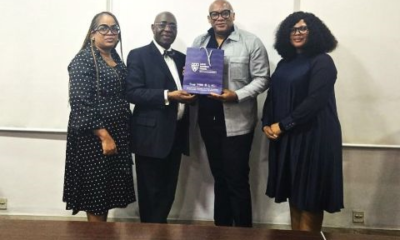
Interswitch Strengthens Investment in Africa’s Future as Founding Corporate Supporter of Lagos Business School’s First Endowed Chair
-
 Banking and Finance23 hours ago
Access Bank UK Polo Day Drives Global Support for Education of Vulnerable Children