Business
True Blue Development Seeks International Arbitration against Caribbean Nation of Grenada
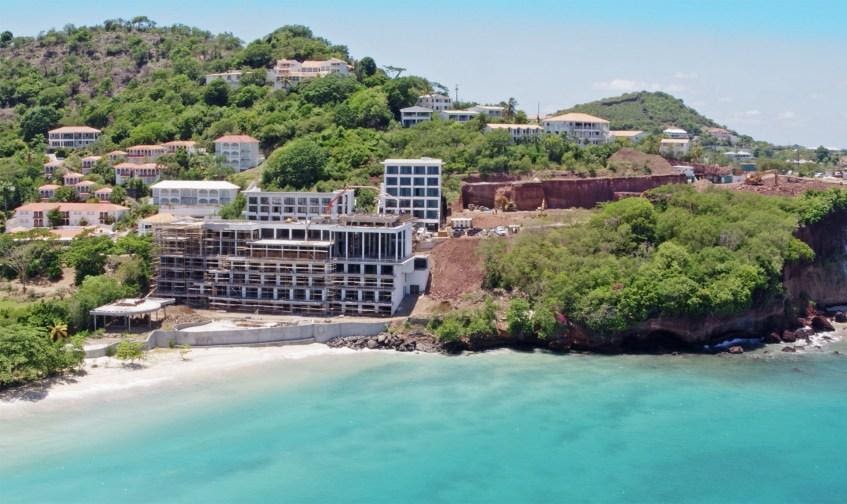
Hospitality Firm True Blue Development Seeks International Arbitration against Caribbean Nation of Grenada, Claiming Government Broke Investor Agreement to Complete 5-Star Kimpton Kawana Bay Resort on Island
True Blue claims nearly-finished luxury condo resort has been targeted by government to “squeeze the project into failure;” True Blue principal Warren Newfield resigned as Grenada’s ambassador-at-large and consul general in May, declaring country’s leadership had turned into an “anti-business regime;” claims to be heard by World Bank arm for investor-state disputes ICSID; True Blue and investors represented by law firm BakerHostetler
——————————————————————————————————————————–
WASHINGTON, DC (June 17, 2021) – Hospitality developer True Blue Development Limited has filed claims against the Government of Grenada at the International Centre for Settlement of Investment Disputes asserting that the Government has blocked True Blue’s efforts to complete the five-star luxury Kimpton Kawana Bay resort on the island. Washington-based ICSID is an arm of the World Bank devoted to resolving international investment disputes against sovereign states.
Here is link to notice of arbitration: www.kawanabay.com.
True Blue submits that the urgency of the ICSID filing reflects the essential need to protect investors in Kawana Bay from what claimants say is an obvious scheme by the Government of Grenada to thwart the successful completion of this world-class resort.
Three of the buildings at Kimpton Kawana Bay are largely finished, and some 92% of condos have been spoken for, either through outright purchase or by confirmed reservation. However, last December, the Government of Grenada started “a surreptitious, multi-front effort to squeeze the project into failure,” according to the ICSID notice for arbitration filed by True Blue and its investors.
Funding for the project primarily comes from private investors participating in Grenada’s Citizenship by Investment program (known as “CBI”), through which investors purchasing condos at Kawana Bay are able to gain citizenship. Grenadian citizenship affords visa-free travel to more than 140 nations worldwide. Owing to Grenada’s unique E2-Visa treaty with the United States, citizens are also eligible to invest in U.S. businesses and live there with their families.
Although funding did not come from government sources, True Blue alleges that the Government’s financial squeeze included revoking a 2017 approved project budget of US$99 million, imposing administrative rules that limit how the developer could use of investors’ money for the project, and ultimately halting approval of CBI applications that provide the principal source of capital.
The ICSID filing asserts that through its arbitrary and unlawful conduct, the Government of Grenada destroyed a successful project and inflicted damages on claimants, the CBI investors, and the economy of Grenada.
The arbitration request is made under the 1986 Treaty Between the United States and Grenada Concerning Reciprocal Encouragement and Protection of Investment. Claimants seek damages for their significant loss of investment principal and lost profits.
The investor group is represented by law firm BakerHostetler, led by head of its International Arbitration and Litigation team, Mark Cymrot, who has brought numerous investor-state disputes before ICSID.
“The issues raised by the CBI committee and Government are flimsy and easily disproven, in some instances by the Government’s own records,” Mr. Cymrot said. “We are deeply concerned that this slipshod attack against a reputable developer is politically motivated or has some other improper purpose. Unfortunately, the ultimate losers here are the Grenadian people who will now lose jobs and vital tourism revenue as travel and hospitality return to the Caribbean.”
The Luxury Resort
Kimpton Kawana Bay, ideally positioned on the island’s famed Grand Anse Beach, was set to become the newest five-star resort in Grenada and a jewel of the Caribbean. The project was initially approved by the Government of Grenada in 2016, and construction began in 2017 with a revised government-approved budget of US$99 million. The project, which is at an advanced stage of construction, employed local labor and drew on goods and services produced in Grenada. The impressive project has already won several awards for design and architecture.
Kimpton Hotels & Restaurants Group LLC, which has a successful track record operating boutique hotels internationally, signed on in 2017 to manage and brand the property after its completion.
Government’s Prior Support
In formally launching the project in early 2017, Grenada Prime Minister Keith Mitchell lauded the public-private collaboration underpinning the Kawana Bay development. “I believe that this country is on a path of serious growth and development,” he said at the ribbon-cutting ceremony, referencing the CBI Program. Grenadian media heralded the project as “a major addition to the tourism industry,” as well as a coup for the island’s economy.
As recently as October 2020, Grenada’s Prime Minister again visited the site and praised True Blue for the impressive progress of work, while stating that his administration looked forward to its official opening sometime in 2022.
As one media outlet reported, “Dr. Mitchell said: ‘I must commend the project developers and investors for creating this idea and executing it. We welcome the modifications made along the way to make this an even bigger project than was initially envisioned and we look forward to the end product – the completion of construction and the formal opening in 2022. We expect Grenada’s tourism product to be revived in the not-too-distant future and developments like these help to expand and improve our offering.”
The Squeeze
According to the ICSID notice, the government’s clandestine scheme appears to have begun in July 2020, with the Grenada CBI Committee informing True Blue that certain documents were missing from its files. True Blue resubmitted the previously approved application and the Grenada Cabinet reaffirmed the 2017 approved budget of US$99 million.
Shortly thereafter, the Committee arbitrarily withdrew reaffirmation of the 2017 budget and suggested in letters to the developer that the budget would need to be adjusted downward. Such a reversal of policy posed an existential threat to the project. Multiple letters to the Foreign Minister and Minister of Finance by True Blue principal Warren Newfield seeking clarification about the proposed withdrawal went unanswered.
Tellingly, these abrupt governmental decisions did not appear to apply to other CBI-funded projects in Grenada.
In December 2020 the CBI Committee’s chief executive Percival Clouden informed Mr. Newfield that the Committee’s August confirmation of the 2017 budget was “withdrawn,” due to “discrepancies.” An explanation of the “discrepancies” was promised but not given for five months. Subsequently, the Committee raised an issue around construction being done by a sister company of True Blue. This arrangement was well known to the government from the outset of the project. Thus, according to the ICSID filing, this so-called explanation was nothing but a poor excuse to cover the government’s clandestine motives.
Mr. Clouden advised True Blue that the government would hire an engineer to review and report on a requested budget expansions for the Kawana Bay project. However, the CBI Unit never provided a report to the developer. Shortly thereafter, Mr. Clouden resigned as head of the CBI Committee. In early 2021 the committee sought to impose unexplained changes to the escrow account True Blue maintains for CBI funds invested in the project. These changes would further restrict the use of the funds permitting them to be used only for construction.
The project is not funded by the government but by CBI investors who contract with True Blue for real estate interests in condominiums. Thus, the CBI Committee was prohibiting True Blue from properly using investor funds to complete the project. “In other words,” states the ICSID filing, “the CBI Committee was effectively further reducing funding to Kimpton Kawana Bay.”
In May, the CBI Committee Chair informed Mr. Newfield that it had halted all processing of CBI applications for Kimpton Kawana Bay, thus turning off funding for the project completely. Soon after, Mr. Newfield announced his resignation from two official diplomatic posts as Grenada’s ambassador-at-large and consul general in Miami. In tendering his resignation, he cited the government’s transformation into “an anti-business regime.”
“I am proud of the spirit with which we began our mission and of the progress we made in getting world-class investors and brands to see the best in Grenada,” Mr. Newfield said in a letter to the Grenadian Minister of Foreign Affairs, adding, “I can no longer serve in good conscience as Grenada’s business and diplomatic representative abroad.” Here is a link to his resignation letter.
Subsequently, the Permanent Secretary in the Ministry of Finance, now interim CBI Committee Chairman, along with the Attorney General, confirmed that CBI applications were being “processed.” However, more than 50 Kawana Bay CBI applications are currently on hold, half of which have been pending for over four months, despite CBI rules providing for decisions within 60 days. As a result of the government’s inaction, worsened by the Prime Minister’s public false allegations against the project and its principal, some investors have begun withdrawing their applications or signalling their intention to do so.
“The Project cannot move forward without the funding promised through the CBI Programme,” the ICSID filing states, “so the Grenadian Government’s actions are thwarting the Project after nearly five years and as it approaches completion.”
Request for International Arbitration
BakerHostetler’s Mr. Cymrot wrote in the demand for arbitration: “The Government of Grenada has not been candid about its motive for the senseless destruction of the five-star resort project that has been bringing substantial benefits to the Grenada economy. The Grenada Government has much it cannot explain.”
Mr. Newfield, an internationally prominent investor whose official roles for Grenada prior to his resignation included engaging with potential investors into the country’s economy, said, “As heartbreaking and perplexing as I find the government’s turnabout on Kimpton Kawana Bay, we have worked diligently to understand and resolve its sudden hostility. I underscore that our development group has diligently met all our obligations, while the government of Grenada has been deceitful. It is a disheartening end to what should be a jewel of a project for all of Grenada and the Caribbean.”
Business
African Marketplace 2026 Returns To Dubai In October
African Marketplace (AMP) is set to return for its highly anticipated second edition from October 10–12, 2026, at the prestigious Conrad Hotel Dubai, following the success of its landmark 2025 debut. The three-day event will once again convene some of the finest products, services, creatives, and innovators from Africa and the Caribbean, connecting them with global buyers, investors, policymakers, distributors, and cultural enthusiasts in one of the world’s most strategically connected trade capitals.African Marketplace is a pan-continental trade and cultural platform designed to spotlight Africa’s and the Caribbean’s finest export-ready brands, SMEs, and innovators, empowering them to scale internationally, unlock investment opportunities, and achieve global relevance. African Marketplace 2026 will showcase the richness of African and Caribbean heritage alongside contemporary innovation across fashion, furniture, art, cuisine, music, technology, wellness, and intellectual capital.Speaking on the announcement, Ibukun Awosika, Founder of African Marketplace and the Ibukun Awosika Leadership Academy (IALA), said: “African Marketplace 2025 was proof of concept. What the world witnessed in Dubai was not potential, it was excellence in full expression.” “For 2026, we are going even further. We are building on that foundation with greater scale, sharper commercial focus, and an even stronger declaration that Africa and the Caribbean are not waiting to be discovered. We are here. We are globally ready. And we are building our own tables. Dubai is where we invite the world to experience who we truly are.” She added.Through curated exhibitions, business networking, investment conversations, cultural showcases, and strategic partnerships, African Marketplace continues to position itself as a leading platform connecting Afro-Caribbean excellence to global opportunity. More than an exhibition, AMP serves as both a commercial gateway and cultural platform; creating meaningful opportunities for trade, investment, collaboration, and cross-cultural exchange on a global scale.As the platform grows year after year, AMP remains committed to building a lasting ecosystem where commerce, culture, innovation, and identity converge.EXHIBITOR REGISTRATION IS NOW OPENBusinesses, investors, partners, and attendees interested in participating in African Marketplace Dubai 2026 can learn more at:www.theafricanmarketplace.orgFor media inquiries, sponsorship opportunities, or partnership proposals, please contact:info@theafricanmarketplace.orgAbout African MarketplaceAfrican Marketplace (AMP) is a pan-African trade and culture platform connecting Africa and the Caribbean to global markets through commerce, creativity, innovation, and strategic partnerships. Hosted annually in Dubai, AMP provides export-ready businesses and entrepreneurs with access to international visibility, investment opportunities, and global networks.
Business
UAE’s Exit from OPEC: Eroding Pricing Power, Saudi Arabia’s Response, and the Implications for Nigeria
By Uwadiae Osadiaye, Head of Alternative Investments, FirstCap Limited
In a move that has sent ripples through global energy markets, the United Arab Emirates (UAE) announced on April 28, 2026, that it will formally withdraw from the Organization of the Petroleum Exporting Countries (OPEC) and the broader OPEC+ alliance effective May 1. The UAE, one of OPEC’s largest and most capable producers with output around 3.2–3.6 million barrels per day (bpd) and significant spare capacity, cited national interests and the need for production flexibility amid the ongoing energy crisis linked to Iran-related disruptions.This departure marks a historic fracture in the nearly 60-year-old cartel and follows precedents like Angola’s 2024 exit over quota disputes. For Nigeria, Africa’s largest oil producer and a longtime OPEC member, the implications centre on weakened cartel cohesion, diminished pricing power, and direct pressure on revenues.Impact on Oil Prices and OPEC Pricing PowerFree from quotas, the UAE is expected to ramp up production toward 5 million bpd. While current supply disruptions may limit the immediate effect, the added volume will exert downward pressure on prices and increase volatility in the medium to long term. Analysts point to potential declines of $5–7 per barrel once markets normalize.More critically, the exit undermines OPEC’s core pricing power. The UAE brought meaningful spare capacity; its departure leaves Saudi Arabia carrying a heavier burden for any future production cuts needed to stabilize prices. This makes defending price levels more costly and less effective for the Kingdom.Saudi Arabia’s Response: A Strategic Setback and Managed RiftSaudi Arabia, OPEC’s de facto leader, regards the UAE exit as a significant blow to its influence. Riyadh has kept public reactions measured, emphasising the resilience of deep trade, investment, and logistical ties between the two economies. Analysts note that a full economic rupture would harm both sides and is unlikely amid shared regional threats. Behind the scenes, however, the move exposes and widens longstanding rifts over oil quotas, Yemen, Sudan, and regional influence. It forces Saudi Arabia to shoulder more of the stabilisation burden alone, weakening its ability to enforce discipline across the group. The exit is seen as the UAE asserting autonomy and rejecting Saudi-led oil governance. A recent Gulf summit was described positively by UAE officials, indicating efforts to contain fallout.This response highlights Saudi Arabia’s recalibration: maintaining core OPEC leadership while adapting to a less reliable alliance structure. It may push Riyadh toward more unilateral production decisions or tighter coordination with remaining compliant members.Domino Risks and Further Erosion of InfluenceVenezuela, with vast reserves and recovering output, emerges as a potential next candidate for greater independence or even exit, alongside other quota-frustrated producers. A cascade of departures could render OPEC largely symbolic, leaving global oil prices driven primarily by market forces rather than coordinated cuts. This would likely result in a structurally lower price floor and higher volatility.Direct Effects on NigeriaNigeria remains heavily dependent on oil for export earnings and government revenue. With production often falling short of its ~1.5 million bpd OPEC quota (recent figures around 1.38 million bpd amid theft, vandalism, and infrastructure issues), the country has limited ability to offset price weakness through higher volumes.Softer prices or sustained volatility would widen fiscal deficits, pressure the naira, and complicate budgets benchmarked around $65–70 per barrel. Angola’s experience showed that quota freedom alone does not guarantee production gains when structural problems persist- Nigeria risks similar constraints. A weaker OPEC, with reduced Saudi leverage to enforce discipline, further diminishes the “price floor” protection African producers have relied upon.In this environment, Nigeria’s longstanding challenges – upstream security, investment attraction, and economic diversification – become even more urgent. While the country has reaffirmed commitment to OPEC, the cartel’s diminishing pricing power (exacerbated by the Saudi-UAE rift) means future revenue stability cannot be taken for granted.Outlook: Navigating a More Fragmented Oil Order The UAE’s exit, Saudi Arabia’s measured but strained response, and the resulting erosion of OPEC cohesion signal a structural decline in the cartel’s pricing influence and a more market- driven oil era. For Nigeria, this heightens fiscal and currency risks tied to its oil dependence while underscoring the limits of relying on collective producer power.In the short term, elevated prices from geopolitical disruptions may provide a temporary buffer. Over the medium to long term, however, increased supply from the UAE (and potentially others) combined with weaker coordination could sustain volatility and a softer price environment. Saudi Arabia’s heavier stabilisation role may lead to more pragmatic quota adjustments or unilateral actions, but it also risks exposing fractures that smaller members like Nigeria cannot easily exploit.ConclusionNigeria’s path forward requires decisive action. Upstream priorities should include intensified security operations against oil theft, accelerated infrastructure upgrades, and targeted incentives to attract investment – addressing the chronic underproduction that has left the country unable to capitalise on quota flexibility. Downstream and diversification efforts remain critical: expanding refining capacity, developing gas resources, and growing non-oil sectors (agriculture, manufacturing, and services) will reduce vulnerability to crude price swings.Diplomatically, Nigeria must engage actively within a diminished OPEC, potentially advocating for more flexible arrangements that reflect African producers’ realities. Broader economic reforms—fiscal discipline, improved revenue management, and naira stability measures—will determine whether external shocks translate into crises or catalysts for resilience.Ultimately, the Gulf realignment and OPEC’s evolution present Nigeria with both risks and opportunities. In a world where oil market power is fragmenting, proactive domestic transformation offers the most reliable route to energy security and sustainable growth. The coming months will test whether Nigerian policymakers seize this moment or allow it to deepen existing vulnerabilities.FirstCap Limited is a dynamic investment banking and capital markets advisory firm, and a subsidiary of First HoldCo Plc, one of Africa’s most resilient and trusted financial institutions. With over two decades of experience delivering tailored financial solutions that drive growth, transformation, and long-term value. Our core expertise spans mergers and acquisitions, capital raising, and strategic financial advisory. Backed by a proven record of landmark transactions across multiple sectors, We are a trusted partner of choice for corporations, institutions, and entrepreneurs navigating complex financial landscapes.https://firstcapltd.com/
Business
FIRSTCAP CLOSES N4.46BN LAPO MFB SPV PLC SERIES 1 BOND, DEEPENS ACCESS TO LONG TERM CAPITAL
IMG_5294 L-R: Chief Finance Officer, LAPO Microfinance Bank, Emmanuel Igiehon; Managing Director, LAPO Microfinance Bank, Cynthia Ikponmwosa; Managing Director, FirstCap Limited, Ukandu E. Ukandu, and Head of Capital Markets, FirstCap Limited, Oluseun Olatidoye, at the LAPO MFB SPV Plc Series 1 Bond Issuance Signing Ceremony recently held in Lagos.
Lagos, Nigeria – April 2026 — FirstCap Limited, a leading investment banking firm and subsidiary of FirstHoldCo Plc., has successfully closed the ₦4.46 billion Series 1 Bond Issuance by LAPO MFB SPV Plc, reinforcing its strong leadership in Nigeria’s debt capital markets and deepening access to long term funding for high impact sectors.Acting as Lead Issuing House, FirstCap structured the fund raising on behalf of LAPO MFB SPV Plc (a company sponsored by LAPO Microfinance Bank Limited to mobilise institutional capital targeted at SME financing, renewable energy expansion, and digital financial services, three critical drivers of inclusive and sustainable economic growth in Nigeria.The transaction is underpinned by a compelling impact thesis, with proceeds strategically deployed to support small businesses and clean energy initiatives. The microfinance sector continues to demonstrate resilience and strong fundamentals positioning the issuance at the intersection of growth, sustainability, and financial inclusion.Commenting on the transaction, Ukandu E. Ukandu, Managing Director, FirstCap Limited, said:

L- R: Company Secretary, LAPO Microfinance Bank, Peggy Idehoy; Managing Director, LAPO Microfinance Bank, Cynthia Ikponmwosa; Managing Director, FirstCap Limited, Ukandu E. Ukandu; Chief Finance Officer, LAPO Microfinance Bank, Emmanuel Igiehon, at the LAPO MFB SPV Plc Series 1 Bond Issuance Signing Ceremony recently held in Lagos.
“This successful issuance underscores our strategic commitment to directing capital where it delivers measurable economic impact. At FirstCap, we partner with institutions that have the scale, discipline, and vision to transform markets, and LAPO exemplifies these qualities.The ₦4.46 billion bond is positioned to be a catalyst for SME growth, expanded energy access, and broader financial inclusion. We remain committed to structuring transactions that are not only bankable, but impactful and aligned with Nigeria’s long term economic trajectory.”FirstCap Limited remains committed to leading from the forefront of Nigeria’s capital markets, structuring transactions that are bankable, impactful, and investable, while supporting the future trajectory of Nigeria’s economic development.”
-
Entertainment10 hours agoDrama, Tears, and Showdowns: BBNaija Reunion Starts on a Heated Note
-
Opinion1 day agoCan Nigeria Become Africa’s Crypto Hub? Bidemi Oke
-
Cover11 hours agoPrimate Ayodele Fires Back at Liberia’s President Boakai Over Complaint Letter to FG, Predicts Second-Term Defeat
-
Banking and Finance2 days agoUnion Bank Backs Nigerian Teachers as Maltina Teacher of the Year Competition Marks 12th Edition
-
Sports12 hours agoGSS Gboko, Father O’Connell Win 26th MILO Central Conference Titles