Health
COVID-19: School Closures Still ‘Last Resort’ Despite Variants – WHO
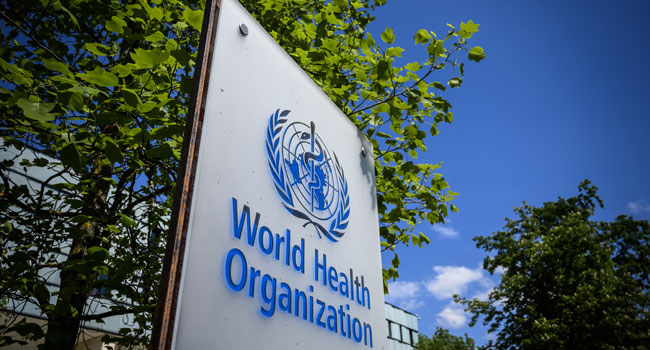
Schools should only close as a last resort while research is under way into whether the new coronavirus variants affect children differently, the World Health Organization said Wednesday.
The debate on shutting schools during the Covid-19 pandemic has been revived by the emergence of more contagious virus mutations.
The WHO said research had begun looking at the factors that may put children at risk, the long-term health effects on those infected, and the impact of new variants of SARS-CoV-2, the virus that causes Covid-19 disease.
“The arrival in late 2020 of new more transmissible variants of SARS-CoV-2 requires additional analysis by sex and age to measure how and if the new variants impact children differently,” it said.
“If it is found that children are more affected, public health social measures may need to be adapted.”
Here is a summary of the WHO’s special focus on Covid-19’s impact on children and schools, issued Wednesday:
– WHO’s conclusions –
– “School closure should be implemented as a last resort, be temporary and only at a local level in areas with intense transmission.”
– Authorities should check for new guidance, “particularly with respect to the appearance of new and possibly more transmissible variants”.
– In low-transmission areas, schools are unlikely to drive infection; in areas with widespread transmission, protective measures in schools are essential.
– Schools need outbreak prevention and management plans, including on ventilation, hand and surface cleaning, communication with parents, mask use and physical distancing.
– Children aged 12 and older “should wear a mask under the same conditions as adults”. Physical distancing can be achieved by limiting class sizes, alternating shifts and limiting mixing of classes.
– Stronger prevention measures might be necessary in secondary schools, and adolescents should limit their exposure risk outside school.
– Teachers “are more likely to be infected” outside schools than inside.
– During school closures, remote learning should be set up, regular schools services such as meals and immunisation should be maintained, while mental health support should be enhanced.
– Data and 2020 findings –
– Under-18s represent 29 percent of the global population but only eight percent of reported cases last year.
– They are more likely to have mild or asymptomatic infection and under-20s accounted for only 0.2 percent of Covid-19 deaths.
– Studies suggest that among children, under-10s are less susceptible and less infectious. Adolescents aged 16-18 transmit the virus as often as adults.
– “The longer vulnerable children are out of school, the less likely they are to return,” said the WHO.
– School closures have a negative impact on children besides their education, including their physical and mental health
Health
PPC Limited Calls for Greater Emphasis on Quality Medical Equipment
In response to the Federal Government’s renewed focus on eliminating substandard medical equipment from Nigerian hospitals, PPC Limited has reiterated the importance of strengthening quality assurance in the country’s healthcare sector
According to Dr. Emmanuel Iyere, Head of Diagnostics Services at PPC Limited, the widespread use of unreliable or poorly maintained medical devices undermines clinical outcomes and puts patients at risk. Addressing this challenge requires greater accountability in procurement, closer monitoring of equipment standards, and a stronger focus on sustainable investments in trusted technologies.
“Healthcare professionals can not deliver optimal care without dependable tools. When equipment fails, it places unnecessary strain on caregivers and can compromise patient safety. Nigeria’s hospitals must be supported with reliable systems that meet international standards,” Dr. Iyere stated.Stakeholders need to be at the forefront of strengthening Nigeria’s healthcare ecosystem through innovative Public-Private partnerships (PPPs). We have achieved notable collaborations, including the provision of diagnostic imaging solutions for tertiary hospitals and the supply and maintenance of laboratory equipment in partnership with state governments. These PPPs demonstrate how combining government support with private-sector expertise can deliver sustainable, high-quality healthcare services.”He further emphasized that by aligning procurement with global best practices and prioritizing quality over short-term cost savings, the healthcare system can better protect patients, reduce waste, and strengthen trust in medical services.
Health
Why Nigeria Needs AEDs in Every Public Space and Trained Personnel to Use Them
In Nigeria today, sudden cardiac emergencies, including heart attacks and cardiac arrest, are no longer rare occurrences. According to SOS Emergency Response Technologies, hypertension affects over 40% of the adult population, and with cardiovascular diseases becoming increasingly prevalent, the need for immediate lifesaving interventions is higher than ever.Heart-Related Illness: A Growing National ConcernHeart-related illnesses have become a major national concern in Nigeria. According to the Nigerian Hypertension Society and Nigerian Heart Foundation, approximately 76 million Nigerians live with high blood pressure, and only a small fraction have their condition under control. Sudden cardiac events, often tied to unmanaged hypertension, are striking people in their prime, sometimes within minutes.Hypertension affects approximately 38–42% of adult Nigerians, with only about 7% achieving effective blood pressure control, according to reports by The Guardian.The Nigerian Cardiac Society also notes that heart disease claims over 20 million lives globally each year, most of them in low- and middle-income countries like Nigeria. These realities are compounded by reports of individuals collapsing from unexpected heart attacks, often attributed to undiagnosed hypertension or heart disease.These figures highlight a major public health challenge: sudden cardiac arrest and heart disease are claiming thousands of lives, many of which could be prevented with timely detection and early intervention.The PPC Healthcare Solution: AEDsAutomated External Defibrillators (AEDs) play a critical role in saving lives during sudden cardiac events. When used in combination with basic CPR, AEDs can triple the chances of survival. Time is critical: survival declines by 10% with every minute without defibrillation. When CPR is used together with an AED, survival chances can triple—even if medical services are still en route (CESAHA.org). Unfortunately, in Nigeria, AEDs are rarely found in public settings.According to guidelines from the Nigerian Cardiac Society, AEDs should be made available in high-traffic, high-risk locations such as airports, shopping malls, markets, schools, universities, event centres, hospitals, clinics, security posts, banks, workplaces, and high-rise buildings.However, simply having AEDs is not enough. Trained staff, such as security officers, receptionists, and event personnel, must be certified in Basic Life Support (BLS) and AED use. According to national standards, each facility installing an AED should train at least 10 personnel to ensure the device is used effectively in emergencies.Every minute without defibrillation reduces a cardiac arrest victim’s survival odds by 7–10%. Keeping AEDs accessible and training people to use them can make the difference between life and death (SOS Emergency Response Technologies).At PPC Limited, we advocate for legislation and policies mandating AED presence in vulnerable public spaces. Businesses, event locations, schools, and transit hubs are encouraged to install AEDs. We also provide not only the deployment of AEDs but also CPR and AED training programs for frontline staff and security personnel.At PPC Healthcare, we believe saving lives is everyone’s responsibility. The integration of AEDs and training programs into Nigeria’s public infrastructure is not just smart, it’s urgent. For more information, visit www.ppcng.com
Health
Inside Afrihealth Expo 2025: Key Highlights and Why You Shouldn’t Miss It
I
Africa’s largest convergence of healthcare professionals, innovators, and solution providers has landed in Lagos, and it’s already shaping up to be a game-changer. From the 18 to 20 June, all roads will lead to the Welcome Centre Hotel, Airport Road, Lagos as Afrihealth Expo 2025 brings together stakeholders from across the continent to discuss, showcase, and collaborate on sustainable healthcare innovations that will drive the future of medical care in Africa.
From high-level panel discussions to product unveilings and strategic partnerships, here are some of the key highlights of this year’s event and why it matters more than ever to be part of the conversation.
A Hub of Innovation and Technology
One of the biggest draws of Afrihealth Expo 2025 is its display of cutting-edge health technologies. From AI-powered diagnostics to portable imaging devices and smart hospital infrastructure, the exhibition halls are packed with next-generation solutions that are redefining access, quality, and efficiency in healthcare delivery.
PPC Healthcare Division, in collaboration with its global OEM partners including Vinno, Comen, Neusoft, and Cardioline, are among the standout exhibitors. With live demonstrations of advanced ultrasound systems and discussions around the integration of technology in maternal and neonatal care, PPC Healthcare is making a strong case for diagnostics as a critical driver of healthcare equity.
Conversations that Drive Policy and Practice
The event also plays host to keynotes and roundtable sessions led by policymakers, medical experts, and industry leaders. Topics such as universal health coverage, local manufacturing, health financing, and workforce development are being explored with urgency and depth, reflecting the need for holistic approaches to Africa’s healthcare challenges.
According to Dr. Chukwunonso Izechukwu, Assistant General Manager of PPC Healthcare, “Events like Afrihealth are vital, not just for showcasing technology, but for shaping the policy and collaboration frameworks that ensure innovation reaches the last mile. The conversations we’re having here are laying the foundation for a more resilient and inclusive healthcare system.”
Networking that Translates to Impact
Beyond the sessions and booths, Afrihealth Expo is a space for meaningful connection. From cross-border partnerships to public-private collaborations, the event is a fertile ground for building relationships that turn ideas into impact.
Healthcare providers, investors, engineers, and government bodies are coming together in real time to exchange insights, forge alliances, and design solutions with the power to transform communities.
Why You Should Be at Afrihealth Expo
Whether you’re a healthcare practitioner, a policymaker, a tech innovator, or a student with a passion for public health, Afrihealth Expo 2025 is the place to be. It’s not just about seeing what’s new, it’s about being part of what’s next.
By attending, you gain access to first-hand exposure to breakthrough technologies, expert knowledge from across the continent, new opportunities for partnership and growth and a deeper understanding of the issues shaping Africa’s health future
PPC Limited, through its healthcare division, is proud to be part of this transformative event, contributing solutions, facilitating dialogue, and advocating for healthcare systems that leave no one behind
Visit the PPC Healthcare booth at Afrihealth Expo 2025 from 9.00am to 4.00pm on 18 to 20 June and be part of the movement to reimagine Africa’s healthcare story.
-
NEWS2 days agoNASSCO Honours Zamfara Governor Dauda Lawal with Excellence Award for Inclusive Governance
-
Banking and Finance16 hours agoFidelity Bank Provides Critical Funding Support to Abuja Special Needs Orphanage
-
Banking and Finance16 hours agoUnity Bank Disburses Over N500 Million Through Shocof To Support Traders
-
Sports16 hours agoEl Clásico Tops European Football Weekend Action on SuperSport
-
Politics15 hours agoWard Tour: Akeweje Flags Off Cash Support for Widows, Older People in Oro Ward 2