Connect with us

Banking and Finance

Providus Bank Expands Footprint with Ekiti Branch, Reaffirms Capital Strength
Published

on

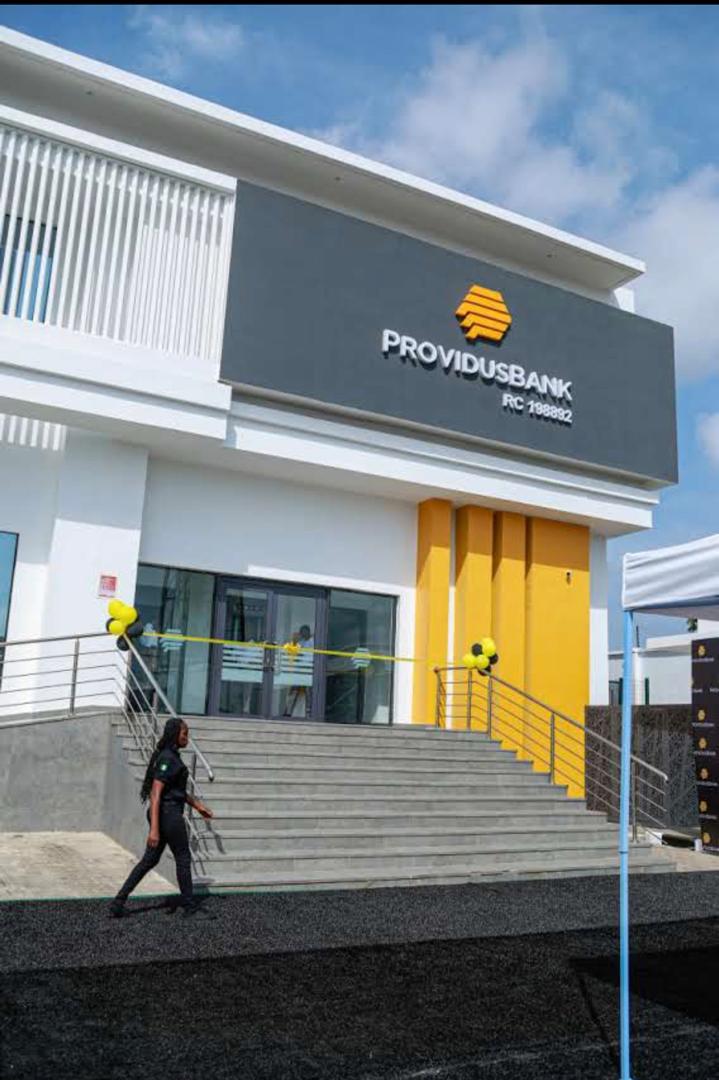
Providus Bank Plc has commissioned a new branch in Ado-Ekiti, marking another step in its steady expansion across key growth markets in Nigeria.Having met the Central Bank of Nigeria’s (CBN) recapitalisation requirement since January 2025, Providus Bank is now focused on expanding its footprint to support local enterprise, deepen financial inclusion, and bring banking services closer to individuals and businesses.Speaking at the commissioning, the Executive Director/Chief Financial Officer, Deoye Ojuroye, noted that the expansion is part of a broader plan to strengthen the Bank’s presence nationwide over the next 12 months.“Our approach is deliberate—we are growing in the right places, supporting real economic activity, and building a bank that is both resilient and responsive to the needs of our customers.”He added that Providus Bank remains on a strong footing, with a disciplined approach to capital and risk management underpinning its growth.“We are well capitalised within our regulatory category, and that gives us the confidence to continue expanding responsibly while supporting businesses and communities.”The Bank plans to open additional branches in strategic locations over the coming year, reinforcing its commitment to scale, accessibility, and long-term value creation.Providus Bank continues to position itself as a reliable partner to businesses and individuals, combining financial strength with a clear focus on sustainable growth.

Continue Reading
Click to comment

Leave a Reply

Your email address will not be published. Required fields are marked *

Banking and Finance

Fidelity Bank Strengthens SME Support with High Impact Masterclasses on Pricing, Digital Growth and Global Expansion

Published

on

By

In line with its commitment to accelerating the growth of Small and Medium Enterprises (SMEs) across Nigeria, leading financial institution, Fidelity Bank Plc, has rolled out a series of high impact masterclasses designed to equip business owners with practical skills, improve operational efficiency and expand market access throughout the month of April 2026.

The first in the series, titled “Pricing That Works: How to Charge Right and Earn More,” held on Friday, April 10, 2026, at the Fidelity SME Hub in Gbagada, Lagos. The session focused on helping entrepreneurs set profitable, sustainable prices without losing customers, an essential factor for long-term business success.

About a hundred SMEs from different sectors attended the masterclass which saw participants receive guidance on key areas many small businesses struggle with including costing, value-based pricing, pricing psychology and customer perception.

Following the success of the pricing masterclass and testimonials from participants, the bank scheduled three additional masterclasses to run throughout April 2026. The second masterclass, held on Tuesday, 14 and Wednesday, 15 April 2026, was a practical, skill-building session titled, “Baking Masterclass: From Kitchen to Cashflow”. The session equipped bakers and food entrepreneurs with hands on techniques to refine their craft, improve product consistency and strengthen their earning potential.

Commenting on the initiative, Divisional Head, Small and Medium-scale Enterprises Banking, Fidelity Bank Plc, Ugochi Osinigwe said, “At Fidelity Bank, we believe that when SMEs succeed, the economy grows. That is why we have curated a suite of masterclasses that provide entrepreneurs with the practical skills they can apply immediately.

“Whether it is pricing correctly, improving product quality, mastering online sales, or preparing for international expansion, we are devoted to empowering SMEs with the tools they need to grow, thrive and prosper.”

She added that the SME Masterclass Series is part of Fidelity Bank’s broader mandate to support SMEs with business advisory, funding, market access and capacity-building initiatives delivered through the Fidelity SME Hub as well as dedicated SME support programmes nationwide. Osinigwe noted that the Bank recently received the Best Retail and SME Bank Award from Independent Newspapers, underscoring its industry leadership and unwavering commitment to growing Nigeria’s MSME sector.

A third masterclass, themed, “Grow Online Sales on a Budget”, is scheduled for April 24, 2026, and will equip entrepreneurs with practical strategies to boost visibility, engage customers, and increase sales using affordable online tools.

Similarly, the fourth and final masterclass, titled, “Take Your Business Global: One-on-One Trade Advisory”, will hold on April 29, 2026 and will serve as a personalized advisory clinic where SME owners will receive expert guidance on export readiness, cross-border payments, global market opportunities, and compliance requirements.

Ranked among the best banks in Nigeria, Fidelity Bank Plc is a full-fledged Commercial Deposit Money Bank serving over 10 million customers through digital banking channels, its 255 business offices in Nigeria and United Kingdom subsidiary, FidBank UK Limited.

The Bank is a recipient of multiple local and international Awards, including the 2024 Excellence in Digital Transformation & MSME Banking Award by BusinessDay Banks and Financial Institutions (BAFI) Awards; the 2024 Most Innovative Mobile Banking Application award for its Fidelity Mobile App by Global Business Outlook, and the 2024 Most Innovative Investment Banking Service Provider award by Global Brands Magazine. Additionally, the Bank was recognized as the Best Bank for SMEs in Nigeria by the Euromoney Awards for Excellence and as the Export Financing Bank of the Year by the BusinessDay Banks and Financial Institutions (BAFI) Awards.

Continue Reading

Banking and Finance

Unity Bank, Experts Advocate Green Investment, Climate Innovation to Drive Economic Resilience

Published

on

By

LAGOS.22.04.2026. Nigeria’s retail lender, Unity Bank Plc, alongside leading climate innovation experts, has called for increased investment in the green economy and the adoption of frontier technologies as critical pathways to driving economic resilience and reducing the impact of climate change on vulnerable populations across Africa.

The call was made during a thought-provoking webinar hosted by the Bank to commemorate this year’s Earth Day, themed “The True Cost of Climate Change and Who Pays?”. Climate experts and stakeholders convened to examine the human, economic, and institutional costs of climate change, while spotlighting practical solutions to address its growing impact.

In his opening remarks, Unity Bank’s Head of Strategy and Innovation, Ibukun Coker, emphasised the urgency of addressing climate risks from both a societal and business perspective.

He said: “Climate change is no longer a distant or abstract challenge. It is an existential threat with direct consequences for individuals, businesses, and economies. At Unity Bank, we recognise the role institutions must play in incorporating sustainability in project financing, supporting businesses and promoting solutions that build resilience in communities where we operate.”

The webinar featured Chinwe Udo-Davis, Founder and CEO of Instollar, and Oluwatosin Ajide, Programme Manager at the Nigeria Climate Innovation Centre, both of whom provided insights into the drivers of climate change and the pathways to mitigation and adaptation.

Speaking during the session, Udo-Davis highlighted the disproportionate burden which climate change places on underserved communities and the need for inclusive solutions.

“The true cost of climate change is not evenly distributed. Communities with the least resources are often the most affected, whether through energy poverty, environmental degradation, or limited access to sustainable alternatives. Addressing this imbalance requires intentional investment in clean energy solutions that are both accessible and scalable.”

Ajide underscored the importance of coordinated, system-wide approaches in tackling climate challenges, particularly through innovation and policy alignment.

“Climate change is fundamentally a structural problem, and its solution requires a paradigm shift: from innovation and policy to financing and implementation. Stakeholders must work collaboratively to drive solutions that are sustainable and inclusive.”

The session also explored emerging opportunities in climate technology, renewable energy, and ecosystem financing, reinforcing the role of innovation and cross-sector collaboration in building long-term resilience.

By hosting the webinar, Unity Bank continues to demonstrate its commitment to advancing sustainability-focused dialogue and supporting initiatives that promote responsible growth and environmental stewardship.

The initiative underscores the Bank’s broader strategic focus on environmental sustainability as well as its commitment to financial inclusion.

Continue Reading

Banking and Finance

Wema Bank Meets Central Bank of Nigeria’s Recapitalisation; Retains National Banking License

Published

on

By

Wema Bank, Nigeria’s oldest indigenous national bank and pioneer of Africa’s first fully digital bank, ALAT, has successfully met and surpassed the Central Bank of Nigeria’s (CBN) recapitalisation requirements, reaffirming its status as a National bank. This achievement represents a critical milestone in the Bank’s growth journey, reflecting its ability to meet regulatory expectations and its deliberate strategy to scale sustainably, strengthen its balance sheet, and reinforce its position within Nigeria’s banking sector.
The milestone follows the Bank’s successful completion of a ₦150 billion Rights Issue and an additional ₦50 billion special placement in 2025, bringing its Total Qualifying Capital to ₦264.7 billion, well above the regulatory minimum. This achievement was concluded six months ahead of the CBN’s stipulated deadline, further reinforcing the Bank’s strong financial position, shareholder confidence, and long-term growth trajectory.

Earlier in April 2026, the Central Bank of Nigeria also formally confirmed that Wema Bank, alongside 32 other financial institutions across international, national, and regional categories, had successfully concluded the recapitalisation process. Notably, Wema stands among only ten national banks that met and surpassed the minimum required capital threshold, thereby sustaining its national banking license.
This milestone not only affirms regulatory compliance but also signals a new phase of accelerated growth for the Bank; one defined by stronger capital base, increased capacity to support customers, and a reinforced position within Nigeria’s competitive banking landscape.
Commenting on the milestone, the Managing Director/Chief Executive Officer of Wema Bank, Moruf Oseni, stated, “The successful completion of our recapitalisation exercise is a defining moment for Wema Bank. It is a strong validation of our strategy, our performance, and the enduring confidence our shareholders and stakeholders have in our vision. We have not only met the CBN’s requirements; we have exceeded them, reinforcing our position as a National Bank with the scale, strength, and stability to compete and lead.”
In March 2024, the Central Bank of Nigeria announced the recapitalisation programme requiring all national banks to maintain a minimum capital base of ₦200 billion. The initiative was designed to strengthen the resilience of financial institutions, enhance their capacity to absorb economic shocks, and position them to drive sustainable economic growth.

In response, Wema Bank embarked on a strategic capital raise through the stock market, successfully strengthening its shareholder base and securing the required capital through strong participation from existing investors. The ₦150 billion Rights Issue, which opened on April 14, 2025, and closed on May 21, 2025, marked a significant step in this journey. This was subsequently complemented by a ₦50 billion special placement later in the year, ensuring the Bank not only met but exceeded the regulatory threshold well ahead of schedule.

For Wema Bank, this journey is a testament to its transformation. After regaining its national license in 2015, the Bank has consistently demonstrated financial discipline and strategic foresight. By raising the necessary capital primarily from existing shareholders, the Bank has underscored a deep-seated mutual trust between the institution and its investors.

Speaking further on what this achievement means for the Bank’s future and its customers, Oseni added: “This milestone strengthens our ability to compete at scale, deepen our market presence, and deliver more value to our customers across Nigeria through improved access to credit, enhanced digital banking experiences, and innovative financial solutions. It positions us to play an even bigger role in powering Nigeria’s economy while continuing to deliver sustainable value to all our stakeholders.

Looking ahead, we remain focused on deepening our market presence, driving customer-centric innovation, and strengthening our role as a catalyst for growth across retail, SME, and corporate segments. This is not just about retaining our license; it is about building a bigger, stronger, and more impactful Wema Bank.”

The successful conclusion of the recapitalisation process underscores Wema Bank’s financial strength, disciplined execution, and unwavering commitment to regulatory compliance as it continues to expand its footprint across Nigeria. With a significantly strengthened capital base, the Bank is now positioned to do more – support more customers, enable more businesses, and unlock more opportunities across every segment it serves.
As it enters this new phase, Wema Bank is not only reaffirming its status as a National Bank; it is stepping forward with greater scale, sharper ambition, and a clear intent to lead. The Bank remains firmly committed to powering progress, driving innovation through ALAT, and delivering sustained value; powering a future of possibilities for all its stakeholders.

Continue Reading

Trending

Mega Awareness 2023