NEWS
Safety compliance and regulation in Nigerian aviation: Beyond rules to a safety culture
By: Evarest Nnaji
Aviation is one of the most heavily regulated industries in the world, and for good reason. In Nigeria, where air transport plays a vital role in economic development and regional connectivity, safety compliance is not merely a regulatory requirement but a strategic necessity. While regulations, manuals, and audits form the backbone of aviation safety, sustainable safety performance depends on deeper cultural, leadership, and learning-oriented practices within organizations.Achieving this requires that the Nigerian aviation industry and its operators must move beyond merely complying with regulatory standards prescribed by authorities. True safety is achieved only when these rules are fully embedded in everyday behaviour. And at the stage when safety principles become second nature to every member of staff and, by extension, the entire industry, safety standard is said to have reach the best possible international level. When safety becomes part of daily practice, it fosters a culture that empowers pilots, engineers, air traffic controllers, and other personnel to prioritize safety at all times, even in the face of operational or commercial pressures.Having a culture of safety, coupled with the mindset that safety should be instinctive rather than imposed, should become a part of everyone who operates in the aviation ecosystem; only then can risk be adequately reduced.Championing Safety through Strong LeadershipLeadership plays a decisive role in translating regulation into practice. In Nigeria’s aviation sector, strong leadership means more than enforcing compliance; it means modelling safety-first behaviour.When senior executives visibly support safety initiatives, allocate resources for training, and refuse to compromise standards, employees are more likely to follow suit. Implementation and indoctrination of safety rules and reliability are most desirable and apposite, and a without-which-not in Nigeria oil and gas aviation where operations run into very uncommon territories of offshore deep water fields with no alternate airport, no navigational aids or full radar coverage to assist aircraft and crew in a case of emergency. Aircraft and crew would have to be equipped, trained and operated safely in a manner only best possible internationally aviation standards can guarantee Regulatory compliance improves when leaders communicate that safety is a core value rather than a regulatory burden. Conversely, weak leadership can foster a culture of minimal compliance, where rules are followed only to pass inspections rather than to protect lives.“Just Culture” NecessaryAlso, the place of a “Just Culture” cannot be overemphasised, as it is especially critical for the growth of aviation in Nigeria and across Africa. In a Just Culture environment, individuals are not punished for honest mistakes but are held accountable for reckless behaviour.Fear of blame or punishment, especially for mistakes, often leads to under reporting of incidents, which deprives organisations of valuable safety data. For Nigerian aviation to mature and compete globally, employees must feel safe to report errors and hazards. This openness strengthens trust, improves learning, and aligns local operations with international best practices promoted by organisations such as ICAO.Near-Misses: Source of Future StrengthNear-misses are powerful learning tools when properly analysed. In Nigeria, where operational challenges such as infrastructure limitations and weather variability exist, capturing and learning from near-misses can significantly enhance safety performance.Instead of viewing incidents as failures, progressive aviation organisations, particularly in developed nations, treat them as opportunities to improve systems, training, and procedures. By systematically analysing near-misses and sharing lessons learned across the industry, Nigerian aviation, which is growing, can build resilience and prevent future accidents.Ultimately, effective safety compliance in Nigerian aviation goes beyond regulation. It requires a strong safety culture, committed leadership, a Just Culture framework, and an organisational willingness to learn. When these elements align, regulation becomes not just a legal obligation, but a foundation for sustainable growth and global credibility in Nigeria’s aviation ecosystem.
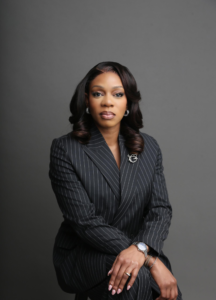
Captain Nnaji is both FAA (USA) and NCAA (Nigeria) licensed pilot, and the Group Chairman of OAS Helicopters, a leading conglomerate in Nigeria’s oil and gas aviation sector as well as an astute businessman and philanthropist.
NEWS
Africa Caught Off-guard as Idris Elba Stuns with FIFA World Cup Message
SuperSport viewers across Africa were left stunned when normal programming was suddenly interrupted by Hollywood star Idris Elba, who delivered a message saying “Everything else can wait.”Millions of DStv and GOtv viewers across Africa experienced the surprise interruption during prime-time viewing on 15 April 2026 at 7pm, including in the middle of live sport broadcast. Screens abruptly went black before a countdown appeared, followed by a familiar silhouette.It was Idris Elba.Ten Of Us NowThe award-winning actor addressed Africa directly with a message celebrating a historic football moment. Ten African nations have qualified for the 2026 FIFA World Cup, the most ever.“There are ten of us now,” Elba said in his unmistakable gravelly voice. “I honestly don’t care which one of us wins. I just want to see African football light up the world stage.”“My mum is from Ghana, my dad is from Sierra Leone. But my heart is African,” said Elba, a global superstar who remains deeply connected to the continent. “That’s why I’m watching. Every. Single. Game.”Africa’s Greatest World Cup?The FIFA World Cup 2026™, hosted across Mexico, Canada and the USA, will see Africa represented by Ghana, South Africa, Senegal, Morocco, Egypt, Algeria, Tunisia, Cape Verde, Côte d’Ivoire and DR Congo.It is a milestone tournament, and SuperSport on DStv and GOtv is positioning itself as the home of every kick, goal and celebration.“History doesn’t always tell you when it’s going to happen,” Elba continued. “But I’m here to tell you where it may happen. SuperSport. Only on DStv and GOtv. Everything else you thought you were going to be doing… it can wait.”Energetic Big Brother Mzansi star Smash Afrika and the ever-stylish host of Big Brother Naija, Ebuka Obi-Uchendu, are also starring in the wider DStv and GOtv FIFA World Cup campaign.Every Match, Every ScreenAll 104 FIFA World Cup 2026™ matches will be available live on SuperSport across DStv, DStv Stream, GOtv and GOtv Stream.Viewers can follow the tournament through satellite TV or stream on phones, laptops and smart TVs, depending on their preference and connectivity.Coverage will also include local language options, including pidgin, making the tournament more accessible to audiences across the continent.The World Cup kicks off on 11 June 2026 with the opening ceremony in Mexico City, live on SuperSport. From the opening match to the final, fans across Africa will be able to follow every moment.
NEWS
Governor Dauda Lawal Receives Nigerian Air Force Delegation in Gusau to Strengthen Security, Combat Terrorism
Governor of Zamfara State, Dauda Lawal P.hD, received a high-level delegation from the Nigerian Air Force during a strategic visit aimed at strengthening ongoing efforts to combat insecurity across the state.
The visit featured a presentation and inspection of key military air assets, including a combat-equipped helicopter designed for rapid response and real-time operations.
The Governor, alongside top government officials and security chiefs, was briefed on the aircraft’s capabilities, operational features, and its role in tackling banditry and other security challenges.
During the session, Air Force personnel demonstrated key features of the aircraft, including weapon systems and surveillance technology, highlighting its effectiveness in reconnaissance and combat missions.
Governor Lawal expressed strong interest, inspecting the equipment and asking questions about deployment and coordination with ground forces.
He commended the Federal Government and Air Force leadership for their commitment to restoring peace in Zamfara and reaffirmed his administration’s dedication to supporting all security agencies through collaboration and strategic initiatives.
The visit marks a significant step toward enhancing aerial surveillance and rapid response capabilities in Zamfara, reflecting renewed progress in addressing insecurity in the state.
NEWS
Governor Dauda Lawal Approves 120-Day Rapid Intervention Plan to Revamp Zamfara’s Educational Sector
Governor Dauda Lawal has approved a 120-day Rapid Intervention Action Plan aimed at addressing systemic failures in Zamfara State’s education sector.
The Governor presided over the State Executive Council meeting on Monday at the Government House in Gusau, where key decisions were taken.
During deliberations at the 65th Council meeting, issues related to education, health, works, and other sectors were discussed and approved.
The Council endorsed a 120-day rapid intervention plan built on prior diagnostic activities conducted by the Ministry of Education and the Education Quality Assurance Agency (EQAA). The plan, presented by the overseeing Commissioner for Education, Abdulmalik Abubakar Gajam, includes payroll audits, school mapping exercises, and infrastructure assessments. It proposes targeted, time-bound interventions across governance, infrastructure, digital transformation, teacher development, and student welfare.
The Council also approved the formation of a joint committee to immediately assess all illegal or unapproved structures built around schools in the state, with a view to relocating them and securing school environments. The committee will be led by the Ministry of Education, Science and Technology (MOEST).
Additionally, the Council approved a single, unified Education Sector Bill (covering Early Childhood Care Development Education to Tertiary level), to be developed in consultation with stakeholders including agencies, institutions, civil society, traditional rulers, and development partners. A draft bill will be presented to the State House of Assembly for enactment within the emergency timeframe.
The Governor further approved the transfer of non-teaching staff—such as messengers, labourers, gardeners, cooks, guards, drivers, health workers, and artisans—from the Ministry’s payroll to appropriate MDAs (CPG, MoH, Establishment) or private firms.
Among other important issues, the Council approved the composition of the Zamfara State Steering Committee on the State of Emergency on Education and authorised the Committee to constitute a Technical Working Group (TWG) and co-opt stakeholders including the NUT, UNICEF, UBEC, traditional and religious leaders, private school proprietors, and CSOs.
-
NEWS2 days agoGovernor Dauda Lawal Receives Nigerian Air Force Delegation in Gusau to Strengthen Security, Combat Terrorism
-
Brand2 days agoOne Universe Launches to Redefine How People Find and Pay for Trusted Services
-
Cover16 hours agoBuilding Systems that outlive Founders – Bidemi Oke
-
NEWS16 hours agoAfrica Caught Off-guard as Idris Elba Stuns with FIFA World Cup Message
-
Brand16 hours agoFidelity Bank Advocates for Inmates’ welfare with donation to Enugu Custodial Centre