Cover
Kyari, Primate Ayodele, and the unresolved petrol hassle
By Babajide Adekunle
There has been pushback from Mele Kyari, the group chief executive officer of the Nigerian National Petroleum Company Limited (NNPCL), against the calls for his sack. It is notable that several facets of Nigerian society have made the calls. I remember that in October 2023, a group of lawyers under the aegis of the ‘Coalition of Nigerian Legal Practitioners’ had asked President Bola Tinubu to relieve Kyari of his position.
The petitioners justified their request with reference to the fuel scarcity facing the country at the time. An excerpt of their petition says, “Under the current leadership of the present Group Chief Executive Officer (GCEO) of the NNPCL, the company has failed woefully and calamitously in its role to ensure adequate supply of petroleum products in the country, leading to skyrocketing transportation costs, inflation of food prices, and other untold hardships.”
In the same vein, the Christian Youth Forum of Nigeria (CYFN), in August 2024, called for Kyari’s sack, again citing fuel shortages and the astronomical increase in price of the product for their action.
The group, in a statement it issued, accused Kyari of lacking ‘empathy’ and the willingness to end the recurrent fuel shortage at filling stations, resulting in the pump price of petrol soaring to N1,000 in some places. The group described the situation as “nothing short of economic terrorism” and it believes that Kyari is complicit. In the long list of those dissatisfied with Kyari’s continued stay at the NNPCL are members of the House of Representatives, who must have found him culpable in the rift involving Dangote refinery.
The unifying thread among the incidents cited above appears to be that many Nigerians have given up on Kyari managing our shared heritage, deciding how best to use it for everyone’s advantage, and fostering the urgently required progress. Rather than Kyari proving his detractors wrong, what we have seen is an obscenely disgusting attempt to twist the issue and launch a flurry of attacks against imaginary foes. Active in this plot are spin-doctors, hired writers in the media, and different nebulous groups stumbling over one another. The emergent pro-Kyari movement has turned into a Bazaar of sorts, reminiscent of the infamous 1990s “two-million march for Abacha”.
The efforts to defend Kyari’s incompetence has become a fight between progressive and retrogressive forces, and what has so far played out is the familiar trend in which an influential person in the polity rallies support from partisan and nativist groups in opposition to popular aspirations. This is clear from the sponsored attacks in the media. In a space of three days, between August 9 and 12, two articles from fictitious writers have emerged in the Daily Trust newspapers.
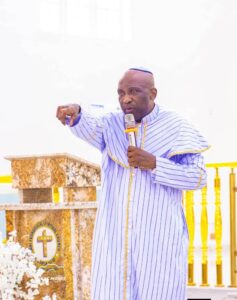
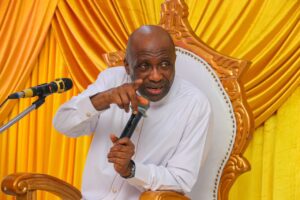
In a particular hatchet job published in the newspaper, titled ‘Prophetic Missteps: Primate Elijah Ayodele’s record of unfulfilled predictions and NNPCL boss’, attributed to one Adewale Olabode, Kyari’s PR goons pilloried the clergyman for joining the patriotic call for his sack. Do Nigerians even need a seer or an oracle to tell them Kyari should go? Are we not entitled to demand for his sack, given our hardships, rising petrol prices, long queues at the filling stations, increased transportation costs, and increased food prices? I believe our focus should be on Kyari, rather than Ayodele’s prophesies that did not materialize.
Although Ayodele’s predictions have garnered him controversy, but as a citizen I find myself drawn to his compassion, altruistic and philanthropic actions toward the same oppressed people that Kyari has made unbelievably worse with his inconsistent policies as NNPCL GCEO.
Kyari’s resolve to single out Ayodele for attack is a red herring and unnecessary. Had a notable sheik from the north made a similar call, would he have sent his media attack dogs after him?
I believe Primate Ayodele, seeing the suffering of the masses, spoke out of empathy and concern, even for President Tinubu, who seemed entangled in a web of plots orchestrated to make him fail. While he makes scary prophesies at times, Ayodele will always urge his subjects to pray to avert the consequences of what he had foretold.
It is significant to note that prophets have historically been essential in influencing the path of human history, and that prophecy is an essential component of the Christian faith.
Scripture is filled with examples of prophets who foresaw disaster, only for their prophecies to be averted through restitution, divine forgiveness, or fervent prayers. The narrative of Jonah and Nineveh (Jonah 1-3) is one famous instance. Jonah had warned the Ninevites that their kingdom would be overtaken in forty days. Jonah’s prophecy caused the people of Nineveh to turn from their sins, and as a result, God spared the city.
Similarly, Amos prophesied against the kingdom of Israel, foreseeing its demise due to its wickedness (Amos 1-9). However, when the king and people of Israel heard Amos’ prophecy, they repented, delaying God’s judgment!
Nathan prophesied to David (2 Samuel 12:1-15) that he would suffer misfortune for sleeping with Uriah’s wife and producing a kid. Nathan forewarned David that the Lord would send his wives to those close to him, who would have sex with them in public. God forgave David when he admitted his sins and demonstrated contrition.
The instances provided above demonstrate that a prophecy serves as a warning, with the goal of bringing about repentance and restoration.
These illustrations demonstrate that prophecy is not a final or set result. While a priest is happy to accomplish his heavenly mission, we are ready to mock anyone who fails to fulfill a prophecy. Thus, it is foolish for Kyari’s thugs to attack Primate Ayodele.
Rather than using insulting language, Kyari need to demonstrate his ability to reverse the current negative trend and guarantee a sufficient supply of petroleum products.
Babajide Adekunle, a marketing specialist, writes from Lagos.
Cover
Kwara Monarch Kidnap: Primate Ayodele Warned But They Didn’t Listen
Oba Salman Aweda, his wife and another resident have been kidnapped emidnight invasion of Olayinka community in Ifelodun Local Government Area of Kwara State.He was recently elevated by the state government.The heavily armed gang stormed the palace of at about 1:40 a.m. on Saturday, firing sporadically to scare residents before taking him and two others to an unknown destination.This is the noise we have been making regarding how they treat the prophecy of Nigerian prophet, Primate Elijah Ayodele of INRI Evangelical Spiritual Church.Before now, people used to say Primate Ayodele talks about politics alone but at the moment, his prophecies about insecurity in the country has been top notch; nobody comes close if we are to rank it but it is alarming that people who are supposed to secure people have turned deaf ears.This has repeated itself several times and it seems the time has come for us to ask questions; do our security operatives enjoy hearing the death and kidnap of innocent Nigerians let alone prominent individuals?Before the recent attacks on military base, an ondo monarch, bomb attacks in Borno, attack on church on Easter Sunday, Primate Ayodele specifically warned the security operatives and the government about the impending attacks but they never listened. Now, few weeks ago, Primate Ayodele revealed that next target of terrorist in Nigeria and stated that they are planning to attack some traditional rulers. He even went as far as revealing the states where the attacks would be carried out.These were his words:“Terrorists will start kidnapping traditional rulers in some states that include Kebbi, Niger, Zamfara, Kano, Kogi (Lokoja axis), Ondo, Kwara, Akwa Ibom, Ebonyi and Yobe, with concerns that the threat could also extend to the Federal Capital Territory, Abuja.”The happening in Kwara state has fulfilled this prophetic warning. Obviously our security operatives didn’t do anything about it. Now, how long do we continue like this?
Cover
How Tinubu’s Government Is Suffering For Ignoring Primate Ayodele’s Early Prophecies On Insecurity
After swearing-in on May 29, 2023, President Bola Ahmed Tinubu received goodwill messages from renowned men of God, with many prophesying that his administration would be better, especially in terms of security.
Many of these messages were based on the earlier promise of the All Progressive Congress that the Vice President, Kashim Shettima, would tackle insecurity adequately for the country.
However, in the midst of these praises and goodwill messages, renowned prophet, Primate Elijah Ayodele, who is known for always revealing the future of any new administration, spoke in a prophetic message that went viral, that insecurity will be used as a great tool against Tinubu’s administration.
The prophet had been talking about another APC government since 2022, noting that Nigerians will face several economic hardships, and he was detested by the ruling party and its supporters because of this. They saw him as an opposition party when they were supposed to listen to his prophetic warnings. However, it happened; the major indices of the economy are energy and currency. The exchange rate and price of petrol have never been so much like it has been for the past three years now.
The prophet warned repeatedly that insecurity and the economy would be the major issues President Tinubu would face in his administration, but did they listen? Absolutely not, because if they did, some of the issues being faced in the country would have disappeared.
Beyond his statement before the election, Primate Ayodele continued to warn the government against insecurity, even as far as warning against an impending coup. The prophet had revealed that some powerful Nigerians are angry with the president and have planned to remove him unconstitutionally. Of course, they never believed this till it happened. If not for the prophetic security alert issued by the prophet, the president may have been removed when the coup came to light.
These were his warnings regarding the coup:
“There will be an attempt to unseat Tinubu unconstitutionally; the NSA, DSS, and Chief of Army Staff must be careful about this. There are some gangs planning between November to January to unseat him.”
Thankfully, they were arrested, and some of them have been detained.
More recently, there were attacks on some states on Easter Sunday, leading to the death of some Christians. This happened as a result of obstinacy on the part of security operatives because just days before it, Primate Ayodele specifically warned that some states would be attacked from Easter Sunday, and it did happen, with security operatives having nothing to do to stop the incident.
These were Primate Ayodele’s warnings.
“Our security operatives must watch Easter Sunday well because plans have been concluded to carry out attacks in seven states starting from that day.
“The states to watch out for include Kogi, Kwara, Ondo, Ogun, Nasarawa, Kebbi, and Kaduna.
“The security operatives must be extra vigilant in these states starting from Easter Sunday.”
Yesterday, there was an internal memo released by the Nigerian Customs Service that Boko Haram are planning to attack some prisons and airports in the country.
This corroborated the prophetic warning of Primate Ayodele, which he shared some weeks ago, regarding some prisons, specifically mentioning Kuje prison.
These were his words:
“Break jail is imminent, Kuje prison or they send a bomb into Kuje prison, it’s a midnight work…..”
Meanwhile, Primate Ayodele had warned that there are people sponsoring insecurity in President Tinubu’s government. He also urged him to name some of them in order to curb it, but this has yet to be done.
President Tinubu’s government would have been one of the best, but insecurity has tarnished it greatly, and the country is gradually returning to the days of daily killings; even Nigerian high-ranking soldiers are not spared. This insecurity has given the administration a bad record internationally, with the US naming Nigeria as a Country of Particular Concern (CPC).
If the president had listened, Nigerians, and even the government, wouldn’t have suffered this much. However, it’s not too late for them to turn a new leaf.
Cover
Building Systems that outlive Founders – Bidemi Oke
There is a quiet misconception in many growing companies that vision alone is enough to sustain momentum. Founders are often the engine because they are decisive, driven and deeply involved. But what happens when the engine steps back?That question is where real companies are separated from fragile ones. Building something that outlives a founder is not about removing their influence; rather, it is about translating that influence into systems, repeatable, observable and transferable structures that do not rely on constant presence. Without this, growth becomes personality-dependent, and scale becomes inconsistent.At the early stage, founder-led execution works. Decisions are faster, direction is clearer, and there is less friction. But as the company grows, that same model becomes a bottleneck. Every approval, every escalation, every strategic shift begins to orbit one person. The business does not slow down because of external pressure; it slows down because its internal architecture cannot carry its own weight.Usually, “system” is often misunderstood. It is not just about tools, dashboards or policies. It is about designing how decisions are made, how information flows and how accountability is structured. It is about making sure that the logic behind actions is visible, not assumed.For example, a strong system answers questions before they become problems. What triggers a decision? Who owns it? What data informs it? What happens if it goes wrong?When these are unclear, teams default to escalation. When they are clear, teams operate with autonomy.This is where many founders hesitate. System-building feels like losing control. In reality, it is the only way to extend control without being physically present. It shifts leadership from being reactive to being embedded.One of the most overlooked aspects of building enduring systems is Documentation.Now, not as a formality but as a strategic asset. Decisions that are not documented become opinions. Processes that are not documented become inconsistent.Over time, this creates invisible friction. Teams solve the same problems repeatedly but differently each time.Documentation, when done well, becomes institutional memory. It ensures that the company remembers even when individuals move on.Another critical layer is Feedback Loops. Systems should not be static; they must evolve with the business. This requires structured ways to capture what is working, what is failing and what needs refinement. Without feedback loops, systems become outdated. With them, systems become adaptive.There is also a cultural dimension to it. Systems do not operate in isolation; people execute them. If the culture rewards speed over clarity, systems will be bypassed. If the culture values accountability, systems will be strengthened. The goal is alignment where systems reinforce behaviour and behaviour reinforces systems.In fast-moving industries, this becomes even more important, take fintech, for instance. The pace of regulatory change, market volatility and user expectations demands consistency under pressure.Companies that rely solely on founder instinct struggle to keep up, while those that invest in structured decision-making, risk management frameworks, and operational clarity are better positioned to adapt.This is something we are increasingly seeing in companies like FlashChange, where the focus is not just on growth, but on building operational resilience. The emphasis is shifting from “who is making the decision” to “how decisions are made.” That shift, while subtle, is very powerful. It creates a foundation that can support scale without losing direction.Ultimately, building systems that outlive founders is about redefining leadership. It is not measured by how many decisions a founder makes, but by how many decisions the organisation can make without them.The strongest companies are not those where the founder is always present. They are the ones where the founder’s thinking is quietly embedded, shaping actions, guiding priorities and influencing outcomes, even in their absence. That is how legacies are built.Not through constant control, but through systems that carry intent forward.About the AuthorBidemi Oke is the Chief Executive Officer of FlashChange, a fintech platform focused on secure digital asset exchange. He is an entrepreneur and vibrant leader, recognised for driving innovation and redefining access in the financial technology industry.
-
Banking and Finance8 hours agoWema Bank Meets Central Bank of Nigeria’s Recapitalisation; Retains National Banking License
-
Business and Brand8 hours agoVerve Partners NEXO Standards Community, PCI Security Standards Council To Secure Global Interoperable Payments
-
Cover1 day agoKwara Monarch Kidnap: Primate Ayodele Warned But They Didn’t Listen
-
Entertainment8 hours agoPremium Entertainment Without the Premium Price Tag
-
Banking and Finance1 day agoBanking the Economy That Actually Exists