Connect with us

Communication

Responsible journalism is key to success of democracy- Pantami

Published

on

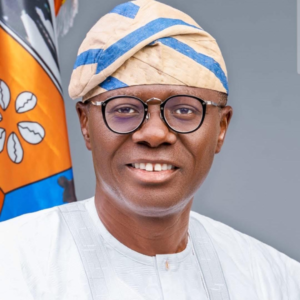
Dr Isa Pantami, Minister for Communications and Digital Economy at the Digital Skills training for ICT Reporters in Abuja.

 Dr Isa Pantami, Minister for Communications and Digital Economy, on Monday said that responsible journalism was key to the success of democracy.
Pantami said this at the opening ceremony of the training of National Information Technology Reporters Association (NITRA) organised by the National Information Technology Development Agency (NITDA) in Abuja.
The theme of the five-day training programme focused on “Digital Skills in News Reportage for ICT Journalists.”
Pantami said that the training was in line with one of the pillars of the National Digital Economy for Digital Nigeria which focused on building digital skills, signed by President Muhammadu Buhari in Nov. 2019.
“Digital Nigeria cannot be achieved without training people that will play key role in ensuring the digital economy.
“Reponsible journalism is key to the success of democracy in Nigeria and the world and that has to do with journalism based on fairness, and all the components of journalism.
“If journalists understand their work and do it professionally, they will be in the forefront of catapulting democracy and good governance, if not they pull down democracy,” Pantami said.
The minister added that current journalism was beyond being in print form but had migrated to multimedia which was all encompassing, consisting of pictures, video, audio, among others.
He further said that ICT reporters needed to acquire the expertise required for conveying real time information, adding that they should engage internet search engines for enhanced work.
He also said that the Federal Government (FG) would build digital skills among rural dwellers who could read and write, farmers, disabled people, public servants and many more to ensure the digital economy.
Pantami added that the FG also launched the National Broadband Plan 2020-2025 to ensure cheaper data plans and accessibility to citizens.
According to him, if the government is serious about its digital economy strategy, it must put policies in place, cheaper data and security of internet infrastructure for the masses.

Mr Kashifu Inuwa, Director General of NITDA said that ICT was a sure way of escaping the COVID-19 pandemic and the training was important towards achieving digital economy.

“Digital skills can open new opportunities for you because there are challenges everywhere but less opportunity, so when the skill you have created the opportunity, you grab it,” he said.
Dr Abimbola Alale, Managing Director, Nigeria Communications Satellite Limited, said digital skill was required of every professional journalist, adding that journalists should not allow the social media override the responsibility of the mainstream media.
Mr Blessing Olaifa, President, NITRA commended the Minister for championing the training and urged journalists to appreciate it, adding that some journalists had lost their jobs during the period of COVID-19.
Olaifa said that the training would open new opportunities for participants and pledged that the trained journalists would ensure the efforts of the Federal Government through the ministry, were projected.
Mr Peter Oyeneye, Chief Executive Officer, Advanced Management Academy, while facilitating the training, said reporting in the COVID-19 pandemic era was the new normal and journalists should acquaint themselves with the changes.
According to Oyeneye, journalists as change agents, should use their mediums to educate their audience using ICT facilities.
He added that there were more than 100 human activities going on online and they engender digital economy.
“Despite the benefits of digitalisation, the challenge of change remains potent and people prefer to stick to the known than the unknown.”
He said that media organisations should embrace change in the stlye of communication, sponsor roadmap, train journalists on the new normal, and be ready to build resistance management.
< /div>

Oyeneye advised that journalists should lead the change, sell benefits of digital economy, research into challenges of digitalisation, base their stories on their research and do comparative analysis of Nigeria’s digital economy to others.
The News Agency of Nigeria (NAN) reports that 47 journalists from different media organisations participated in the training and were supported with computers to aid their job.

Continue Reading
Click to comment

Leave a Reply

Your email address will not be published. Required fields are marked *

Communication

GLO Prime offers additional voice, data value to customers

Published

on

By

Glo logo


Total telecommunications solutions provider, Globacom, has said that its new product offering, Glo Prime, would help businesses grow by keeping them connected and running no matter the time of day. It is also meant to ensure customers get more value for the money they spend on the Glo network.

Glo Prime, a portfolio of call and data plans is designed principally for high networth individual and corporate customers, especially those who operate their businesses locally and need to be in touch with other clients globally both during the day and at night.

According to a statement by Globacom, it comes in four different plans – N1,500, N3,000, N5,000 and N10,000 packages. Whichever of these plans the customer chooses, he or she is assured of tremendous value to the business and other customers.

For instance, the Prime N1,500 plan gives the customer 45 minutes of calls and 4GB of data, while Prime N3,000 plan has 100 minutes of calls and 12GB of data. For the Prime N5,000, the subscriber gets 300 minutes of calls and 25GB data, while Prime N10,000 plan offers 750 minutes of calls and a huge 60GB of data.

“In a highly dynamic environment, there is need for constant innovation to offer more value to our new and existing customers. The Glo Prime is, therefore, a portfolio of new plans designed to surpass similar products in the market in terms of flexibility, ease of use and value”, the company said.

Globacom which marked 20 years of operations in August is reputed for providing its subscribers innovative Voice and Data solutions at the most competitive prices. It recently won two awards at the “Consumer Value Awards” for its commitment to excellent service delivery and innovative offering to subscribers.

Continue Reading

Communication

Banking and digitization: An opportunity for economic growth in Africa

Published

on

By

Some of the biggest banks on the continent to digitize and utilize the latest technology. According to McKinsey, cash is still used in more than 90% of all transactions in Africa. One of the key reasons for this is access to smartphones.

Sim Tshabalala, the CEO of South Africa’s largest bank Standard Bank Group speaks about this issue and how it is changing, “Progress is continuing with more internet connectivity, more fibre being rolled out by the cell phone companies on the African continent. The consequence of that is that the African continent is in a position to leapfrog. And banks operating on the continent are using that capability and that connectivity to meet the needs of their clients, to pay, to move money around, to invest, and indeed to create wealth and pass it on to future generations. So, to put it differently, now is a time that is most exciting for the banking industry.”


African Continental Free Trade Area (AfCFTA) is opening new opportunities for businesses and individuals across the continent. Tshabalala explains, “The African Continental Free Trade Area is going to be a game changer for our continent. Firstly, it’s going to reduce poverty. It’s going to increase incomes, it’s going to increase the ability of people, ideas, knowledge, and capital to move between countries, and therefore it’s going to increase economic activity.”


Looking ahead to the future, Tshabalala says he is excited for Africa’s potential, “The regions that are really exciting on the continent, to be frank, are all of them. Here in southern Africa our business is growing very, very fast, it’s growing in double digits. The Mediterranean-facing countries, as they increasingly integrate themselves into the African continent, provide massive opportunities for financial institutions. And I’m hoping you get a sense from me, as a pan-Africanist, that this’ll be the African century, it is incredibly exciting.”


The development of the financial system in Africa is crucial for economic growth and reduces financial volatility by encouraging long-term investment. FirstRand Group Chief Operations Officer Mary Vilakazi speaks about how fintech companies are changing the banking landscape, “If you look back 10 years ago, there were about two digital banks, and now there are about 21 on the continent. So, competition is fierce. And certainly, the need and demand is there. So, we are still very excited about waking up and understanding the needs of our customers across all the markets and coming up with solutions that are of relevance to them. And certainly, I think trying to keep up with the technological advancements that that I think we’ve been seeing come our way.”

Vilakazi describes what she thinks are the current biggest trends in banking and fintech, “When I think of what technology does, it really enables us to be able to look out for fraud. I think in this day and age we know how cyber risk is top of mind for everyone. And then, the second one is really to remove any friction-costs because I think we always think about reducing customer angst but any things that you can do quicker, and I think you can do a bit more slicker, with technology.”

In Ghana, Giokos meets with Ecobank Managing Director Jeremy Awori. He discusses the bank’s current digitization, “I think banks have moved forward and Ecobank is really trying to move forward even faster. We believe that digital is the way forward. We’re a digitally driven bank. We have a single gateway that you can literally access our 35 markets. So, you know, when we talk about money transfers, it’s real.”


Awori is also a supporter of the AfCFTA, but he says more must be done to implement its goals, “Countries are indicating that they really want to work with one another. Where we are looking forward is, how do we actualise this? Let’s actually see trade increasing. And you know, looking at the non-tariff barriers. How do we eliminate those? How do we reduce those? How do we reduce the friction?”

Continue Reading

Communication

DSO: BON Rejects NCC’s Planned Sale of 600MHZ Spectrum Band

Published

on

By

BON’s logo

The Broadcasting Organisations of Nigeria (BON) has rejected the planned sale of the 600MHz spectrum band exclusively allocated to broadcasting in the country.

The rejection was conveyed via a letter to the Director-General of the National Broadcasting Commission (NBC), by Dr. Yemisi Bamgbose, Executive Secretary of BON. The letter, titled “An Urgent Call to NBC to Save Television Broadcasting from Extermination” and dated 25 April 2023, called on the NBC to take the required legal steps to prevent the sale of the spectrum band until after the completion of the Digital Switchover (DSO), as stipulated by the International Telecommunications Union (ITU) and as stated in the Federal Government White Paper on digitization.

Bangbose cautioned that a sale of the band before the analogue switch-off will result in the denial of access to television broadcasting of over 80 per cent of Nigerians, who depend on it for information and public enlightenment. “Our attention has been drawn to an advertisement placed by the NCC, titled ‘Availability of Frequency Slots in the 600 MHz Spectrum Band’, published on March 23, 2023.

“In the said advertisement, the NCC brought notice to the general public on the availability of frequency slots in the 600MHz spectrum band for sale. The advertisement further stated that submission of interest closes on or before the close of business on April 28, 2023.

“Director General, Sir, if this sale of the primary spectrum allocated to broadcasting is allowed to happen, all television stations operating on frequency 600MHz will be affected negatively.


“Those that will be affected include all DTT operators; ITS; Pinnacle; many private television stations; majority of state government-owned stations; some NTA community and state stations operating within the range of 600MHz frequency.”

“The Director General will recall that the frequency 700-800MHz, housing some state government-owned and private stations, have been sold to telecom operators, a decision that has created problems that have not been resolved,” Bangbose stated in the letter.

He similarly stated that if the proposed sale of the spectrum by NCC goes ahead, it will leave the country’s broadcast space for unhindered penetration by foreign media organs, negative consequences of which he said will be significant.

Continue Reading

Trending

Mega Awareness 2023