The Sky Has No Gender: Why The Girl Child Needs a Pathway into Aviation
As the aviation industry continues to demand technical expertise, discipline and leadership, Captain Evarest Nnaji, Group Chairman of OAS Helicopters, has called for greater access to education, mentorship and career opportunities to encourage the girl child to consider careers in aviation.
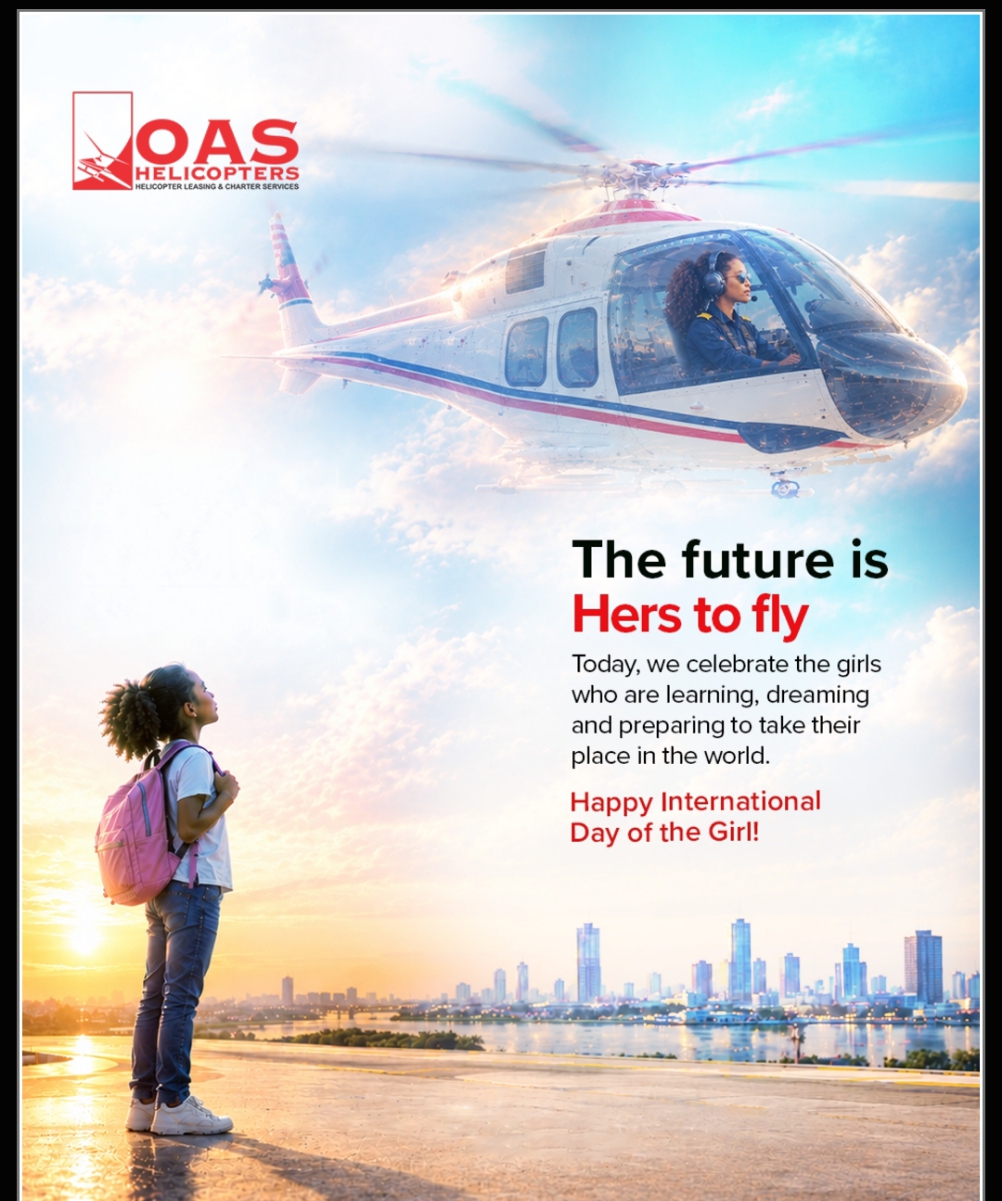
In a message marking the 2026 International Day of the Girl Child, themed “Empowering Every Girl Child Today for a Brighter Tomorrow,” Capt. Nnaji said the challenge was not a lack of potential among the girl child, but limited access to the opportunities needed to turn their ambitions into careers.
“The sky was never reserved for anyone,” he said, urging stakeholders to create an environment where the girl child can see aviation as a realistic career path.
According to Nnaji, aviation roles such as piloting, aircraft engineering and air traffic control have long been perceived as male-dominated fields. He argued that this perception, alongside limited exposure to women already working in the industry, can make it difficult for the girl child to imagine themselves pursuing such careers.
He said expanding representation and access to professional role models would help the girl child recognise the opportunities available to them and build confidence in their abilities.
“At OAS Helicopters, we see what aviation demands every day: discipline, calm under pressure, technical mastery, teamwork. None of these qualities is gender specific,” Capt. Nnaji said.
He noted that the qualities required to succeed in aviation are equally relevant to leadership, business and community development, adding that opening more opportunities to the girl child would benefit society beyond the aviation industry.
Capt. Nnaji called for practical measures to begin early, including keeping the girl child in school, particularly in science, technology, engineering and mathematics (STEM), connecting them with mentors in aviation and creating opportunities for them to visit hangars and terminals to learn about the industry.
He also highlighted the importance of scholarships and structured training pathways that can help the girl child progress from the classroom into professional aviation careers.
For Capt. Nnaji, exposure is a critical part of that process. the girl child who has opportunities to meet women pilots, aircraft engineers and air traffic controllers can gain a clearer understanding of the different roles available and the steps required to pursue them.
He urged industry stakeholders to move beyond general commitments to empowerment and support practical initiatives that give the girl child access to education, training and professional guidance.
“A brighter tomorrow is not delivered by chance. It is airlifted there, one deliberate choice at a time,” he said.
Capt. Nnaji reaffirmed the importance of creating opportunities for the girl child to explore careers based on their interests and abilities, regardless of gender.
His message for the International Day of the Girl Child was clear: with access to education, mentorship, training and support, the girl child can begin to see aviation not as a distant ambition, but as a career they can pursue.
About The Author