Banking and Finance
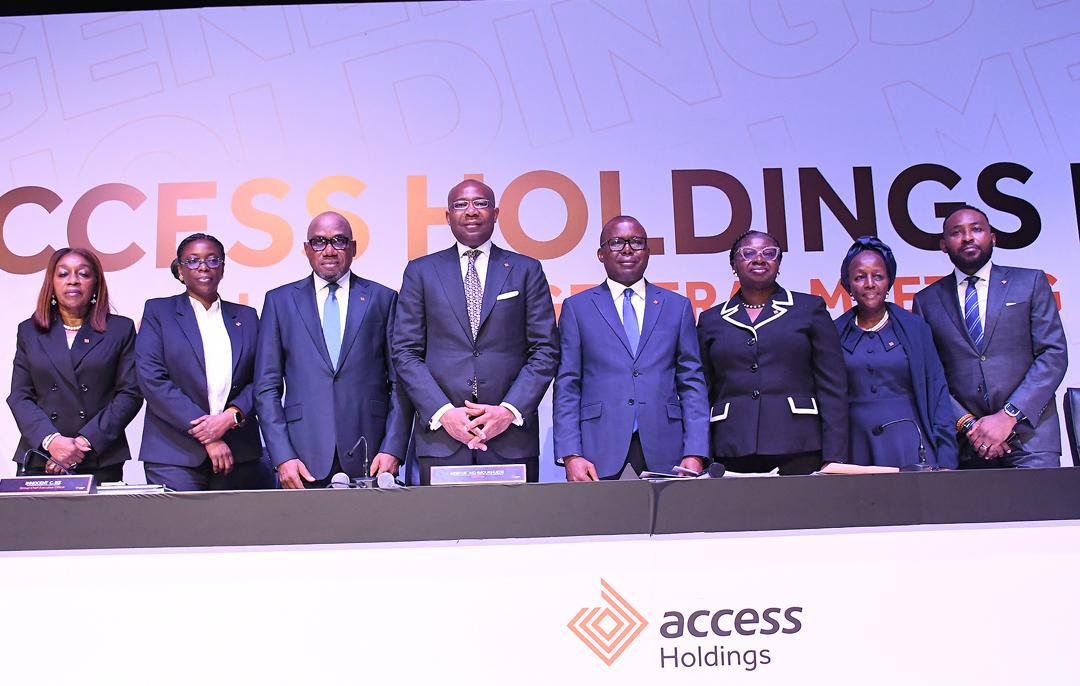
Access Holdings reaffirms long-term value strategy at 4th AGM
Lagos, Nigeria– June 11, 2026:
Access Holdings Plc has reaffirmed its commitment to long-term value creation, financial resilience and disciplined growth, assuring shareholders that its strategic focus remains firmly on building a stronger and more sustainable institution despite a challenging operating environment.Speaking at the Group’s 4th Annual General Meeting (AGM), Chairman Aigboje Aig-Imoukhuede, said the true measure of a financial institution is not simply its ability to grow but its ability to do so profitably, sustainably and with discipline over time.He said the Group’s 2025 performance reflected a deliberate strategy to strengthen its long-term fundamentals while maintaining solid financial results.Access Holdings reported a Profit Before Tax of ₦1.007 trillion, supported by the strength of its diversified business model and expanding earnings across key markets. Total assets rose to ₦51.56 trillion while customer deposits recorded strong growth, reinforcing the confidence of customers and the momentum of the franchise.According to the Chairman, the results should also be viewed in the context of prudent risk management decisions taken during the year. The Group accelerated provisions on legacy and regulatory forbearance credit exposures, leading to higher impairment charges as part of a conscious effort to reinforce its balance sheet and strengthen long-term resilience.”Periods of economic uncertainty often reveal more about an institution than periods of uninterrupted growth. Our focus remains on building a business that is not only growing, but improving in the quality, resilience and sustainability of its earnings,” Aig-Imoukhuede said.The AGM also highlighted the continued transformation of Access Holdings beyond traditional banking into a broader financial services ecosystem. While banking remains the Group’s primary earnings driver, businesses spanning investment management, pensions, insurance, consumer finance and digital payments are making increasing contributions to overall performance.Growth platforms including Access ARM Pensions, Access Insurance Brokers, Oxygen X Finance and Hydrogen Payments continue to expand the Group’s presence across retirement services, consumer lending and digital finance, strengthening its long-term earnings profile.Looking ahead, Aig-Imoukhuede said the Group’s next phase of development is anchored on its “From Scale to Value” strategy.”Our strategy, From Scale to Value, reflects the natural evolution of our journey. Scale created opportunity; value creation is how we fully realise it,” he said.He added that while the Group continues to generate strong returns, its long-term objective is to ensure earnings per share consistently exceed the cost of capital while unlocking the significant unrealised value embedded within its international subsidiaries.Addressing shareholders’ concerns over dividend payments, the Board clarified that the temporary suspension of dividends resulted from regulatory compliance requirements rather than any weakening of the Group’s financial position.Aig-Imoukhuede assured shareholders that the Group’s earnings capacity remains robust and reaffirmed the Board’s commitment to resuming dividend payments once the relevant regulatory conditions have been satisfied.”Our approach is clear: capital retained today must translate into greater value tomorrow and sustainable returns for our shareholders,” he stated.The AGM also reflected continued progress in governance and leadership succession. During the year, Innocent Ike was appointed Group Managing Director and Chief Executive Officer, while Ibironke Adeyemi joined the Board as an Independent Non-Executive Director.Shareholders equally commended Bolaji Agbede, Executive Director, Business Development, for her leadership of the management team during her tenure as Acting Group Chief Executive Officer before the appointment of Mr. Ike.The Chairman noted that the leadership transition was executed seamlessly, ensuring strategic continuity, operational stability and sustained stakeholder confidence.Despite ongoing macroeconomic uncertainties across its markets, Access Holdings expressed confidence in its strategic positioning, citing disciplined execution, a diversified business model, a strengthened capital base and a clear commitment to sustainable value creation.Reaffirming the Group’s long-term vision, Aig-Imoukhuede said: “Our responsibility is to justify the confidence of our shareholders by building an institution that endures, one defined by clarity of purpose, discipline of execution and sustainable value creation over time.”
Banking and Finance
Fidelity Bank Reaffirms Support for MSMEs, Drives Growth Agenda at SME Forum
Photo caption: L-R: Divisional Head, Small and Medium-scale Enterprises (SMEs), Fidelity Bank Plc, Mrs. Ugochi Osinigwe; Executive Director, South, Fidelity Bank Plc, Mrs. Pamela Shodipo; and Representative of the President of the Port Harcourt Chamber of Commerce, Industry, Mines and Agriculture (PHCCIMA) and Chairman of SMEs and Non-Governmental Organizations (NGOs) Trade Group, Mr. Jack Daboikiabo; at the Fidelity Bank SME Quarterly Business Forum held in Port Harcourt, recently.
Leading financial institution, Fidelity Bank Plc, has reaffirmed its commitment to advancing the growth and sustainability of Micro, Small and Medium-scale Enterprises (MSMEs), positioning itself as a trusted partner beyond traditional banking and financing.This commitment was reiterated by the bank’s management during a keynote address delivered by the Executive Director, South, Mrs. Pamela Shodipo, at the recently held SME Quarterly Business Forum in Port Harcourt, Rivers State.The Forum, themed “Scaling Trade and Distribution of Businesses for Sustainable Growth,” brought together entrepreneurs, business owners, industry experts and customers for insightful discussions on strategies for expanding businesses, strengthening distribution networks and unlocking sustainable growth opportunities in Nigeria’s evolving marketplace.In her address, Shodipo reiterated Fidelity Bank’s commitment to supporting SMEs beyond traditional banking and financing. She stated, “Our objective is clear: to help Nigerian enterprises grow, become more competitive and create sustainable value in their communities and the wider economy. We want to be more than a provider of funds; we want to be your trusted partner in growth,” she said.Further emphasising the strategic importance of the host city, the bank’s Executive Director described Port Harcourt as a critical economic hub, with significant influence across trade, logistics, marine services, manufacturing, agriculture, and the energy sector.“Port Harcourt occupies a strategic place in the economic life of Nigeria. It is a major commercial hub, a gateway to the South-South and a city whose influence extends across trade, logistics, marine services, manufacturing, agriculture and energy. Businesses here understand what it means to operate in a dynamic environment, respond to market demand quickly and keep commerce moving,” she said.Shodipo maintained that, the Forum’s theme was particularly relevant given the vital role trade and distribution businesses play in connecting producers to consumers, supporting supply chains, creating jobs and sustaining livelihoods.“Trade and distribution businesses play a critical role in the Nigerian economy. They connect producers to consumers, support supply chains, create jobs and sustain livelihoods. In the South-South, this role is even more significant because the region remains one of the vital arteries of commerce in Nigeria, with strong links to ports, industrial activity, wholesale trade and regional distribution networks,” she remarked.The bank’s Executive Director also highlighted initiatives such as the Fidelity Nigeria International Trade and Creative Connect (FNITCC), which connects businesses to international markets like the UK and US, as well as partnerships with the Nigeria Export Promotion Council (NEPC) and Lagos Business School through the Export Management Programme, alongside the Fidelity SME Hub for advisory support.In her remarks, Mrs. Ugochi Osinigwe, Divisional Head, Small and Medium-scale Enterprises, Fidelity Bank Plc, said the forum was designed to provide business owners with actionable insights and valuable networking opportunities that can accelerate growth.“SMEs remain the backbone of Nigeria’s economy, and at Fidelity Bank, we are deliberate about creating platforms that expose entrepreneurs to knowledge, innovation and opportunities that help them build resilient and scalable businesses. This forum reflects our ongoing commitment to supporting SMEs beyond banking by equipping them with the tools and connections needed to thrive in today’s competitive environment,” Osinigwe said.She encouraged participants to leverage the Bank’s various SME-focused initiatives, advisory services and digital solutions to strengthen their operations and position their businesses for long-term success.Participants at the forum commended Fidelity Bank for creating a platform that addresses real business challenges and provided practical solutions.One of the participants, Mr. Andy Macozi, praised the initiative, saying, “The forum was timely and informative. The discussions addressed challenges many business owners face daily, and I believe more entrepreneurs will benefit if Fidelity Bank continues to organize such seminars and knowledge-sharing sessions.”Also speaking, Chief Uche Aham, an oil and marine services entrepreneur, described the forum as insightful and impactful.“I commend Fidelity Bank for bringing together business owners to learn and exchange ideas. The sessions were practical and insightful. It would also be helpful if participants could receive comprehensive materials from the forum for future reference and implementation,” he noted.The Fidelity Bank SME Quarterly Business Forum is the latest of the bank’s initiatives aimed at empowering entrepreneurs, fostering innovation and driving sustainable economic development across Nigeria.Ranked among the best banks in Nigeria, Fidelity Bank Plc is a full-fledged Commercial Deposit Money Bank serving over 10 million customers through digital banking channels, its 255 business offices in Nigeria and United Kingdom subsidiary, FidBank UK Limited.The Bank is a recipient of multiple local and international awards, including the 2025 Development Bank of Nigeria (DBN) Innovation Award for MSME support; Best Retail and SME Bank Award from Independent Newspapers; Best Bank for Export & Trade Finance and Most Innovative Bank of the Year at the 2025 BusinessDay Banks and Financial Institutions (BAFI) Awards; and Nigeria’s Best Private Bank at the 2025 Euromoney Awards. The Bank also received the inaugural Most Improved Commercial Bank of the Year award by Nairametrics, the SME Bank of the Year award by NewsDirect, and the Straight-Through Processing (STP) Excellence Award by Citi Group, in addition to recognition by Global Brands Magazine for Excellence in Community Empowerment
Banking and Finance
Union Bank Backs Nigerian Teachers as Maltina Teacher of the Year Competition Marks 12th Edition
Lagos, Nigeria – June 8, 2026
Union Bank of Nigeria has reaffirmed its commitment to Nigerian teachers and the wider education sector at the flag off of the 12th edition of the Maltina Teacher of the Year Competition (MTOTY), held today in Lagos.
Now in its third consecutive year as a partner, the Bank joined organisers Nigerian Breweries Plc and the Felix Ohiwerei Education Trust Fund, alongside educators and sector stakeholders, for a panel session on how educational support can enhance learning outcomes for teachers and students.
Speaking on behalf of Union Bank, Chief Brand and Marketing Officer, Olufunmilola Aluko, positioned education as central to the Bank’s purpose rather than a peripheral cause.
“At Union Bank, we believe education is not a social obligation. It is a strategic investment,” she said. “A nation that does not invest in its teachers and its learners is borrowing from its own future, and we are in the business of building futures, not mortgaging them.”
She pointed to Edu360, the Bank’s flagship education initiative under the UnionCares platform, as the practical expression of that conviction. Edu360 spans the full education value chain, from widening access for children in underserved communities and investing in the teachers who multiply learning outcomes, to building digital literacy and STEM capability, and preparing young people for employment or enterprise.
On the role of the financial sector, Aluko challenged her peers to think differently. “Financial institutions need to stop thinking of ourselves as donors and start thinking of ourselves as ecosystem builders,” she said. “We can embed financial literacy into school curricula, design products that help parents save for their children’s education, and convene policymakers, educators and the private sector around shared goals. Above all, we can show up consistently, not only when it suits our brand calendars.”
She noted that lasting change requires sustained collaboration between the public and private sectors, and pointed to the strength of the signal sent when institutions commit to teachers at scale, citing the competition’s ₦100 million grand prize. With twelve editions and more than three hundred teachers recognised to date, she described MTOTY as a model of the consistency Union Bank embodies through Edu360.
Her closing message was directed at educators across the country. “To every teacher in this country, what you do is not small,” she said. “Your story deserves to be told, and Nigeria needs to know your name.”
Union Bank’s participation aligns with United Nations Sustainable Development Goal 4 on inclusive and equitable quality education, and reflects the Bank’s broader commitment to social impact and sustainable development across the communities it serves.
#
Note to Editors:
About Union Bank of Nigeria Plc’s
Established in 1917, Union Bank is a leading provider of financial services in Nigeria, renowned for its “Simpler, Smarter Banking” philosophy. With a nationwide network and a strong focus on digital innovation, Union Bank continues to empower individuals, businesses, and the public sector to achieve lasting success.
The Bank is a trusted and recognisable brand with an extensive network of over 300 branches across Nigeria. The Bank offers a range of banking services to individual and corporate clients, including current, savings, and deposit account services, funds transfer, foreign currency domiciliation, loans, overdrafts, equipment leasing, and trade finance. The Bank also offers customers convenient electronic banking channels and products, including Online Banking, Mobile Banking, Debit Cards, ATMs, and POS Systems.
More information can be found at: www.unionbankng.com
Media Enquiries:
Olufisayo Adelekun
+234 (0) 201 271 6800
mediarelations@unionbankng.com
Banking and Finance
Stewardship, Not Seizure: What the Union Bank Case Is Really About
There is a particular genre of financial commentary that mistakes legal process fora factual verdict. A court delivers a first-instance ruling, procedural questions areraised, and before the ink is dry on the appeal filing, the narrative has alreadyhardened: the regulator overreached, investor confidence is shattered, andNigeria’s financial governance is on trial before the world. Much of thecommentary currently circulating about Union Bank of Nigeria belongs to thatgenre. It is not without merit on certain procedural questions. But it is, at its core,incomplete — and incompleteness in financial journalism carries costs that runwell beyond the column.The Acquisition That Started EverythingIn 2022, Titan Trust Bank Limited, then chaired by Mr Tunde Lemo, acquiredapproximately 94 per cent of Union Bank of Nigeria through two Dubai-registeredentities: Luxis International DMCC, promoted by Mr Rahul Savara, and MrCornelius Vink’s Magna International DMCC, both linked to the Tropical GeneralInvestments (TGI) Group. The US$300 million transaction was financedpredominantly through an Afreximbank facility. The CBN’s policy is unambiguous:borrowed funds may not be used to acquire shares in a licensed financialinstitution. That principle exists because debt-funded acquisitions hollow out thevery capital base they purport to build.That is precisely what happened. A forensic audit found that the Afreximbank loanwas ultimately reflected in Union Bank’s own books, with no hedgingarrangements against naira depreciation. As the currency weakened, revaluationlosses intensified, the capital adequacy ratio deteriorated into negative territory,non-performing loan exposure increased significantly, and a substantial capitalshortfall emerged. Critically, as stated in the Bank’s own Notice of Appeal, aspecial examination was conducted, and its findings were formally presented toformer Managing Director Mudassir Amray and the board then chaired by FaroukGumel, who were confronted with the institution’s grave financial condition andcontinuing regulatory infractions. The claim that the CBN acted without evidencebefore dissolving the board is, on the record, simply not accurate.The Legal PictureThe CBN acted under Section 34 of BOFIA 2020 and Section 52 of the CBN Act2007 — broad discretionary executive powers that do not require a specialexamination as a condition precedent. The Federal High Court’s characterisationof those powers as quasi-judicial is itself among the central questions now onappeal. Both the CBN and Union Bank have filed formal appeals. Union Bank’sown Notice of Appeal, filed the day after judgment on thirteen grounds and arguedby Olaniwun Ajayi LP, challenges the ruling on several fronts: that therespondents may never have had locus standi to sue in the first place, under therule in Foss v. Harbottle; that the application was filed nearly two years after theJanuary 2024 events, well outside the prescribed three-month limitation window;and that the CBN-supervised recapitalisation exercise, mandated under Section 9of BOFIA, cannot constitute evidence of bad faith. These are not technicalities.They are substantive questions of law that the Court of Appeal must nowdetermine.The Human Stakes and the Real QuestionBehind the legal arguments sit approximately 7.8 million depositors and around6,450 employees across 281 branches. Union Bank’s own affidavit describes it as asystemically important institution in a precarious financial situation, continuing torely on CBN forbearance for its existence — a frank admission that validates,rather than undermines, the case for intervention. Meanwhile, critics argue thedispute damages investor confidence. The wider evidence does not support thatconclusion. By April 2026, thirty-three Nigerian banks had raised N4.65 trillionunder the CBN’s recapitalisation framework — over ten times the 2004 to 2005consolidation figure. The Nigerian Exchange All-Share Index rose approximately29 per cent in the first quarter of 2026 alone. The market has read the CBN’sresolve as stability, not recklessness. Conflating this case with a systemicconfidence crisis runs the risk of misleading the very international investors thecommentary claims to be protecting.The structural vulnerability at the centre of this dispute originates not with theregulator but with an acquisition financed with borrowed funds, loaded onto theacquired institution’s balance sheet, and left unhedged against exchange-raterisk. When the CBN stepped in, it was doing what central banks everywhere areexpected to do. When Union Bank’s own legally constituted board subsequentlyfiled its own appeal, it was signalling what a properly constituted governancestructure recognises as being in the institution’s best interests. Nigeria’sappellate courts — not the court of commentary — are the appropriate arena forresolution.Union Bank of Nigeria is a 109-year-old institution serving nearly eight milliondepositors. It is not being dismantled. It is being stabilised under active regulatorysupervision, with operations intact and depositors protected. In the language ofinstitutional governance, that is called stewardship. The commentary thatmistakes it for anything else does the institution, its depositors, and Nigeria’sfinancial governance narrative a disservice that will outlast the headlines.*Bala Rabiu, writes from Kano
-
NEWS14 hours agoGovernor Dauda Lawal names executive secretaries for two agencies, appoints ZACADEP coordinator
-
Brand1 day agoInterswitch Brings Two Decades of Infrastructure Thinking to the 3rd ‘Invest Lagos’ Summit, highlights Lagos SHIP as prime example of forward-thinking public-private sector partnership
-
Brand1 day agoWatching BBN and the World Cup Is No Longer a Location Thing
-
Banking and Finance1 day agoFidelity Bank Reaffirms Support for MSMEs, Drives Growth Agenda at SME Forum