NEWS
Governor Dauda Lawal to Unlock Zamfara’s Economic Potentials with Tinubu’s UK State Visit
By Oladapo Sofowora
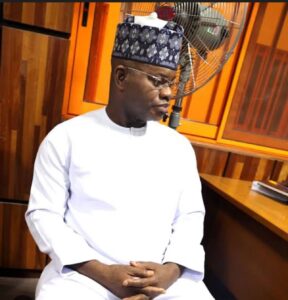
As President Bola Ahmed Tinubu commences his landmark state visit to the United Kingdom the first by a Nigerian leader in 37 years, the inclusion of Zamfara State Governor Dauda Lawal in the presidential entourage is not a fluke; rather, it signals a strategic opportunity for the northwest state to transform its economic fortunes. Beyond the ceremonial pageantry, this high-level diplomatic engagement holds concrete prospects for Zamfara, particularly in agriculture and solid minerals development, sectors where the state possesses a comparative advantage but has struggled to attract meaningful investment. With Governor Lawal working assiduously to generate more IGR for the state and also position it as an economically advanced hub within the region with the construction of a Cargo Airport, this ushers in an era where the state is about to witness a great turnaround championed by Governor Lawal.
The timing of the bilateral engagement between the UK and Nigeria is significant, as the trade surplus between the two countries has reached a record £8.1 billion annually, and both nations are intensifying collaboration under the UK–Nigeria Enhanced Trade and Investment Partnership (ETIP) framework.
According to economic pundits, key sectors targeted for cooperation include trade and investment, energy transition, solid minerals development, and security collaboration – all areas with direct implications for subnational governments like Zamfara. For Governor Lawal, being part of this engagement provides direct access to British investors and development partners that could reshape Zamfara’s economic landscape.
Governor Lawal arrives in London with ambitious development plans to corroborate the budget he presented in December 2024, a ₦861.3 billion budget proposal for the 2025 fiscal year submitted to the Zamfara State House of Assembly, a document he described as “a roadmap for transformation and a declaration that Zamfara will rise stronger.” The budget allocates ₦714.05 billion (83 per cent) to capital expenditure, with sectoral allocations including ₦86 billion for agriculture and significant provisions for infrastructure development. However, these ambitious plans require corresponding revenue streams and investment partnerships to allow them to materialise and reach their full potential.
The governor has been implementing domestic reforms to strengthen the state’s fiscal position. In March 2025, he abolished cash revenue collection across Zamfara, directing all Ministries, Departments, and Agencies to adopt digital systems for revenue collection. His administration set an Internally Generated Revenue target of ₦38 billion to ₦42 billion for 2025, building on 2024’s revenue performance of ₦358.9 billion. With all these impeccable performance indicators, domestic resource mobilisation alone cannot fund the scale of transformation he envisions for the state. The only way to scale up is through Foreign Direct Investment, particularly in agriculture and mining, which represents the missing piece of Zamfara’s development puzzle.
Zamfara State is predominantly agrarian, with the majority of its indigenous population engaged in farming. The state’s favourable climate and vast arable land position it as a potential breadbasket for northern Nigeria. However, the sector remains largely subsistence-based, with limited processing capacity and weak linkages to export markets.
The UK state visit offers opportunities to change this dynamic. British companies have demonstrated growing interest in Nigerian agriculture, as evidenced by Twinings Ovaltine’s £24 million manufacturing facility launch in Lagos its first in Africa creating over 100 direct jobs. Similar investments could be directed toward Zamfara’s agricultural sector, which would be a boost and also create more income for farmers in the production of specific crops with value-addition potential. These include:
Zamfara lies within Nigeria’s cotton belt, but the state lacks ginning and textile processing facilities. Partnerships with British textile companies could establish local cotton processing capacity, capturing value currently lost to exports of raw lint. Groundnut is also a major export commodity from northern Nigeria, but production has declined due to neglect of the sector. British confectionery and food processing companies represent potential off-takers for processed groundnuts.
With growing demand for animal feed and industrial starch, Maize and Sorghum crops offer processing opportunities. British agribusiness firms with expertise in agro-processing could establish milling and processing facilities in Zamfara.
With Sesame Seeds already an export crop, sesame production could benefit from improved processing and certification to meet international standards, particularly for the UK market.
For Zamfara, “opportunities for Nigerian businesses” translates directly to potential agricultural partnerships that could modernise farming practices, establish processing infrastructure, and create export linkages.
Perhaps the most significant potential gains for Zamfara lie in the solid minerals sector. The state is renowned for its gold deposits, which have historically attracted both licensed operators and illegal miners. However, the sector has been characterised by informality, environmental degradation, security challenges, and loss of revenue to the state.
Recent developments at the federal level underscore the growing importance of the minerals sector. The Federal Government recently announced the commencement of operations at a high-purity gold refinery in Lagos – a private-sector initiative led by Kian Smith in partnership with UAE-based Suvarna Royal Gold Trading. For Zamfara, this means advocating for gold processing facilities within the state, not merely exporting overseas, but creating a gold refinery which helps create more jobs within the mining value chain. Governor Lawal’s presence in London provides an opportunity to position Zamfara as a preferred location for one of these gold refineries, particularly with British investment partners.
In a bid to redefine the regulatory framework and investment readiness, Zamfara has been taking steps to create an enabling environment for mineral investment. In February 2025, the Federal Ministry of Solid Mineral Development, in collaboration with the Zamfara State Mineral Resources and Environmental Management Committee (MIREMCO), convened a stakeholders’ meeting with quarry operators, mineral processors, and gold dealers to promote safety and regulatory compliance. The Federal Mines Officer in Zamfara State emphasised that both the federal and Zamfara State governments are determined to promote responsible mining practices that enhance security, safeguard the environment, and ensure that solid mineral resources contribute meaningfully to economic development.
This regulatory clarity is essential for attracting foreign investors. British mining companies and equipment manufacturers require assurance that their investments will operate within a predictable legal framework. The UK–Nigeria ETIP discussions in London provide a platform for Governor Lawal to articulate Zamfara’s investment readiness and regulatory improvements directly to potential partners.
No discussion of Zamfara’s economic potential can ignore the security challenges that have plagued the state. Banditry, kidnapping, and community conflicts have disrupted farming, hindered mining operations, and deterred investment. Governor Lawal’s 2025 budget allocates ₦45 billion to public order and safety, recognising that security is foundational to economic development. The UK visit offers opportunities for security collaboration. Improved security cooperation between Nigeria and the UK could translate to enhanced capacity to protect farming communities and mining sites, creating conditions for agricultural and mineral investments to flourish.
As Governor Lawal engages with British investors and policymakers, he would do well to study how other resource-rich regions have successfully attracted investment while ensuring local benefits. For Zamfara under Governor Lawal, the lesson is clear: attracting investment in extraction must be accompanied by deliberate strategies to build local processing capacity. Simply exporting raw gold or agricultural commodities perpetuates the “resource trap” that has left many African regions impoverished despite abundant natural wealth.
If Governor Lawal’s participation in the UK state visit yields tangible results, Zamfara could experience, in agriculture, British investment in agro-processing facilities, creating jobs for local farmers and capturing value from crops like cotton, groundnuts, and sesame. Technical partnerships to improve farming practices and access to UK markets for certified organic or fair-trade products.
In solid minerals, partnerships with British mining companies for responsible gold extraction, potentially including a gold refinery within Zamfara. Technical assistance for artisanal miners to formalise operations and improve safety. Investment in environmental remediation of degraded mining areas.
For Zamfara State, Governor Lawal’s inclusion in the presidential entourage transforms a diplomatic milestone into a concrete opportunity for subnational economic development. The state’s abundant agricultural land, mineral wealth, and a population eager for economic opportunities hold immense potential. The journey from potential to prosperity is long, but it begins with a single step or in this case, a transatlantic flight carrying Zamfara’s hopes to the corridors of British power and finance.
NEWS
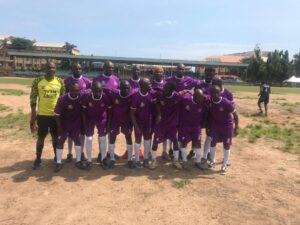
Ifako Mini Stadium, Temitope Adewale And His Result-Oriented Youth Development
By Oluwatosin John
At last, the long awaited remodelling of Ifako Mini Stadium is coming to fruition, we say a ‘big kudos’ to Hon. Adewale Temitope Adedeji, OON, member representing Ifako-Ijaiye Constituency I at the Lagos State House of Assembly.
The Ifako Mini Stadium is the only sporting facility that serves over one million residents of Ifako-Ijaiye Local Government and environs including several youths in neighbouring communities in Ogun State. Since its demolition and approval for renovation, standard sporting activities had been put to halt.
The development and growing impact of the Ifako Mini Stadium is now being widely recognised as a significant step toward advancing grassroots sports and youth empowerment within the community.
Facilitated by Hon. Adewale and constructed by the Governor of Lagos State, Mr. Babajide Olusola Sanwo-Olu, the modern sporting facility is designed to provide accessible and functional infrastructure for recreational and competitive activities. It will also serve as a hub for youth engagement, talent discovery, and community development.
The initiative, according to residents who would benefit from it, reflects a broader commitment to addressing the challenges faced by young people, particularly the lack of structured recreational spaces and opportunities for personal growth.
The stadium features a beautiful standard football pitch, spectator seating area, floodlighting for evening activities as well as essential amenities such as world class changing rooms, restrooms, and administrative spaces. These features position the complex as a suitable venue for tournaments, training programmes and community events.
For emphasis and the purpose of appreciation, it is noted again that central to the success and visibility of this initiative is Hon. Temitope Adewale, a son of Ifako-Ijaiye whose continued commitment to youth development and community advancement has been instrumental in promoting projects that directly impact the lives of residents in the area.
This lawmaker’s dedication underscores the importance of leadership that prioritizes sustainable development through investments in young people and community infrastructure. His education initiatives have catapulted Ifako-Ijaiye from the bottom to the top.
“The Ifako Mini Stadium represents more than just a place for sports—it is a foundation for opportunity, growth, and the future of our youth,” Mr. Johnson Oredolu, a community representative, said about the facility and he is right.
Before now, sporting activities in the constituency and its neighbourhood had been reduced to streets and school compounds leaving no room for professional experiences and exposures to expert connections. The youth are now excitedly optimistic believing that these challenges will become ‘a thing of the past’.
The Ifako Mini Stadium will surely create opportunities for local coaches, sports organisers, and small businesses to benefit from activities hosted at the venue.
Residents and observers note that the stadium has the potential to serve as a pipeline for discovering and nurturing future professional athletes while also strengthening community ties through regular sporting and social events.
As Lagos State continues to expand its investment in grassroots sports infrastructure, the Ifako Mini Stadium stands out as a model of how targeted initiatives can drive meaningful change at the community level.
With sustained support, effective management, and active community participation, the facility is expected to remain a cornerstone for youth empowerment and sports development in Ifako-Ijaiye for years to come. The long awaited JAHrity Cup, a novel football competition to combine sports and charity will be unveiled soon at the stadium.
The enormous value of this infrastructure will remain unquantifiable as it will attract sports enthusiasts from around the state and beyond to experience classical games at a standard-class facility, thus putting Ifako-Ijaiye in the spotlight as a destination for sports lovers.
With the continued efforts of this worthy legislator, our own Hon. Adewale Temitope Adedeji, OON, the future of sports in Ifako-Ijaiye can only be more experienced than imagined.
NEWS
UN Deputy Chief Commends Governor Dauda Lawal’s Reforms, as Zamfara Unveils Development Blueprint
In a significant diplomatic endorsement, the United Nations Deputy Secretary-General, Hajiya Amina Mohammed, on Thursday visited Governor Dauda Lawal in Gusau, Zamfara State, where the governor formally presented his administration’s comprehensive development blueprint aimed at rebuilding the state after years of banditry, economic instability, and governance deficit.
The visit, which lasted several hours, included closed-door talks at the Government House, a brief tour of ongoing infrastructure projects, and a joint press appearance. It marks the highest-level UN visit to the North-Western state in nearly a decade.
Speaking to reporters afterward, the UN Deputy Secretary-General commended Governor Lawal for what she called tangible progress in opening up Zamfara, noting that he had made the state more accessible not just in terms of roads but by creating an enabling environment for investors and development partners. She highlighted ongoing administrative reforms, including the digitization of revenue collection and steps to strengthen the civil service, as encouraging signs that Zamfara is moving toward greater stability, economic growth, and sustainable development.
Her remarks were particularly notable given the state’s recent history, as large parts of Zamfara were until last year no-go zones for international agencies due to banditry, kidnappings, and poor road networks.
During the meeting, Governor Lawal presented a 97-page document titled the Zamfara State Development Plan 2024 to 2028, which his aides have called the “Zamfara Rising” blueprint. The plan is built on four pillars: security and rule of law; economic revival focusing on agriculture and mining reforms; human capital development including rebuilding schools and health centers; and infrastructure with an emphasis on rural roads and digital access.
Governor Lawal said the document is not just a policy paper but a covenant with the people of Zamfara and an open invitation to the world. He reaffirmed his administration’s commitment to working with international partners, including the United Nations, to promote development, improve livelihoods, and attract more investment opportunities, adding that the state has moved from survival mode to development mode. Governor Lawal, a former banker who took office in May 2023, inherited a state that the World Bank had ranked among Nigeria’s poorest and least resilient, with his predecessor’s tenure marked by accusations of mismanagement and failed amnesty deals with bandits.
While security remains the greatest challenge and critics note that rural communities still face sporadic attacks, the UN Deputy Secretary-General’s visit signals cautious optimism. She revealed that the UN system will deploy a technical team to Gusau within 30 days to align the state’s development plan with the UN Sustainable Development Cooperation Framework for Nigeria, and she hinted at a possible high-level donors’ conference for Zamfara later in 2026 that could attract funding from the World Bank, African Development Bank, and European Union.
NEWS
GOV. LAWAL WINS BON GOVERNOR OF THE YEAR FOR ZAMFARA’S INFRASTRUCTURE
The Broadcasting Organisations of Nigeria (BON) has awarded Governor Dauda Lawal the Infrastructure Governor of the Year honour for his administration’s giant strides in the Urban Renewal project across Zamfara.
The governor received the award at the second edition of the Broadcasting Organisations of Nigeria (BON) held at the NAF conference centre, Abuja.
A statement by the governor’s spokesperson, Sulaiman Bala Idris, revealed that the BON acknowledged Zamfara state’s unprecedented and transformative achievements in infrastructure, recognising excellence beyond the broadcasting industry.
He added that Governors Bassey Otu of Cross River and Uba Sani of Kaduna, the minister of information and national orientation, Mohammed Idris, along with John Momoh, Shyngle Wigwe, Abubakar Jijiwa, and Sa’a Ibrahim, were among the prominent Nigerians honoured at the 2026 Nigeria Broadcasting Awards.
The statement read in parts, “The Broadcasting Organisation of Nigeria, an umbrella body for public and private broadcasters in Nigeria, was established in 1973 to promote the interests of the broadcasting industry and ensure high standards in media practices.
“The organisation conducted a thorough months-long selection process aimed at recognising professional excellence and raising standards for media practice across Nigeria.
“The Awards Selection Committee was chaired by Dr Danladi Bako, former Director-General of the National Broadcasting Commission (NBC). The awards panel included veterans and representatives from the Advertising Regulatory Council of Nigeria (ARCON) and the NBC.
“The selection committee cited numerous reasons for awarding Governor Dauda Lawal, notably his significant progress across sectors, particularly for transforming Gusau into a modern State Capital.
“Zamfara has witnessed unprecedented achievements under Governor Dauda Lawal, including the historic construction of a modern International Airport in the State.
“Apart from urban renewal projects, as well as the construction and outfitting of General Hospitals, Governor Dauda Lawal’s administration has built, refurbished, and equipped over 800 schools across the 14 local government areas of the State.
“This recognition by the highest broadcasting authority in Nigeria will motivate the governor to dedicate more effort to his mission to serve and rebuild Zamfara state.”
-
Banking and Finance2 days agoWema Bank Releases Full Year 2025 Audited Financial Results
-
NEWS1 day agoGOV. LAWAL WINS BON GOVERNOR OF THE YEAR FOR ZAMFARA’S INFRASTRUCTURE
-
Cover2 days agoHow Primate Ayodele Foretold Death Of Kebbi Speaker, Abuja Building Collapse In Prophecy Book
-
Banking and Finance1 day agoPolaris Bank Drives Youth Financial Literacy Through Global Money Week 2026
-
Entertainment2 days agoHeartbeat Finale: Who Found Love, Who Lost It, and Who Almost Had It
-
NEWS7 hours agoUN Deputy Chief Commends Governor Dauda Lawal’s Reforms, as Zamfara Unveils Development Blueprint
-
Entertainment2 days agoFrom E! Africa to Bravo Africa: Where Your Favourite Reality Shows Live Now
-
NEWS34 minutes agoIfako Mini Stadium, Temitope Adewale And His Result-Oriented Youth Development