Brand
Interswitch Showcases Technology Leadership at the 2025 Delta Tech Week
Interswitch, one of Africa’s leading integrated payments and digital commerce companies, played a significant role at the inaugural Delta Tech Week 2025, the flagship innovation, technology, and entrepreneurship festival convened by the Delta State Government through the Ministry of Science and Technology. The five-day event, held in Asaba from December 1st to 5th, brought together startups, corporates, academia, investors, developers, and ecosystem enablers from across Nigeria. As a sponsor of the festival, Interswitch delivered a strong presence through product demonstrations, panel discussions, and developer-focused engagements, reinforcing its commitment to strengthening Nigeria’s digital infrastructure and enabling innovation across the South-South region. The company’s participation aligned with Delta State’s goal of positioning itself as an emerging technology hub through collaboration, capacity-building, and ecosystem development. A key highlight of Interswitch’s involvement was its showcase of the API Marketplace and the Interswitch Payment Gateway, where the team demonstrated how businesses and developers can seamlessly integrate for payments, collections, merchant services, reconciliations, and commerce expansion. These sessions offered hands-on insights into how Interswitch’s technology is powering secure, frictionless checkout experiences and enabling enterprises to scale quickly across the country. The company also featured prominently across panel discussions exploring financial inclusion, digital commerce enablement, the evolution of developer culture, and the role of infrastructure in driving socio-economic growth. These conversations underscored Interswitch’s continued leadership in shaping Nigeria’s digital economy. Speaking on the company’s participation at the event, Olayinka Oluwadamilare, Head, Operations Strategy, Interswitch, noted the importance of multi-stakeholder collaboration in accelerating regional innovation. “Delta Tech Week reflects the power of collective action in building a stronger digital future. Interacting with developers, startups, and the public sector in one space reaffirmed the importance of reliable infrastructure in driving innovation. Interswitch remains committed to supporting Delta State’s tech ecosystem and empowering its builders with secure, seamless payment solutions.” Throughout the event, Interswitch maintained strong visibility across key gatherings including DevFest, the Women in Tech Summit, and various breakout sessions focused on infrastructure, entrepreneurship, payments, and the future of software development. Representing the company across these engagements were Adeyinka Adekoya, Vice President, Energy Ecosystem; Blessing Ogbonna James, Head, Digital Payments; Chidi Opara Ndudu, Partner Manager; and Esohe Obaseki, Executive, Growth Marketing. As the maiden edition of Delta Tech Week came to a close, Interswitch reaffirmed its commitment to supporting Delta State’s fast growing technology ecosystem and to enabling individuals and businesses with secure, reliable, and future ready digital payment solutions.
Brand
WEMA BANK SET TO SPONSOR CELEBRITY PERFORMANCE AT COUPLE’S WEDDING
In the spirit of the season of love, Wema Bank has announced the couple who will be getting a special celebrity artiste performance at their wedding on Valentine’s Day, February 14, 2026: The bride, Rita Ndukwe and the groom, Jemil Adama.
Inspired by the “Evolution” theme of its upgraded ALAT App tagged “ALAT: The Evolution”, Wema Bank launched its Valentine campaign on February 1, 2026, with a focus on celebrating the journey of love across four categories: self-love, friendship, romantic relationships and marriage.
“Evolution Of Love, Powered by Wema Bank” called on singles, friends, lovers, and married couples to post a 1-minute video sharing their love journey and how it has evolved over the years. At 3 p.m. on Thursday, February 12, the Bank announced the couple who would be getting the ultimate love experience: a celebrity artiste performance live at their wedding on February 14th.
The internet has been buzzing in excitement and anticipation of the celebrity artiste Wema Bank is bringing to the special Valentine wedding this weekend.
Updates are available on the Bank’s social media platforms @wemabank. Anyone interested in following the conversation and watching the big reveal of the celebrity artiste is encouraged to turn on post notifications and use #ALATEvolutionOfLove to stay up to date.
Brand
Ugbe: Reflections on Tenure as MultiChoice Nigeria CEO
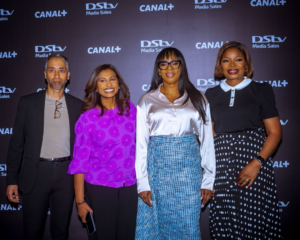
The recent retirement of Mr. John Ugbe as Chief Executive Officer of MultiChoice Nigeria, a Canal+ company, offers a useful example of a leadership style that has become rare on the Nigerian corporate landscape. This reflects less on the effectiveness of the approach than on its divergence from prevailing leadership norms.Over more than two decades within the MultiChoice system, including eight years as Chief Executive Officer in Nigeria, Ugbe adopted an approach that placed emphasis on process, governance and continuity. To his credit, and that of the organisation, MultiChoice Nigeria did not evolve into an extension of executive personality. In an environment where visibility is often equated with authority, this positioning stood apart.Corporate leadership transitions in Nigeria frequently follow a familiar pattern. Incoming executives emphasise personal vision and rapid change. Existing structures are dismantled to signal a break from the past. Success is closely tied to individual leadership, while challenges are attributed to inherited constraints. When transitions occur, organisations often experience disruption, with focus shifting to short-term stabilisation.Ugbe’s trajectory differed. He advanced through technical and managerial roles within MultiChoice Nigeria before assuming senior leadership. This progression informed a management style grounded in operational familiarity rather than symbolic authority. Decisions were shaped by institutional process and regulatory context, with growth pursued alongside organisational coherence.This orientation became more pronounced as the operating environment grew more complex. Nigeria’s media and entertainment sector operates under intense regulatory scrutiny, consumer sensitivity and global competitive pressure. Leadership in such conditions often attracts demands for visible decisiveness. During periods of heightened scrutiny, including debates around pricing, accessibility and content direction, corporate engagement under Ugbe remained largely restrained. Responses prioritised institutional positioning rather than executive prominence.Growth initiatives followed a similar logic. The launch of GOtv, expansion of local content, creative development programmes and empowerment schemes were integrated into the organisation’s operating framework rather than presented as separate leadership interventions. Over time, these initiatives contributed to an ecosystem capable of functioning without constant executive involvement.This distinction matters. Many Nigerian organisations remain dependent on individual leaders. Decision-making slows in their absence, and leadership transitions often trigger operational resets. In such settings, succession becomes disruptive rather than procedural. Ugbe’s tenure points to an alternative, where leadership prioritises institutional continuity over personal indispensability.This approach is reflected in the manner of his exit. Ugbe’s retirement coincided with a structured transition to Kemi Omotosho, an executive with extensive experience within the broader MultiChoice system. The process suggests an organisation prepared for leadership continuity. In a corporate environment where succession planning is often informal or delayed, this remains relatively uncommon.Leadership tenure in Nigeria is frequently extended beyond optimal periods, or exits occur with limited preparation. Authority becomes personalised, complicating transition. Ugbe’s career illustrates a model in which leadership is treated as stewardship rather than possession.Another defining feature of his tenure was pacing. Ugbe led in an industry shaped by technological disruption, shifting consumer behaviour and economic volatility. Streaming platforms altered consumption patterns. Currency instability affected planning. Public expectations evolved rapidly. Organisational responses during this period tended to be incremental rather than reactive, with sustained investment in talent development, content production and distribution infrastructure.This approach is sometimes interpreted as caution. It can also be understood as an emphasis on building capabilities that remain relevant across changing market conditions, rather than pursuing short-term visibility.Nigeria’s corporate environment often rewards immediacy. Executives face pressure to demonstrate impact quickly, sometimes at the expense of durability. Ugbe’s tenure highlights an alternative emphasis on organisational resilience.This is not to suggest an absence of limitations or criticism. Like most long-serving executives, Ugbe operated within structural constraints, market pressures and regulatory realities. MultiChoice Nigeria faced sustained criticism over pricing, accessibility and public communication, particularly during periods of economic strain. These challenges remain part of the operating environment beyond any individual leader.Ugbe also avoided positioning himself as the public face of the organisation. Visibility was distributed across teams, platforms and institutional initiatives, reinforcing a focus on organisational function rather than executive prominence.As MultiChoice Nigeria enters a new phase, the relevance of Ugbe’s career lies less in symbolism than in implication. It provides a reference point for leadership in complex Nigerian corporate environments where public scrutiny, regulatory pressure and long-term continuity must be balanced.
Brand
“No Pepsi, No Detty December” – Industry Leaders Explain How the Brand Took Over December
If Detty December has a backbone, many industry leaders believe it is Pepsi.As the new year sets in and normal life slowly resumes, industry voices are looking back with clarity. Across music, media, nightlife and live entertainment, one sentiment continues to surface. No brand has shaped Nigeria’s December culture with the depth and consistency of Pepsi.“Without Pepsi, we wouldn’t have Detty December in the manner that we know it now,” says music journalist Joey Akan. Every December, there is always a Pepsi activation. There is always a Pepsi angle.”Pepsi’s influence cuts across generations of entertainment culture. From early concert sponsorships to backing DJs, festivals and emerging platforms, the brand embedded itself long before December became a global export.Ayo Animashaun, founder of Hip TV and The Headies, recalls the early days. “When the industry was emerging, Pepsi was one of the brands that supported us by way of endorsement. Pepsi held the hands of many practitioners through the journey.”That support extended beyond artists. DJs who were often overlooked in brand conversations, found a consistent ally in Pepsi. “They were the first people who recognised DJs as a brand,” Joey Akan notes, referencing ambassadors like DJ Obi, DJ Cuppy, DJ Xclusive, DJ Spinall and most recently DJ YK Mule.For event founders, the impact was tangible. Mainland Block Party founder Tobi Mohammed credits Pepsi with helping build an entire ecosystem. “There was a major Mainland event that Pepsi saved. Those funds did not just pay for a party. They helped build a business.”As Nigerian music and nightlife continue to evolve from concerts to block parties to raves, Pepsi has moved with the culture. “Every time the culture shifts, Pepsi shifts with it,” Joey Akan explains. “That’s why they’ve stayed ahead of the game.”In a season where many brands now scramble for relevance, industry insiders agree: Pepsi didn’t chase Detty December. It built it.