Uncategorized
Ibrahim Dende Egungbohun Receives Award for Philanthropy
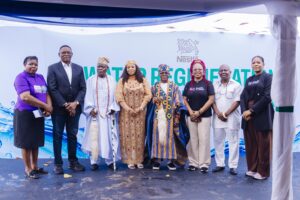
In a momentous ceremony held at the highbrow Radisson Blu Hotel in GRA, Ikeja, High Chief Ibrahim Dende Egungbohun, widely recognized as IBD Dende, received an illustrious Award of Excellence presented by the City of Brampton, Canada. This prestigious recognition highlights his outstanding contributions to philanthropy, empowerment, and entrepreneurial development in Nigeria, affirming the profound impact he has made on countless lives through his IBD Foundation.

The event was graced by a formal delegation representing the Mayor of Brampton, His Lordship Mayor Patrick Brown, led by Mr. Richard Forward, the Senior Manager of the Financial Advisory Budget Office. During the award presentation, the delegation emphasized Brampton’s dedication to cultivating international partnerships with distinguished leaders like IBD Dende, who is renowned for his philanthropy and unwavering commitment to improving the lives of those in need.
The award acknowledged Dende’s extensive philanthropic initiatives, particularly through his IBD Foundation, which has spearheaded transformative projects in various communities throughout Lagos and Ogun States. The recognition also included a formal commendation letter sealed by Mayor Brown, praising Dende’s tireless efforts in economic development, community growth, and his active support for the recently concluded African Made Economic Growth Initiative (AMEGI) in Canada, a significant event that was attended by his wife, Mrs. Omolara Egungbohun.
During the ceremony, Mayor Brown’s representatives delivered a poignant message regarding the importance of recognizing impactful figures within the community, noting, “With a vibrant Nigerian community of approximately 12,000 residents in Brampton, it is vital to spotlight individuals like Chief Dende who are making a tangible difference in the welfare of others.” This statement illustrates Dende’s role as a beacon of hope and progress within the Nigerian diaspora.
The distinguished delegation included Mr. Imadu Maurice, an adviser and community engagement specialist from the Mayor’s Office, and Mrs. Kehinde Adelaja-Okoroafor, Founder of the Make Mee Elegant Foundation. Both speakers highlighted Dende’s deep compassion for the marginalized and his relentless drive to empower them through various initiatives.
As a gesture of ongoing collaboration and mutual support, Mayor Brown extended a warm invitation to Chief Ibrahim to participate in next year’s AMEGI event, set to be hosted by the City of Brampton. This event aims not only to strengthen economic ties but also to empower one thousand women, celebrating the rich contributions of the African diaspora to Canadian society.
Upon receiving the award, Chief Dende articulated his commitment to philanthropy, emphasizing how he has consistently demonstrated his wealth through substantial investments in empowerment initiatives, particularly benefitting the people of Yewa land. He praised Mayor Brown and his administration for their commendable efforts in making Brampton one of the finest cities in Canada, stating, “Your hands-on leadership in championing the Brampton Youth Empowerment Initiative, alongside the recent Affordable Housing Expansion Program, exemplifies public service that truly uplifts its citizens in real time.”
Dende further expressed his enthusiasm for deepening collaborative efforts with the residents of Brampton, especially during his upcoming visit to Canada next year. He hopes to extend his philanthropic and developmental programs to the city, thereby supporting local initiatives and fostering shared prosperity.
“Through the IBD Foundation, our mission remains clear: to restore essential human amenities to communities where they have been lost and to create opportunities where none currently exist. We have invested heavily in educational sponsorships, healthcare interventions, humanitarian relief, rural development, and initiatives to support women-led entrepreneurial ventures. Over the years, we have provided thousands of essential medical treatments, delivered millions of meals to those in need, and supported youth who require encouragement and belief in their potential,” Dende articulated passionately.
For Ibrahim Dende Egungbohun, receiving this honour signifies not only individual achievement but also reflects the strengthening diplomatic and economic ties between Canadian institutions and Nigerian leaders dedicated to societal improvement and resilience. It stands as a powerful reminder of what can be accomplished when people come together to uplift their communities.
Uncategorized
Interswitch Group Founder, Mitchell Elegbe Rejoins Global Jury for 2026 EY World Entrepreneur of the Year Awards Grand Finale in Monaco for the 3rd Consecutive Year
…makes history, becoming the first and only entrepreneur globally to have won in both emerging and master categories in any region in 40 years, and invited to global jury for the 3rd year running
LAGOS, Nigeria, June 01 2026: Mitchell Elegbe, Founder and Group Managing Director/CEO of Interswitch Group has again been re-appointed as the only entrepreneur from Africa into the global jury of the 2026 Ernst & Young (EY) World Entrepreneur of The Year Awards, which takes place annually in June in Monte Carlo, Monaco, for the third consecutive year, following his inaugural jury duties at the 2024 awards. According to EY, the World Entrepreneur of the Year Hall of Fame is an elite corps of men and women who have been recognized for their exceptional entrepreneurial achievements. For 40 years, since 1986, EY has been celebrating ingenuity through the Entrepreneur of the Year program. “The program has recognized more than 10,000 outstanding entrepreneurs for their vision, innovation, courage, and leadership in building and growing successful businesses — businesses that influence the way people live, the products and services we depend on, and the economic vibrancy of our local communities and global markets.” In June of 2023, Elegbe, alongside 48 other accomplished entrepreneurs from 45 countries across the world were inducted into the 2023 WEOY Hall of Fame, with Interswitch’s Elegbe holding the unique distinction of being the only black and African global finalist and inductee into the coveted hall of fame, as well as the only entrepreneur in the 40-year history of the awards to have won in both the emerging and master categories at various times in their region (West Africa). For the 2026 edition of the global awards, Elegbe has been re-invited by EY’s global leadership to join the global jury being 1 of 9 former finalists who form the judging committee for the 2026 global awards of the initiative, holding annually in Monte Carlo, Monaco. The 2026 jury is made up of accomplished entrepreneurs, all former regional winners drawn from Australia, Brazil, Germany, Hong Kong & China, Nigeria (Elegbe), Singapore, The United Kingdom, and The USA. Mitchell Elegbe is widely regarded as one of the pivotal architects of Nigeria’s payment innovation revolution and has gained acclaim globally for his contributions as an exceptional African entrepreneur, who has contributed in no small measure to the economic development of Nigeria and Africa as a whole, having distinguished himself in business leadership and technology development. A multiple award-winning professional and a renowned business leader in the Information Technology and Financial Services industry, he has won several awards, some of which include Harvard Business School Association (Nigeria) Leadership Award in the General Management Category; African Banker Awards 2019 as the African Banker Icon; CNBC/Forbes All African Business Leader (AABLA) Awards for West Africa as well as Financial Technology (Fintech) Africa Awards, Payments and Transfer category in 2016, among other deserving recognitions. He is also a Bishop Desmond Tutu Fellow of the African Leadership Institute, an Endeavor Entrepreneur and also a member of the Board of Endeavor in Nigeria. Mitchell Elegbe founded Interswitch in 2002 to provide a solution to problems associated with payments in Nigeria and has since led the company to consolidated growth as a leading payment and digital commerce company that helps to build and manage payment infrastructure and provides robust technology-based solutions to individuals, financial institutions, and governments across Africa. See the full list and profiles of the 2026 Global Jury Members for the EY World Entrepreneur Of The Year Awards here https://www.ey.com/en_gl/weoy/judges
Uncategorized
Fidelity Bank to Drive SME Growth with Quarterly Business Forum
Leading financial institution, Fidelity Bank Plc, is set to launch a strategic engagement platform aimed at promoting the growth and sustainability of small and medium enterprises across Nigeria.Known as the Fidelity Quarterly Business Forum, the initiative is designed to bring together SME business leaders, founders, policymakers and industry experts to discuss business opportunities, economic trends, innovation and sustainable growth strategies.Speaking on the initiative, Ugochi Osinigwe, Divisional Head, Small and Medium-scale Enterprises, Fidelity Bank Plc, said the forum reflects the bank’s commitment to delivering a wide range of initiatives that support the growth of small businesses in Nigeria.“Our Quarterly Business Forum is part of our regular engagement with small businesses across the country. As you may know, Fidelity Bank is a leading supporter of SMEs through numerous financial products, and a strong advocate of a multi-dimensional approach to helping them succeed.“Through this initiative, the bank will host engagements with businesses across the country to strengthen their capacity, encourage networking and provide relevant advisory support to help them navigate the evolving economic climate and achieve profitability,” Osinigwe said.The maiden edition of the forum is scheduled to hold in Port Harcourt, Rivers State, on Wednesday, 3 June 2026. It will feature a range of activities, including a keynote address titled “Scaling Trade and Distribution Businesses for Sustainable Growth”, to be delivered by Pamela Shodipo, Executive Director, South, Fidelity Bank Plc.This will be followed by a Business and Economic Outlook presentation themed “Doing Business in a Trade Driven Economy”, to be delivered by Okechukwu Ugoji, Group Head, SME, Fidelity Bank Plc.The session will conclude with a networking event designed to foster valuable relationships among participants and encourage mutually beneficial business opportunities.The Fidelity Quarterly Business Forum adds to the range of innovative solutions introduced by the bank to support sustainable business expansion. It will be recalled that Fidelity Bank established a dedicated physical facility for small and medium-scale enterprises and entrepreneurs in the creative sector, known as the Fidelity SME Hub, in Gbagada, Lagos State.Through the hub, the bank provides entrepreneurs with networking and stakeholder engagement opportunities, as well as access to industry experts and mentors for practical guidance and business advisory support.Ranked among the best banks in Nigeria, Fidelity Bank Plc is a full-fledged Commercial Deposit Money Bank serving over 10 million customers through digital banking channels, its 255 business offices in Nigeria and United Kingdom subsidiary, FidBank UK Limited.The Bank is a recipient of multiple local and international Awards, including the 2024 Excellence in Digital Transformation & MSME Banking Award by BusinessDay Banks and Financial Institutions (BAFI) Awards; the 2024 Most Innovative Mobile Banking Application award for its Fidelity Mobile App by Global Business Outlook, and the 2024 Most Innovative Investment Banking Service Provider award by Global Brands Magazine. Additionally, the Bank was recognized as the Best Bank for SMEs in Nigeria by the Euromoney Awards for Excellence and as the Export Financing Bank of the Year by the BusinessDay Banks and Financial Institutions (BAFI) Awards
Uncategorized
Rescue Mission @ 3: How Governor Dauda Lawal Dragged Zamfara Back from the Abyss
By: Oladapo Sofowora
Three years ago, Zamfara State was not merely a place on the Nigerian map; it was a global byword for the darkest extremes of human and governance failure. To call the name “Zamfara” in any public gathering, anywhere across the world was to invite a sharp intake of deep breath followed by an unassuming shake of the head. It was formerly a state where school gates had become rusted relics, where hospitals were hollowed-out shells dilapidated and where the only booming economy was the dark, bloody trade of banditry and insurgency. But when Dr Dauda Lawal placed his hand on the Holy Qur’an on May 29, 2023, he did not inherit a government; he inherited a graveyard of unfulfilled promises. The civil service was a ghost of itself; unstructured and underperforming, groaning under the weight of unpaid salaries and gratuities stretching back over a decade. The state’s treasury had been bled dry, with an astonishing backlog of debt, including a suffocating ₦2.7 billion owed to the West African Examinations Council (WAEC) and the National Examinations Council (NECO); a debt that had cruelly barred thousands of innocent Zamfara State pupils from sitting for their final exams and progressing to tertiary education. Insecurity was apocalyptic; rural communities had been abandoned, entire local government areas were under the effective control of non-state actors and the proud agrarian identity of the state ‘Farming is Our Pride’ had been replaced by the grovel of internally displaced persons begging for a handful of grains. This was the hellscape that Lawal walked into for the first few months, even his most optimistic supporters wondered if the former banker had made a catastrophic error in judgment. Instead of complaining and playing the blame game as many of his peers do, he folded his sleeves and went straight into the rescue mission. Rebuilding brick by brick, reforming strategically and effecting holistic change across board, three years later, as the sun rises over the newly constructed terminal of the Gusau International Airport and the sound of children reciting lessons echoes from over five hundred renovated schools, the verdict is undeniable: Dauda Lawal did not come to manage Zamfara; he came to rescue it and he has delivered a performance so startling that it has forced even his fiercest political rivals to stand and applaud him for a job well done. What seemed like an Herculean task was a piece of cake for him because he came with a will and can-do spirit, and his love for his people helped him navigate the tides. Let us start with the most brutal wound; security. When Lawal campaigned on the promise of a “Rescue Mission,” the cornerstone was his vow to dismantle the ‘banditry economy’ that had turned farming into a death sentence. The previous approach had been a confusing mess of negotiations with criminals, which only emboldened the outlaws. Lawal, bringing the precision of a forensic auditor to the battlefield, did something unprecedented; he treated security like a strategic investment portfolio; he gave teeth to the security apparatus. The Governor dramatically raised the stakes by operationalizing and heavily funding the Zamfara Community Protection Guards, known locally as Askarawan Zamfara. These were not vigilantes; they were a disciplined, state-backed auxiliary force recruited from local communities who knew the terrain very well, the caves and the escape routes of the bandits. To support them and the regular military, Lawal’s administration donated over 140 brand-new, high-capacity operational vehicles equipped with modern communication gadgets, ensuring that for the first time, security agents could match the mobility of the criminals. He invested in sophisticated intelligence-gathering technology, creating a situation room in Gusau that monitors real-time movements across the fourteen local government areas. The results have been staggering. Within eighteen months, the bandits lost their strategic freedom of action. Farmers who had not seen their ancestral lands in four years were suddenly escorted back by combined teams of soldiers and guards, clutching subsidized seedlings and bags of fertilizer provided by the government for wet-season and dry-season farming. The famous rice and maize fields of Maradun and Anka which were once deserted are now green with harvest. The Governor understood a basic truth you cannot eat security, but you cannot farm without it. By breaking the siege on rural Zamfara, Lawal did not just save lives; he resurrected the state’s economy from the root upwards. The wailing of mothers who had lost sons to banditry has not stopped entirely, but it has been largely replaced by the hum of grinding machines and the laughter of children playing in villages that were once classified as “no-go areas.”But what is a secure community without an educated mindset? The statistics Lawal met upon arrival were enough to make any compassionate leader weep. Thousands of students had been locked out of their futures because the previous administration simply refused to pay examination fees. Young girls, in particular, had been pushed into early marriage because their parents saw no point in sending them to dilapidated, teacher-less schools. Lawal declared a State of Emergency in Education on his second day in office and unlike the hollow declarations of the past, he backed it up with actions and the state’s treasury. The first thunderbolt was the payment of the ₦2.7 billion WAEC and NECO debt, a move that instantly liberated the results of over 45,000 students. That single act of fiscal responsibility changed the trajectory of an entire generation as students’ results were released. But Lawal did not stop at paying debts. He launched a massive, unprecedented infrastructural blitz. In three years, over 500 schools from primary to secondary have been either completely reconstructed, renovated or equipped with modern furniture and learning aids, replacing the broken chairs and mouldy chalkboards with over 9,542 new two-seater desks. He went further, recruiting over 2,000 qualified teachers, ending the absurdity of one teacher managing a class of 120 students. He also tackled the rot in tertiary institutions; the Zamfara State University and the College of Health Sciences and Technology received not just facelifts but functional laboratories, libraries and hostels. The 2025 budget, a towering ₦79.6 billion allocation to education, is not an expense; it is a declaration that Zamfara will never again be a state of illiterates; rather it will be a state where intellectual giants and sound minds will be moulded. Parallel to the educational revolution, Lawal launched a surgical strike on the healthcare sector, which had become a death trap for the poor. When he toured the General Hospitals in Gusau and Anka shortly after inauguration, what he saw reportedly upset his stomach. Maternity wards without mattresses, operating theatres without power supply and pharmacies without a single tablet of medication. The Governor’s response was a systematic, ward-by-ward renovation of the state’s health infrastructure. The Yariman Bakura Specialist Hospital in Gusau has been transformed into a gleaming referral centre, equipped with digital X-ray machines, a functional dialysis unit, an MRI Machine deployment and a steady supply of essential medications. General hospitals in Kaura Namoda, Maru and Maradun have been similarly upgraded, ensuring that a sick person no longer has to travel 200 kilometres to Sokoto, Kano, Kaduna and Abuja for a simple surgery. But perhaps the most humane intervention has been the health insurance rollout for the poorest citizens. Lawal’s administration has enrolled over 150,000 vulnerable women and children into the state’s health insurance scheme, meaning that for the first time, a poor mother in a remote village can take her child to a primary health centre and receive treatment without being asked for a dime. This singular act has slashed the maternal mortality rate in the local governments by a significant margin.Then there is the quiet revolution happening in the civil service, a sector often ignored by politicians but which Lawal understood as the engine room of government. He met a workforce that had lost all hope. Retired professors and permanent secretaries were dying without collecting their gratuities, leaving their families in penury. The backlog of unpaid pensions and death benefits stood at an astronomical ₦13 billion. In a move that sent shockwaves through the state’s bureaucracy, Lawal cleared that entire backlog within his first 15 months in office. He didn’t stop there; he introduced a 13th-month salary bonus for all active workers, a rare gesture that boosted morale and productivity. He also cleared the previously unpaid cooperative deductions that had been stolen from workers’ salaries, an act that made him a hero in the corridors of the secretariat. By treating civil servants with dignity, Lawal ensured that the machinery of government began to move again, processing files, issuing permits and collecting revenue with an efficiency that saw the state’s Internally Generated Revenue (IGR) skyrocket from a pitiful ₦80 million per month to over ₦5 billion. This financial discipline allowed him to fund his infrastructure ambitions without begging for federal bailouts. The signature project of this ambition is the ongoing construction of the Gusau International Airport, a massive, visionary project that will open Zamfara to global trade, connect local farmers to export markets and drastically reduce the cost of transportation for businesses. Complementing this airborne gateway, Lawal unveiled 50 modern mass transit buses, equipped with free Wi-Fi and digital fare collectors, slashing the cost of commuting for the average worker and student while modernizing the chaotic transport sector.As the sun sets on the third year of this remarkable tenure yesterday the 29th of May, the political landscape has shifted seismically. The opposition, which spent the first two years mocking Lawal has run out of insults. The evidence is too overwhelming. The students just received their WAEC results after a three-year delay, retired civil servants who finally received their ₦6 million gratuity after waiting for eight years are not going to vote for a return to the old ways. This is why the recent political development the endorsement of Governor Dauda Lawal as the consensus candidate of the All Progressives Congress (APC) for the 2027 election is not a surprise. What is stunning is the unanimity. In a rare, almost unprecedented show of political maturity, four former governors of Zamfara State Ahmed Yarima, Mahmuda Shinkafi, Abdulaziz Yari and Bello Matawalle gathered in Gusau to throw their weight behind Lawal’s second-term bid. These are men who have not agreed on a single issue in the past twenty years, yet they agree on Dauda Lawal’s re-election. This consensus is a powerful signal to the electorate that the era of destructive political rivalry is over and the era of collective development has begun.But why should the people of Zamfara re-elect Dauda Lawal for another four years? The answer lies in the unfinished symphony of his rescue mission. He has laid the foundation but the house is not yet completed. He has secured the rural areas but the bandits have not been annihilated; a second term would allow him to consolidate the security gains and finally flush out the remaining bandits from their hideouts. He has built the schools, but the first cohort of his revolutionary education reforms is just now entering their final year; a second term would see them graduate and move into the new technical colleges he plans to build. He has started the airport, but it needs to be completed and operationalized to attract the foreign direct investment that will turn Zamfara from a consumer state to a producer state especially in the agricultural value chain. He has cleared the pension backlog but he needs another term to build a sustainable pension fund that ensures no future retiree ever suffers again. To abort the rescue mission now would be like a surgeon stopping a life-saving operation halfway through because the patient is breathing again. The patient, ‘Zamfara’ is breathing but it is not yet running. Dauda Lawal is a goal-getter not a goal-celebrator. He has shown that he has the vision, the discipline, the grit, the capacity and the courage to stare into the abyss and command it to close. The choice for the people of Zamfara in 2027 is the simplest binary in Nigerian politics; return to the dark, bloody, bankrupt stagnation of the pre-2023 era or move forward with the man who proved that a rescue mission is not a slogan; it is a reality. If the last three years are a sample of what Dauda Lawal can do, then another four years will not just complete the good work; they will turn Zamfara into a beacon a testament to the power of determined leadership.
-
Uncategorized1 day agoFidelity Bank to Drive SME Growth with Quarterly Business Forum
-
Uncategorized1 day agoRescue Mission @ 3: How Governor Dauda Lawal Dragged Zamfara Back from the Abyss
-
Uncategorized1 hour agoInterswitch Group Founder, Mitchell Elegbe Rejoins Global Jury for 2026 EY World Entrepreneur of the Year Awards Grand Finale in Monaco for the 3rd Consecutive Year