
Brand
Interswitch Group Reinforces Call for Homegrown Innovation and Greater Economic Self-Determination At 2025 Africa Soft Power Summit


Interswitch Group, one of Africa’s leading integrated payments and digital commerce companies, has emphasized the imperative for African technology players to champion locally relevant innovation that are tailored to the continent’s realities and nuances.
Speaking at the recently concluded 2025 Africa Soft Power (ASP) Summit in Nairobi, Kenya, Key industry players and leaders at the Summit 2025 summarily called for greater economic self-determination and stronger artificial intelligence governance as the continent seeks to reduce dependence on foreign capital and prevent unregulated technology deployment.
The 4th edition of the two-day summit, running through May 22nd – 23rd, brought together thought leaders, policymakers, investors, and innovators from Nigeria, Kenya, South Africa, Tanzania, and other African nations to address leadership, investment, and technological development challenges.
The discussions at the summit highlighted the current reality that most African startup capital Decision-makers remain external to the Continent, limiting the ecosystem’s potential, and called for unified perspective towards challenging this longstanding reality.
Speaking at the summit, Interswitch Group, represented by Bernard Kinara, Country General Manager in Kenya asserted that the company, as a fintech leader proudly rooted in Africa remains resolutely championing technology solutions that connect and empower individuals, businesses, and communities, to drive prosperity across the continent. He noted that beyond her role as a pioneering innovator in the digital payments & commerce space, Interswitch is always enthused at opportunities to advocate and advance the conversation around digital transformation geared towards enabling financial inclusion.
Speaking on a pivotal panel discussion themed “Inclusive Leadership & Disruptions: Shaping Growth and Navigating Global Shifts”, He highlighted Interswitch’s impact – being the continent’s first fintech/payments unicorn – in strengthening cross-ecosystem linkages and partnerships by bringing together fintechs, banks and other financial service delivery enablers; in advancing borderless payments and cross-country value-exchange; and in driving required affirmative action on the social development front through the creation of opportunities for women and youth through corporate responsibility and sustainability initiatives; such as #InterswitchSPAK, in line with the organization’s corporate purpose – inspiring Africa to greatness through innovation, value-creation and excellence.
He furthermore highlighted AI’s potential to democratize access through natural language coding tools that break down gender and linguistic barriers, while cautioning against biases in AI systems.
The summit also discussed topical themes such as AI Models, Sovereignty, and Democratizing Access, and highlighted the necessity of policy autonomy in the global digital landscape, citing successful regulatory actions by governments in Uganda and Nigeria against multinational tech platforms.
Philip Ikeazor, Director General of Financial System Stability at Nigeria’s Central Bank, emphasized that anti-money laundering and fraud detection standards are becoming mandatory, with AI supporting but policy leading these efforts.
However, challenges remain around weak data protection and low digital literacy, which policy must address. The AI governance panel emphasized AI literacy for policymakers and the public, advocating tailored education approaches to ensure that AI tools solve practical problems for farmers, creatives, and civil servants. A technologist noted the paradox of rising public AI awareness alongside skepticism, reinforcing the need for transparent, trustworthy AI systems.
The Africa Soft Power Summit 2025 assembled Leaders, Innovators, and Creatives from across the Continent to address challenges in leadership, infrastructure, and technological development, with participants calling for frameworks that prioritize African decision-making and economic sovereignty. The discussions covered infrastructure, digital finance, and artificial intelligence, with a consistent theme of moving beyond external dependence toward sustainable, locally-driven development models.
Interswitch remains a leading technology-driven company focused on the digitization of payments and commerce across Africa. Founded in Nigeria in 2002, Interswitch disrupted the traditional cash-based payments value chain in Nigeria by supporting the introduction of electronic payments processing and switching services, and launched Verve, Africa’s premier and leading domestic EMV-standard chip and pin payments card scheme.
Today, Interswitch is a leading player with critical mass across Africa’s developing financial ecosystem and is active across the payments value chain, providing a full suite of omni-channel payment solutions. Interswitch’s vision is to make payments a seamless part of everyday life in Africa, and its mission is to create transaction solutions that enable individuals and communities to prosper across Africa. Interswitch’s broad network and robust payments platform have been instrumental to the development of the Nigerian payments ecosystem and provide Interswitch with the infrastructure to expand across Africa.
Brand
St. Jude Girls Secondary School, Bayelsa, and King Amakree Academy, Rivers, Win MILO Atlantic Conference Titles
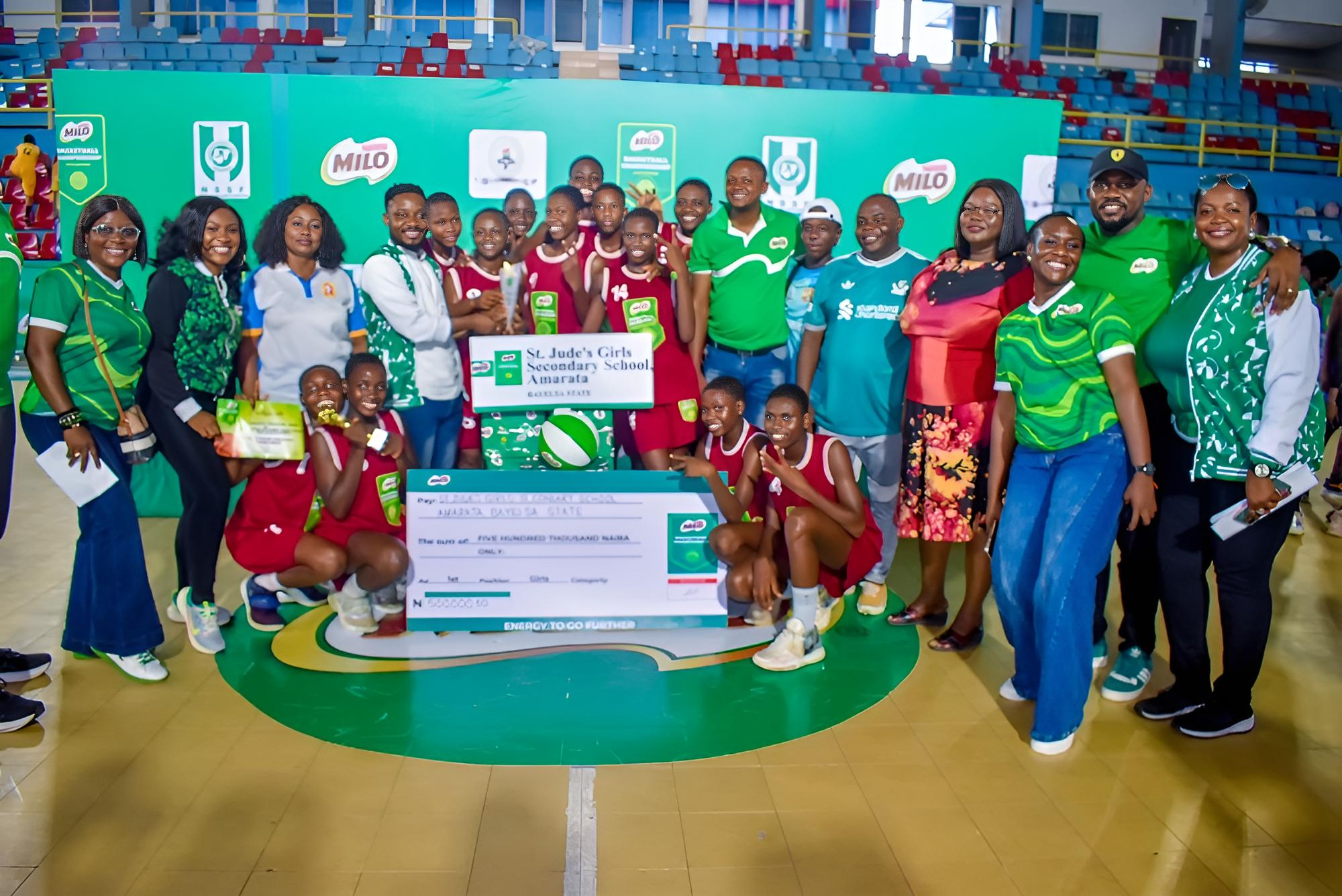
The road to the 26th MILO Basketball Championship National Finals continued with the successful conclusion of the Atlantic Conference, the third regional conference of the championship, held at the Stephen Keshi Stadium, Asaba, Delta State, where St. Jude Girls Secondary School, Amarata, Bayelsa State, and King Amakree Academy, Rivers State, emerged champions in the girls’ and boys’ categories respectively.
For 26 years, MILO has remained committed to youth development through school sports, using basketball as a platform to inspire discipline, teamwork, resilience and confidence among young people. This year, over 13,000 schools applied to participate in the MILO Basketball Championship nationwide, reflecting the continued growth and relevance of the platform.
Nine schools in each category competed with passion and determination for a place at the National Finals, with only the regional champions advancing to the next stage of the competition. At the end of the contest, St. Jude Girls Secondary School emerged champions in the girls’ category after defeating Urhobo College 46–25, while King Amakree Academy secured the boys’ title with a hard-fought 47–44 victory over Urhobo College.
The opening address was delivered by the Category Manager, MILO, Nestlé Nigeria Plc, Mr. Gilbert Tweneboah-Koduah, who highlighted the role of the championship in inspiring young athletes to pursue excellence beyond the game.
“Every game played at this championship reminds us of the courage, determination and promise that exist in our young people. These students are not only competing for medals; they are learning to believe in themselves, to work as a team, and to rise above challenges. At MILO, we are proud to continue supporting a platform that helps young people turn their passion into purpose,” he said.
In the girls’ category, Anthonia Obokawe of St. Jude Girls Secondary School, Amarata, Bayelsa State, was named Most Valuable Player. Wearing jersey number 4, she contributed 12 points out of her team’s 46 points, playing a key role in their victory.
In the boys’ category, Edmund Hart of King Amakree Academy, Rivers State, was named Most Valuable Player after delivering an outstanding performance, contributing 22 points out of their team’s 47 points.
The event was attended by dignitaries from the Delta State Ministry of Education, as well as representatives from NSSF, NCSF and FIBA.
The journey to the 26th MILO Basketball Championship National Finals has progressed through key regional stages across the country.
From the Savannah Conference, where Government Secondary School, Zing, Taraba State, emerged girls’ champions and Family Support Programme Secondary School, Katsina State, won the boys’ category. To the Central Conference, where Government Secondary School, Gboko, Benue State, secured the girls’ title and Father O’Connell Science College, Niger State, emerged boys’ champions. And now to the Atlantic Conference, where St. Jude Girls Secondary School, Bayelsa State, and King Amakree Academy, Rivers State, emerged champions in the girls’ and boys’ categories respectively.
Attention now turns to the Western Conference, the final regional stage, where winning schools will secure places at the 26th MILO Basketball Championship National Finals scheduled for July 2, 2026, at the National Stadium, Surulere, Lagos.
Big Brother Naija Reunion is on, the World Cup tournament is kicking off, or that new DStv/GOtv series everyone has been talking about just dropped, and somehow, you’re not at home. Maybe you’re in traffic, at work, or just not near a TV. In moments like these, the real question is no longer “what’s showing?” but “how do I not miss it?”That shift is precisely why the DStv and GOtv Stream have become more than just viewing platforms. They are now part of how people actually experience television on the move, at home, on phones, and in real time.”Whether it’s someone trying to catch a live show while commuting, watching highlights during a break at work, or simply preferring to stream directly from their device instead of using a decoder, these apps have quietly changed how entertainment is consumed.But beyond streaming and access, many users still don’t fully understand how to navigate them properly. Here’s a simple guide.1. Getting StartedDownload the DStv Stream or GOtv Stream app from your device’s app store and sign in using your DStv or GOtv account details.Once you’re logged in, you’ll land on the home page, where you’ll find a mix of live TV, recommended content, trending titles, and recently added shows.2. Watching Live TVOne of the easiest ways to use the platform is through the Live TV section.Simply:Tap on Live TVBrowse available channelsSelect the channel you wantStart watching instantlyThis is especially useful for:Big Brother Naija live broadcastsFootball matches and tournamentsNews coverageReality showsLive eventsYou can move between channels just as you would on a decoder.3. Finding Shows and MoviesFor viewers who already know what they want to watch, the search feature offers a quick way to find specific shows, movies, channels, or sporting events without scrolling through categories.The platform also organizes content into categories, making it easier to discover something new.4. Catch Up on Missed EpisodesIf you missed an episode because you were busy, the catch-up feature allows you to watch selected programs after they have aired. Instead of waiting for reruns, you can simply search for the show and pick up right where you left off. This feature is especially useful during busy periods when it can be difficult to keep up with daily shows.5. Explore Recommended and Trending ContentThe home page regularly highlights:Trending showsNewly added contentPopular moviesRecommended titles based on viewing habitsIf you’re not sure what to watch next, this section can help you discover content you may have otherwise missed.6. Accessing Showmax ContentOne of the biggest additions to the streaming experience is the integration of Showmax content.Viewers can now access a wide range of Showmax movies, series, and entertainment content directly through the streaming platform, making it easier to move between live TV and on-demand viewing without constantly switching services.From international blockbusters to local favorites, there’s significantly more content available to explore.7. Creating a Personal Viewing ExperienceThe platform allows users to:Continue watching from where they stoppedSave favorite contentBrowse viewing historyDiscover personalized recommendationsThis makes it easier to keep track of ongoing series and find content that matches your interests.With the DStv Stream and GOtv Stream, live channels, catch-up viewing, on-demand entertainment, and Showmax content are all available in one place, making it easier than ever to watch what you want, when you want, and wherever you are.
Brand
Interswitch Brings Two Decades of Infrastructure Thinking to the 3rd ‘Invest Lagos’ Summit, highlights Lagos SHIP as prime example of forward-thinking public-private sector partnership
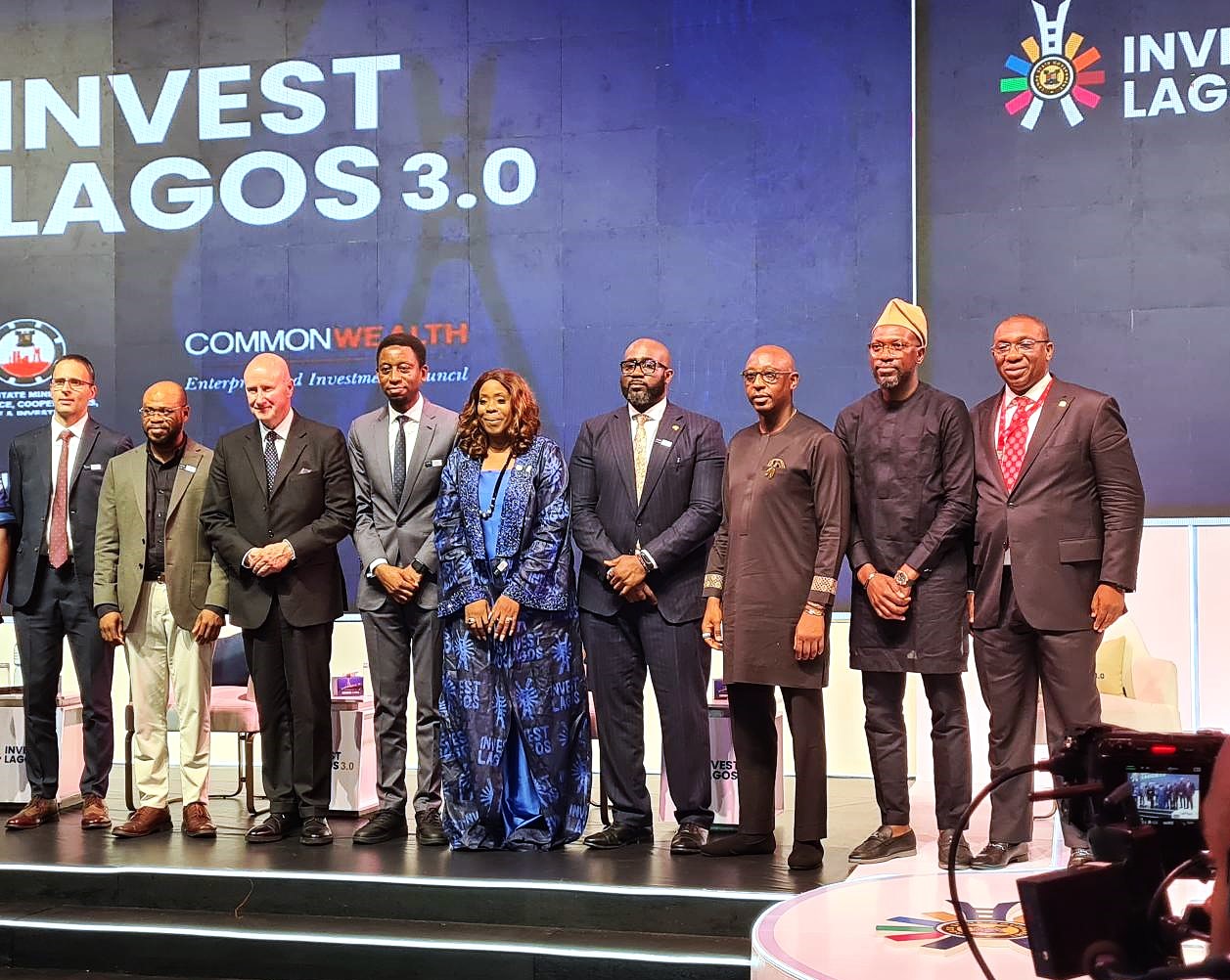
Lagos, Nigeria; June 10, 2026
Interswitch Group, Africa’s first homegrown technology unicorn and the continent’s foremost digital payments infrastructure company, participated as AI and Innovation Pavilion co-chair and corporate thought-leader at the 3rd Invest in Lagos Summit, held at the Eko Hotels & Suites, Victoria Island, Lagos, from June 8–9, 2026. The high-profile summit, convened under the auspices of the Lagos State Government and themed ‘Lagos: Business Gateway to Africa’ expectedly drew a distinguished gathering of public and private sector leaders from across Africa and the global investment community, including His Excellency Senator Kashim Shettima, Vice-President of the Federal Republic of Nigeria, His Excellency Mr. Babajide Sanwo-Olu, Executive Governor of Lagos State, and a slew of other state governors from across Nigeria, as well as members of the Federal Executive Council, whose presence underscored the strategic importance of the summit as a platform for shaping Africa’s investment and innovation agenda. Representing Interswitch Group on the summit’s flagship technology panel on day 1, themed “The Future of Technology and Innovation” was Babafemi Ogungbamila, Executive Vice-President (EVP) for Operations and Technology. Speaking to an audience of investors, policymakers, entrepreneurs, and global business leaders, Ogungbamila drew on Interswitch’s foundational story to deliver what became one of the session’s most cited contributions: a frank, first-hand account of what it truly takes to build technology infrastructure in Africa; not in theory, but from the ground up, against the odds, and before the market was ready to reward the effort. “Without the right rails, even the best products will stall before reaching scale,” Ogungbamila asserted. “We built Nigeria’s first successful digital interbank transaction infrastructure in 2002. Nobody was asking us to build it. There was no guaranteed return. But we understood that the companies that build the foundational layer of an ecosystem don’t just compete in that ecosystem; they shape it. That principle holds as powerfully today as it did then.” His contribution to the panel was rooted in a founding narrative that remains as instructive today as it was defining in 2002. When Interswitch was established in Lagos by Founder and Group CEO Mitchell Elegbe, there was essentially no technology ecosystem to speak of. No digital payments infrastructure. No interoperability between financial institutions. No playbook from which to build. According to him, what Lagos offered instead was something more powerful than infrastructure: a market whose economic ambition had already outpaced its digital capacity – a gap that became Interswitch’s founding mandate. “In 2002, there was no ecosystem” Ogungbamila reflected. “No blueprint. No guarantee that what we were building would find a market. Just a sprawling, complex, commercially ferocious city whose economy was moving faster than its digital infrastructure could carry. That gap was our invitation.” That invitation produced Nigeria’s first interoperable digital payments switching infrastructure, the invisible backbone that today processes the majority of Nigeria’s electronic transactions and connects banks, merchants, fintechs, and consumers across the country’s financial ecosystem at scale.Speaking to the broader question of what conditions are required to scale African technology companies into globally competitive enterprises, Ogungbamila was emphatic that infrastructure depth, and the institutional courage to invest in it before the market offers its reward, remains the defining variable separating technology companies that endure from those that plateau. “The companies that build the foundational layer of an ecosystem don’t just compete in that ecosystem, they shape it” he reiterated. “Twenty-three years on, that principle is not nostalgia. It is our operating philosophy, and it is more relevant now than ever, as Lagos cements its place as one of Africa’s foremost technology and innovation hubs, and as the next generation of African builders constructs what comes next.” Ogungbamila further referenced The Lagos Smart Health Information Platform, known as Lagos SHIP or LAGSHIP as a first-of-its-kind initiative developed by Digital Health Platform Limited, a Special Purpose Vehicle comprising the Lagos State Ministry of Health and Interswitch eClat, designed to digitize and integrate patients’ health records across the state into a single, comprehensive platform, enabling a robust Health Information Exchange system that gives healthcare providers real-time access to comprehensive patient records for more informed decision-making, while simultaneously empowering patients with unprecedented control over their personal health data. Beyond individual patient care, LAGSHIP eliminates the inefficiencies of manual data handling, ensures data confidentiality and privacy, and equips the Lagos State Government with the data intelligence needed to plan and coordinate healthcare services across all levels, from primary healthcare centres to tertiary institutions. This essentially transforms fragmented, error-prone record management into a unified, policy-grade infrastructure for a city of over 22 million people Such an intervention, which essentially seeks to replicate in healthcare, how technology was leveraged by Interswitch, based on infrastructure-thinking, to transform banking and payments (resulting in tremendous multiplier effects) about 2 decades ago, speaks to forward-thinking vision by the leadership of Lagos State. Ogungbamila further addressed the conditions required to drive inclusive, broad-based economic growth through technology, arguing that connectivity must be treated as constitutional infrastructure, that public-private partnerships must be designed around community need rather than commercial convenience, and that regulatory frameworks must be built to enable innovation rather than merely govern it. On artificial intelligence specifically, he called for African governments to invest in regulatory capacity before regulatory complexity highlighting that understanding must precede legislation if Africa is to capture the full economic value of the AI revolution. A central theme of Interswitch’s participation at the summit was the role of Lagos not merely as a commercial hub, but as the specific environment whose scale, complexity, and appetite for solutions gave Interswitch the mandate and the market to become what it is today. Africa’s first homegrown technology unicorn was not built despite Lagos’s infrastructure challenges. In many meaningful ways, it was built because of them. That framing carries particular resonance at a moment when Lagos is actively positioning itself as the investment destination of choice for global capital flowing into African technology, financial services, and digital infrastructure. Interswitch’s story, from a 2002 startup operating in a vacuum of digital financial infrastructure to a billion-dollar pan-African enterprise operating across over 23 countries is, in many ways, Lagos’ story told through the lens of a company that bet on the city before the city had fully bet on itself.


Primate Ayodele Fulfilled Prophecies On UK Prime Minister, Lagos Explosion

The Role of TV in Preserving African Stories and Identity

Fidelity Bank Empowers Exporters to Unlock AfCFTA Opportunities with EMP 19
Regberegbe 1986, 87 and 88 Appoints Deputy Speaker As Adviser Okunrin

9mobile, Kantar Discuss Building Impactful Brands for the Future
dLocal Enables Payments from Verve Cards and Tokens for Global Merchants
-

 Entertainment1 day ago
Entertainment Non-Stop: Movies and Shows to Watch on GOtv This Week
-
 Entertainment10 hours ago
The Role of TV in Preserving African Stories and Identity
-
 Banking and Finance1 day ago
Fidelity Bank Empowers Exporters to Unlock AfCFTA Opportunities with EMP 19
-
 Cover8 hours ago
Primate Ayodele Fulfilled Prophecies On UK Prime Minister, Lagos Explosion