Connect with us

Sports

The Premier League’s Biggest Transfers – Did They Live Up to the Hype?
Published

on

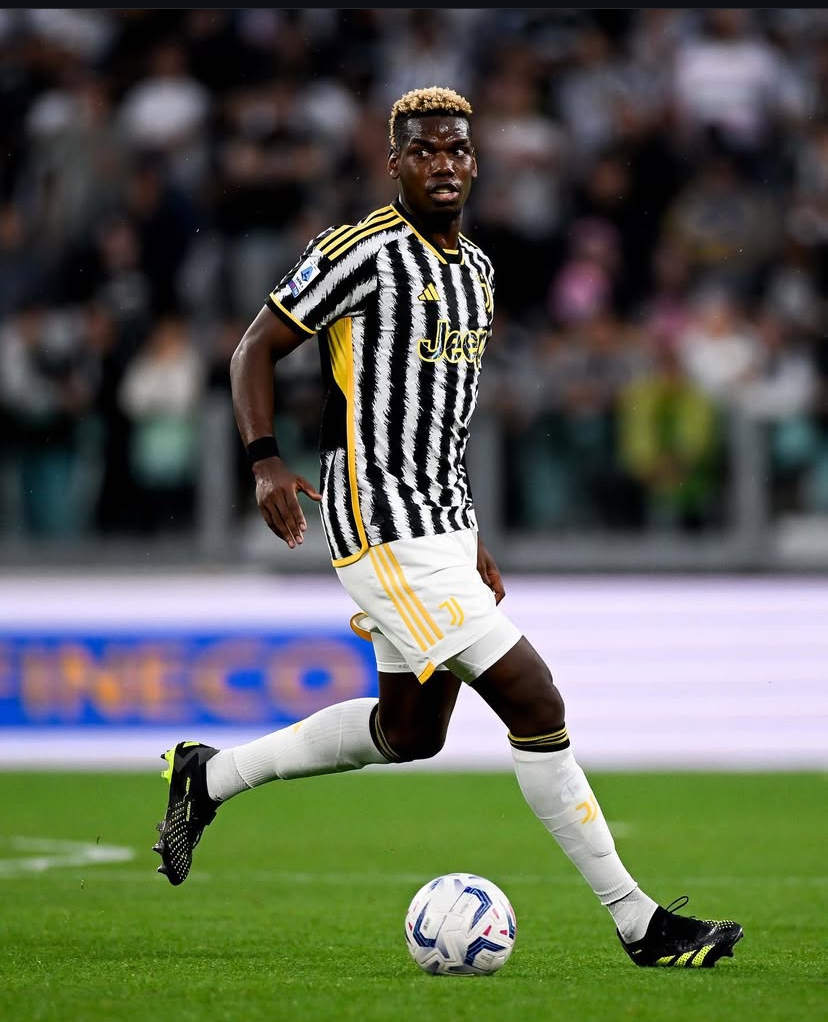
Every season, Premier League clubs break records with eye-watering transfer fees, hoping their latest superstar signing will deliver trophies, goals, and unforgettable moments. Some of these big-money moves shape football history, while others turn into costly mistakes that haunt clubs for years.As we move deeper into 2025, some of the league’s most expensive transfers are still making headlines, whether for the right or wrong reasons. With new transfer records expected to be shattered in the next window, now is the perfect time to look back at the Premier League’s priciest signings and ask the big question: Were they worth it?The Hits: When Big Money Was Well SpentSome signings came with huge expectations and somehow have exceeded them, helping their teams win titles, break records, and dominate the league.Declan Rice (Arsenal – £105m, 2023)Arsenal’s decision to break their transfer record for Declan Rice raised eyebrows, but two seasons later, it’s looking like a masterstroke. A leader in midfield, Rice has been instrumental in Arsenal’s Premier League and Champions League ambitions, proving he’s worth every penny.Jack Grealish (Manchester City – £100m, 2021)After a slow first season, Grealish silenced critics by helping Man City win the 2022/23 treble. His performances in big games, especially in City’s Champions League-winning run, justified the investment.Erling Haaland (Manchester City – £51m, 2022)While not one of the most expensive transfers on this list, Haaland’s impact has been historic. Breaking goal-scoring records in his first Premier League season, he played a crucial role in City’s 2022/23 treble-winning campaign. When it comes to value for money, Haaland might be the best signing of the decade.Virgil van Dijk (Liverpool – €84m, 2018)Critics questioned Liverpool’s decision to make Van Dijk the most expensive defender in history, but he proved to be the missing piece in their puzzle. His arrival transformed their defence, leading to Champions League and Premier League glory.Kevin De Bruyne (Manchester City – £55m, 2015)Few signings have shaped a club’s success like De Bruyne at City. The Belgian midfield maestro has been at the heart of their dominance, winning multiple league titles and setting assist records.The Misses: When Big Transfers FloppedNot every expensive signing delivers. Some fail to adapt, struggle with injuries, or simply don’t justify their price tag.Romelu Lukaku (Chelsea – £97.5m, 2021)After excelling at Inter Milan, Chelsea’s record signing was expected to be the missing piece in their attack. Instead, Lukaku’s return was a disaster falling out with the manager, struggling for consistency, and getting loaned back to Italy.Jadon Sancho (Manchester United – £73m, 2021)Once seen as one of the brightest young talents in Europe, Sancho’s move to United never lived up to expectations. After struggling for form and clashing with Erik ten Hag, he was sent back on loan to Borussia Dortmund in 2024.Paul Pogba (Manchester United – £89m, 2016)Signed for a world-record fee at the time, Pogba’s second stint at United was full of flashes of brilliance but overall inconsistency. Injuries, tactical struggles, and off-field issues meant he left on a free transfer in 2022, making it one of United’s most frustrating transfers.Nicolas Pépé (Arsenal – £72m, 2019)Pépé arrived as Arsenal’s most expensive player ever, but never fully adapted to the Premier League. By 2023, he had left on a free transfer, making his signing a costly mistake for the Gunners.As we look ahead to the next transfer window, clubs are once again preparing to spend big. But will the next record-breaking signing be a game-changer or another expensive regret?For fans who want to stay ahead of every move, Showmax is the ultimate destination for live Premiere League football coverage.Don’t just read about the next big signing, watch them in action. Stream all the premier league matches on Showmax Premier League mobile. Sign up now at www.showmax.com/ng and never miss a moment.

Continue Reading
Click to comment

Leave a Reply

Your email address will not be published. Required fields are marked *

Sports

The Role of Live Sports in Modern Entertainment

Published

on

By

Not many forms of entertainment still require people to show up in real time. Movies can be watched days later. Series can be binged over a weekend. Social media ensures that almost every major moment is available on demand. But live sports remain one of the few experiences where being present at the moment still matters.The ongoing FIFA World Cup is proving exactly why. Every tournament comes with its own stories. There are the favourites expected to dominate, the underdogs rewriting expectations, and the players who suddenly become household names overnight. But beyond football itself, the World Cup continues to highlight something bigger: live sports have become one of the most powerful forces in modern entertainment.What makes live sports different is simple: nobody knows how it ends. Unlike scripted television or pre-recorded content, sports thrive on unpredictability. A match can change in seconds. A last-minute goal can alter a nation’s mood. One decision, one save, or one upset can become a moment fans talk about for years. That uncertainty is what keeps people watching live rather than catching up later.In an era where audiences increasingly consume content on their own schedules, live sports create a rare shared experience. Millions of people are reacting to the same moment at the same time. Conversations happen instantly online, and debates continue long after the final whistle.The World Cup has once again shown how sports have evolved beyond competition into full-scale entertainment. The experience no longer begins at kick-off or ends at full time. Pre-match analysis, expert commentary, post-match discussions, and digital conversations have become part of how fans engage with the game.Access also plays a major role in this experience. Across Africa, fans continue to rely on platforms that bring the tournament closer to them. Through SuperSport on DStv and GOtv, viewers can follow the action live as it unfolds, experiencing every goal, upset and defining moment in real time rather than through highlights or social media clips.This immediacy is part of why live sports remain so valuable in today’s entertainment landscape. While streaming has changed viewing habits and audiences have more content choices than ever before, sports still command attention in a way few other formats can.The World Cup serves as a reminder that in a world of endless content, people still crave moments they can experience together. Live sports deliver exactly that: unscripted drama, shared emotions and memories that last long after the final whistle.As entertainment continues to evolve, live sports have not lost their relevance. If anything, they have become even more important because in an age where almost everything can wait, some moments are simply better experienced live.To make football’s biggest moment even more accessible, MultiChoice has introduced special World Cup bundle offers across DStv and GOtv ahead of the 2026 FIFA World Cup in the US, Mexico, and Canada. From June 1, 2026, new customers can get a full decoder kit plus a one-month subscription for ₦15,000 on either platform. The offer is aimed at helping more Nigerians stay connected to the tournament, which will feature 48 teams and 104 matches. Through SuperSport, viewers will enjoy full live coverage of all games, dedicated 24-hour World Cup channels, expert analysis, highlights, multilingual commentary including pidgin, and flexible viewing options on TV and streaming so fans don’t miss any moment of the action.

Continue Reading

Sports

GSS Gboko, Father O’Connell Win 26th MILO Central Conference Titles

Published

on

By

Group photo of Government Secondary School, Gboko, Benue State, winners of the Girls’ Category at the 26th MILO Basketball Central Conference Finals.

The 26th edition of the MILO Basketball Championship continued with the successful conclusion of the Central Conference regional finals, where Government Secondary School, Gboko, Benue State, and Father O’Connell Science College, Niger State, emerged champions in the girls’ and boys’ categories respectively. For 26 years, MILO has remained committed to youth development through school sports, using basketball as a platform to inspire discipline, teamwork, resilience and confidence among young people. Through the championship, MILO continues to create opportunities for students across Nigeria to discover their potential, build character and pursue excellence both on and off the court. This year, over 13,000 schools applied to participate in the MILO Basketball Championship nationwide, reflecting the continued growth and relevance of the platform. At the Central Conference regional finals, seven schools competed for a place at the National Finals. Government Secondary School, Gboko, won the girls’ category with a 63–31 victory over Nigeria Defence Academy Staff Secondary School, Kaduna State, while Father O’Connell Science College, Niger State, won the boys’ category after a hard-fought 56–53 win over Government Secondary School, Gwarinpa Life Camp, Abuja. The opening remarks were delivered by the MILO Sports Marketing Manager, Mrs. Funmilola Oyewole, on behalf of the Category Manager, Mr. Gilbert Tweneboah-Koduah. In his address, Mr. Tweneboah-Koduah highlighted the role of the championship in inspiring young athletes to pursue excellence beyond the game. “Every game played at this championship reminds us of the courage, determination, and promise that exist in our young people. These students are not only competing for medals; they are learning to believe in themselves, to work as a team, and to rise above challenges. At MILO, we are proud to continue supporting a platform that helps young people turn their passion into purpose,” he said. Friday Victoria Ada of Government Secondary School, Gboko, Benue State, was named the Most Valuable Player in the girls’ category. Wearing jersey number 13, she contributed 25 points out of her team’s 63 points, playing a key role in their victory. In the boys’ category, Idris Mohamed of Father O’Connell College, Niger State, was named Most Valuable Player. Wearing jersey number 5, he delivered an impressive performance, contributing 20 points out of his team’s 56 points. The Central Conference is the second of four regional conferences in the 26th MILO Basketball Championship. With the Savannah and Central Conferences now concluded, the championship will move to the Atlantic Conference, where nine schools each in the boys’ and girls’ categories will compete for a chance to join the race to the National Finals. At the Savannah Conference, Government Secondary School, Zing, Taraba State, emerged champions in the girls’ category, while Family Support Programme School, Katsina State, won the boys’ category. Together with the Central Conference champions, they form part of the growing list of regional winners heading towards the grand finale. The event was attended by dignitaries from FCT ministries, as well as representatives from NSSF, NCSF and FIBA. The winning teams from the Central Conference will advance to the National Finals, scheduled to hold in Lagos on July 2, 2026, where they will compete with other regional champions for the ultimate title.

Continue Reading

Sports

Sports Viewing Is Becoming More Social and Here’s Why

Published

on

By

gSports viewing has quietly changed its personality in Nigeria. It is no longer just about sitting in front of a TV and following a match from start to finish. It has become something more layered, constant, and social, stretching across both physical spaces and digital platforms.From viewing centres and barbershops to X feeds and WhatsApp groups, football is no longer watched in isolation; it is experienced collectively, even when people are not in the same room. Platforms like GOtv have also supported this shift by making football more accessible and consistent, helping fans stay plugged into live matches and highlights without missing key moments. But beyond access, what has truly changed is the culture around the game and how conversations now live far beyond the screen.There was a time when football talk had a clear beginning and end. You watched the match at a viewing centre, a neighbour’s house, or wherever there was a working screen, and that was where everything happened. The arguments, celebrations, and banter stayed in that space. Once you left, the conversation faded until the next match day. Football was social, but it was also limited by time and place.Then social media changed everything. What used to stay in viewing centres now spills across the entire day. A goal is no longer just a moment in a match; it becomes a tweet, a meme, a hot take, and a debate within seconds. Rival fans respond instantly, stats are shared, and the same incident is argued from multiple angles across different platforms. Football didn’t just become more visible; it became continuous.Viewing centres used to be the main social hub for football culture. That was where strangers bonded, arguments felt personal, and every match had a shared energy. Today, that barrier is gone. Football is no longer tied to a location. Someone is watching highlights in traffic, another is following updates at work, while others are debating online while the match is still ongoing. The reaction now runs alongside the game itself.This shift has changed the emotional rhythm of football. The conversation no longer ends at full-time. It continues through post-match analysis, memes, tactical debates, and recycled clips that keep rivalries alive long after the final whistle. Football has become less of a fixed event and more of a constant social stream.Ultimately, the desire behind watching football has not changed. People still want to celebrate, argue, and feel part of something bigger. What has changed is where that experience happens. It is no longer confined to one screen or one space; it now exists everywhere at once.That is why sports viewing today feels more social than ever, not because the matches have changed, but because the conversation around them never stops.To make football’s biggest moment even more accessible, MultiChoice has introduced special World Cup bundle offers across DStv and GOtv ahead of the 2026 FIFA World Cup in the US, Mexico, and Canada. From June 1, 2026, new customers can get a full decoder kit plus a one-month subscription for ₦15,000 on either platform. The offer is aimed at helping more Nigerians stay connected to the tournament, which will feature 48 teams and 104 matches. Through SuperSport, viewers will enjoy full live coverage of all games, dedicated 24-hour World Cup channels, expert analysis, highlights, multilingual commentary including pidgin, and flexible viewing options on TV and streaming so fans don’t miss any moment of the action.

Continue Reading

Trending

Mega Awareness 2023