
Business
Why investors will buy Fidelity Banks offers, by capital market stakeholders


Fidelity Bank Plc started its N127.1 billion combined rights and public offers to a rousing support from the investing public as key capital market stakeholders recalled the symbolic importance of Fidelity Banks impressive growths and investor-friendly disposition over the years.
From the Nigerian Exchange (NGX) to stockbrokers, investors and customers; the N127.1 billion combined rights and public offer received unreserved recommendations, with industry thought leaders citing the performance of Fidelity Bank in its core banking operations and as a quoted company at the stock market.
They said Fidelity Banks N127.1 billion combined rights and public offer was the right way for the nations banking recapitalisation exercise to start as the bank, which has the highest corporate governance rating and an average annual capital gain of more than 100 per cent at the stock market, has strong appeal to the investing public.
Fidelity Bank is offering a rights issue of 3.2 billion ordinary shares of 50 kobo each at N9.25 per share. The bank is also simultaneously offering 10 billion ordinary shares of 50 kobo each to the general investing public at N9.75 per share.
The acceptance and application lists for the rights issue and public offer, which opened on Thursday, June 20, 2024, are scheduled to close on Monday, July 29, 2024. The rights issue has been pre-allotted on the basis of one new ordinary share for every 10 existing ordinary shares held as at the close of business on Friday, January 05, 2024.
The Doyen of Stockbrokers, the oldest practicing stockbroker, Alhaji Rasheed Yussuff, said Fidelity Bank has good records going for it with its history of impressive growth and profitability and dividend payments.
According to him, the bank is known to the market as a good investment, with evident records of impressive returns and corporate responsibility.
Yussuff, who was already a leading stockbroker and managing director of Trust Yields Securities Limited in 2004-2005 when Fidelity Bank launched its initial public offering (IPO) and listed its shares at the stock market, said the bank has been hitting all positive records that should encourage investors to buy more into it.
Referencing the banks impressive returns, Yussuff, who has more than five decades in the capital market and was principal dealing clerk for ICON Limited/ICON Stockbrokers in 1976, particularly noted that Fidelity Bank has been paying good dividends.
Chairman, Association of Securities Dealing Houses of Nigeria (ASHON), Mr Sam Onukwue, who recalled the founding days of Fidelity Bank in 1987, said he had watched Fidelity Bank sustained commendable growth trajectory over the years.
He said the bank has shown exceptional growth and resilience, rising from being a private merchant in 1987 to becoming one of the largest, publicly quoted commercial banks in Nigeria. Fidelity Bank is one of the seven Nigerian banks with international banking licences.
Onukwue, who is also managing director of Mega Equities Limited, said Fidelity Banks history of performance underlines the strength of its management, noting that the bank has proven to be able to keep investors trust.
Chairman, Nigerian Exchange (NGX), Mr. Ahonsi Unuigbe said the combined offer marked a pivotal moment for the bank and the financial services sector.
This is a testament to Fidelity Banks unwavering commitment to strengthening its own capital base and ensuring sustainable growth through amazing roles played by all of the professional parties to this transaction, Unuigbe, an investment banker and former director at Standard Bank, said.
He said the new banking recapitalisation is aimed at bolstering the resilience and stability of the nations financial institutions.
According to him, the ongoing recapitalisation has set robust minimum capital requirements that will ensure Nigerian banks are not only more solvent, but also capable of supporting the growth and development of the economy.
Acting Chief Executive Officer, Nigerian Exchange (NGX), Mr. Jude Chiemeka, commended Fidelity Bank for its performance and willingness to avail the investing public of every relevant information.
He assured that the NGX remains committed to supporting companies like Fidelity Bank in its quests to deepen the capital markets and fostering an environment conducive to sustainable growth and innovation.
Founder, KAM Holding, Dr Kamoru Yusuf, said Fidelity Bank has shown to be an exceptional bank with focus on the development of Nigerian economy and companies.
He said investing in Fidelity Bank will be an investment in the growth of Nigerian economy and companies like KAM Holding, the nations largest wholly indigenous metal and steel production company.
Yusuf, whose group has metamorphosed into a global business conglomerate operating in three countries across two continents, confirmed that KAM Holding has benefited immensely from financial supports from Fidelity Bank.
Yusuf, who was physically present at a session at the NGX to present facts behind the offer to the investing public, underlined the relationship between increased capital for a business-focussed bank like Fidelity Bank and the overall development of the Nigerian economy.
Addressing the investing public at the NGX, Managing Director, Fidelity Bank Plc, Dr Nneka Onyeali-Ikpe, reiterated the commitment of the bank to delivering impressive returns to shareholders and supporting the growth of the Nigerian economy.
She explained that the new capital raising by Fidelity Bank was driven by its proactive business expansion plan having secured shareholders approval to raise new equity funds as early as August 2023. The Central Bank of Nigeria (CBN)s directive on new minimum capital was released in March 2024.
The offer will increase our capacity to support our customers and their businesses. In summary, this capital raise will help our customers to grow, their businesses to thrive, and their economy to prosper, Onyeali-Ikpe said.
She assured that with its groundswell of supports from enthusiastic shareholders, customers and stakeholders, the bank is on course to achieving the N500 billion new minimum capital base, which will clearly confirm the bank, beyond any doubt, as one of the biggest banks in Nigeria.
Onyeali-Ikpe noted that being the first bank to launch offer out of the many banks in Nigeria after the CBN directive, Fidelity Bank has shown again to be a pace-setter.
According to her, Fidelity Bank seeks the CBN recapitalization directive as a significant opportunity for a stronger and more resilient banking industry.
We have embraced the challenge as a catalyst to propel us, towards a long-term vision of becoming a market leader across every product that we offer and segment that we sell, not just in Nigeria, but as an international bank, Onyeali-Ikpe said.
She said the proceeds from the N127.10 billion capital raising exercise would be instrumental in achieving its strategic growth plan.
She highlighted that the funds, firstly, would be deployed to drive, business growth and regional expansion.
We will strategically expand our footprints within and outside Nigeria to serve as a broader customer base and to unlock new market opportunities.
Secondly, we will have what we call technological transformation. We are committed to leveraging proprietary technology to improve operational efficiency and deliver exceptional customer service.
Thirdly, we intend to diversify and grow. By investing in information technology (IT) infrastructure and product distribution channels, we will aim to diversify our earnings base through digitalization and business expansion, Onyeali-Ikpe said.
She said the management recognised the importance of investors and are committed to delivering value to them as well.
Our track record of accelerated growth and consistent dividend payment is a testament to this, Onyeali-Ikpe said.
A recent review had shown that Fidelity Bank outperformed all major market indices for measuring returns at the Nigerian stock market, with the banks average annual return over the past five years twice the average return by the overall market and almost four times of average return in the banking sector.
A review of official trading reports at the Nigerian stock market showed that investors in Fidelity Bank have earned more than 507 per cent in capital gains over the past five years, between May 31, 2019 and May 31, 2024
Fidelity Banks share price rose by 507.14 per cent over the period, representing average annual capital gain of 101.43 per cent. This significantly exceeds all other major return benchmarks, including the banking sector.
With 507 per cent capital gain in five years and average annual gain of more than 100 per cent, the return analysis implies that investment in Fidelity Bank is more attractive than other class of assets, including fixed-income securities such as government and corporate bonds; real estate investment and mutual funds among others.
These returns underscore Fidelity Banks immense value as a stock for all times, helping investors to hedge against inflation while preserving significant long-term value.
The high divisible nature of shares investment and high free float of Fidelity Bank, which makes the banks shares easily available, underline the bank as a most attractive investment option for all cadres of investors- small, medium and high networth; retail and institutional investors.
The All Share Index (ASI) – the common, value-based index that tracks all share prices at the Nigerian Exchange (NGX), which is widely regarded as Nigerias benchmark for equities market, recorded a five-year return of 219.61 per cent, an average annual return of 43.9 per cent.
Contrary to the significantly above average performance of Fidelity Bank, the NGX Banking Index-which tracks the banking sector, doubled by 120.53 per cent over the five-year period, representing average annual return of 24.11 per cent, more than 77 percentage points below Fidelity Banks average return.
Two other major price indices- the NGX 30 Index and NGX Main Board Index, recorded five-year cumulative return of 185.73 per cent and 265.6 per cent respectively, representing average annual gain of 37.15 per cent and 53.1 per cent respectively.
The NGX 30 Index tracks share prices of the 30 largest companies at the stock market while the NGX Main Board Index represents the largest and most diversified group of listed companies at the stock exchange. Fidelity Bank is quoted on the main board, like most other major banks and companies at the stock market.
The average annual return of 101.43 per cent underlines that Fidelity Bank provides substantial return for investors, even where such investors had borrowed money at the ruling interest rate and the invested fund was adjusted for impact of inflation rate.
Nigerias inflation rate peaked at a high of 33.69 per cent in April 2024 while the Central Bank of Nigeria (CBN)s Monetary Policy Committee (MPC) recently increased the Monetary Policy Rate (MPR), otherwise known as benchmark interest rate, to 26.25 per cent.
Fidelity Banks share price, which closed May 31, 2019 at N1.68 per share, rose successively to N10.20 per share by the end of May 2024.
The ASI had, during the period, rose from its opening index of 31,069.37 points to close weekend at 99,300.38 points. The NGX Banking Index rose from 361.57 points to 797.37 points. The NGX 30 Index, which opened the period at 1,286.68 points, closed the period at 3,676.44 points. The NGX Main Board Index appreciated from 1,267.54 points to close weekend at 4,634.31 points.
Business
Shareholders back Access Holdings’ long-term value creation strategy-Investors confident of earnings outlook

Shareholders have expressed confidence in Access Holdings Plc’s long-term value creation strategy as Nigeria’s largest financial services group continues implementation of a deliberate plan to consolidate its pan-African and global investments into greater sustainable returns to investors.Speaking on the outcome of the group’s annual general meeting, shareholders, according to The Nation newspaper, said they were confident that Access Holdings has been well positioned for sustainable growth and high value-creation in the years ahead.They said the performance of the group in the past 15 months highlighted the fundamental strength of Access Holdings, which provides a strong reassurance on the current strategic shift from investments to value creation and shareholders’ return.With nearly one million shareholders, Access Holdings, according to The Nation newspaper, has one of the largest shareholders base across Africa. More than three-quarters of the shareholders are retail minority shareholders, making them significant stakeholders in the group. Domestic minority retail shareholders typically account for nearly half of transactions at the Nigerian stock market.Shareholders said they believed Access Holdings could translate its strong fundamentals into exciting returns while simultaneously building on the group’s vision of being Africa’s gateway to the global financial system.Founding Coordinator and Leader, Independent Shareholders Association of Nigeria (ISAN), Sir Sunny Nwosu, said shareholders have no fear about the future of Access Holdings having seen its historic transformation from a mid-tier bank to becoming Nigeria’s biggest bank in many parameters.He explained that the understanding shown by shareholders over the non-declaration of dividend for the 2025 business year was based on both past performance and future expectation.President, Association for the Advancement of Rights of Nigerian Shareholders (AARNS), Dr Faruk Umar, said Access Holdings has endeared itself to shareholders with its performance overtime.According to him, shareholders were looking at the bigger picture and were confident that the group would deliver impressive long-term values as outlined under its strategic plan.“We’ve no cause to worry about Access Holdings. True, dividend is important to us shareholders, but then, when you take everything together, you see that it’s like keeping your money in a compounding interest account, you’re going to get the bumper return at the end,” Umar said.National Chairman, New Dimension Shareholders Association, Mr. Patrick Ajudua said Access Holdings has experienced commendable growth, citing the group’s performance in 2025 when gross earnings rose to N5.53 trillion and total assets crossed N51.53 trillion.”As shareholders, we express our satisfaction with the company’s overall performance, particularly in the light of the decision not to distribute dividends this year. This decision was clarified as a necessary step to ensure compliance with Central Bank of Nigeria’s regulations,” Ajudua said.He said shareholders during the general meeting had underlined areas where they need the board and management to focus on, including the need to further address impairment charges on financial assets and cost optimisation.Chairman, Progressive Shareholders Association of Nigeria, Boniface Okezie, according to The Nation newspaper, said the overall assessment of Access Holdings’ performance was strong.According to him, while the absence of dividend payment is notable, it shouldn’t solely determine a company’s performance.He underlined that part of shareholders’ trust in the board was to entrust the directors with the discretion to declare or not to declare dividend.He said: “With earnings per share so impressive at N13.48, the company is certainly capable of rewarding its shareholders for even as much as N5 per share. We know that it’s CBN’s rules that posed challenges for dividend disbursement. As a holding company, the performance of the bank, which serves as its main subsidiary, significantly impacts the overall situation. If the bank doesn’t distribute dividends, it naturally limits the holding company’s ability to do so as well”.He urged regulators to consider the impact of their policies on investors, highlighting the importance of dividends in reflecting a company’s success.“When a company performs well, fulfilling the dividend expectation becomes crucial for maintaining investors’ satisfaction, especially for those who have supported the bank during challenging times,” Okezie said.Regarding future projections, he expressed confidence in the management’s projections for returns, noting the clarity of the company’s vision and growth strategy.He pointed out that setting clear goals is essential for growth while commending the board and management of the group for their painstaking efforts at carrying shareholders along in the company’s growth plan.He advised the board to maintain its focus and drive on business success, urging the directors to consider proposing an interim dividend by the end of this financial year or by September, to help address the impact of the previous non-payment on shareholders as well as reassure and align shareholders’ interests with the company’s overall performance.National Coordinator, Independent Shareholders Association of Nigeria (ISAN), Mr. Moses Igbrude, according to The Nation newspaper, expressed confidence in Access Holdings’ earnings outlook noting that the company stands out as a robust and well-structured financial institution poised to provide substantial value to its shareholders.He said shareholders were confident the management team possesses the necessary skills and expertise to effectively leverage the group’s assets and resources, ensuring that they meet their projections and fulfill the commitments made to investors.Access Holdings saw 16.2 per cent growth in pre-tax profit to N1.01 trillion in 2025, driving by impressive growth in core banking interest income, which rose to N1.36 trillion and a 41 per cent growth in net fees and commission incomes, which jumped to N585 billion. Operating income rose by 23.9 per cent to N3.17 trillion. Gross earnings had risen from N4.88 trillion in 2024 to N5.53 trillion in 2025.The group’s total assets expanded to N51.56 trillion while shareholders’ funds rose to N4.33 trillion by December 2025. Cost to income ratio improved from 56.7 per cent to 51.7 per cent. Return on Average Equity (ROAE) remained high at 18.4 per cent.With earnings per share at N13.48, shareholders however approved the board’s position to focus on structural realignment of the group’s foreign investments in compliance with domestic regulatory space, which necessitated non-declaration of dividend for the 2025 financial year.In first quarter 2026, pre-tax profit stood at N272.1 billion as against N222.78 billion recorded in comparable period of 2025, putting the group on a strong footing to surpass its N1 trillion profit mark. Total assets rose to N54.44 trillion while total equity improved to N4.4 trillion by March 2026.Speaking at the AGM in Lagos, Chairman, Access Holdings Plc, Aigboje Aig-Imoukhuede, reaffirmed the group’s strategic transition towards long-term value creation, balance sheet resilience, and disciplined growth, even as it navigates a dynamic and evolving operating environment.He said the group’s vision was anchored on the belief that the defining test of a financial institution is not merely its capacity for growth, but its ability to grow profitably, sustainably, and with discipline over time.“Periods of economic uncertainty often reveal more about an institution than periods of uninterrupted growth. Our focus remains on building a business that is not only growing, but improving in the quality, resilience, and sustainability of its earnings,” Aig-Imoukhuede said.He reiterated the strategic imperative underpinning the group’s next phase of growth.He said: “Our strategy, From Scale to Value, reflects the natural evolution of our journey. Scale created opportunity; value creation is how we fully realise it”.He noted that while the group continues to generate strong returns, ensuring that earnings per share consistently exceed the cost of capital remains central to unlocking sustainable shareholder value.He also acknowledged the significant unrealised value embedded within the group’s international subsidiaries and reiterated management’s focus on improving market recognition of that intrinsic value over time.“Our approach is clear: capital retained today must translate into greater value tomorrow and sustainable returns for our shareholders. Our responsibility is to justify the confidence of our shareholders by building an institution that endures, one defined by clarity of purpose, discipline of execution, and sustainable value creation over time,” Aig-Imoukhuede said.
Business
As Loan Defaults Rise, VeendHQ Says AI Recovered ₦69 Million from Delinquent Borrowers – Business
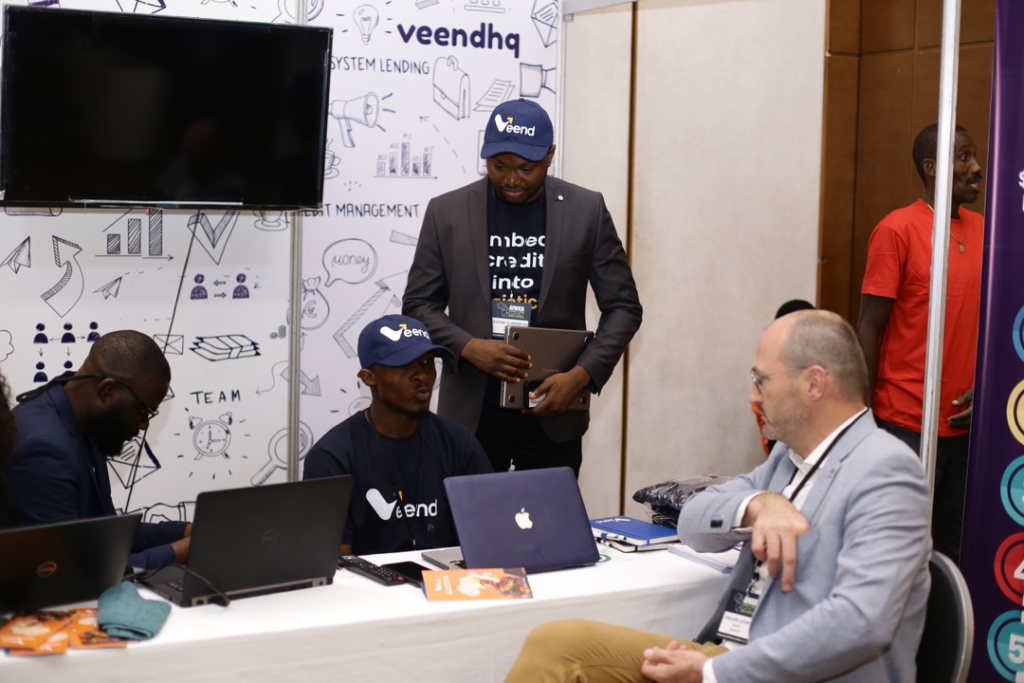
VeendHQ says its AI-powered credit platform, Vida AI, helped recover ₦69 million from a ₦172.5 million portfolio of loans that were more than 90 days overdue, in a pilot that highlights the growing role of technology in loan recovery and portfolio management.The result comes at a time when lenders are under increasing pressure to improve recovery outcomes while managing the cost, reputational risk, and operational burden associated with overdue loans. For many credit providers, the challenge is no longer only how quickly loans can be approved, but how effectively repayment can be monitored and delinquent loans can be recovered after disbursement.According to VeendHQ, the pilot delivered a 40 percent recovery rate on the overdue loan portfolio. The company said the result significantly outperformed traditional recovery benchmarks, where a five percent recovery rate on a similar loan book would amount to about ₦8.6 million.VeendHQ said the pilot demonstrates how Vida AI can support lenders beyond credit assessment, extending into repayment monitoring, collections, and recovery.“Credit access is only one side of lending. The bigger challenge for many lenders is what happens after disbursement,” said Olufemi Olanipekun, Co-founder and CEO of VeendHQ. “Vida AI helps lenders make smarter decisions across the credit lifecycle, from approval to repayment and recovery.”VeendHQ, a Nigerian fintech company building digital credit infrastructure, developed Vida AI as an artificial intelligence-powered platform for lenders, merchants, and financial institutions. The platform supports credit assessment, identity verification, repayment collections, and loan management workflows.With the recovery pilot, the company is positioning Vida AI beyond loan origination, as a tool for lenders seeking to improve repayment performance and manage overdue portfolios more efficiently.Delinquent loans remain a major cash-flow challenge for lenders. Once loans exceed 60 to 90 days past due, recovery becomes more difficult, expensive, and unpredictable. Traditional approaches such as manual calls, recovery agents, and legal escalation often increase costs without significantly improving recovery rates.VeendHQ said Vida AI’s recovery workflow enables lenders to upload overdue loan records, verify borrower information, assess repayment capacity, and trigger automated recovery actions. This gives lenders better visibility after disbursement and allows recovery teams to prioritize overdue portfolios more effectively.“If lenders cannot recover efficiently, they become more conservative with lending. That affects consumers, small businesses, and the wider credit market,” Olanipekun said. “Better recovery infrastructure gives lenders more confidence to lend, manage risk, and keep credit flowing.”The company said the recovery use case is especially relevant for banks, microfinance institutions, digital lenders, cooperatives, and merchants managing loans that are 60 to 180 days past due. It added that it plans to deepen Vida AI’s recovery capabilities for credit providers seeking to improve recovery performance without relying solely on manual methods.“As lending expands across Nigeria and Africa, recovery infrastructure is becoming as critical as origination,” Olanipekun said. “Tools that improve both will define which lenders can scale sustainably.”The pilot, VeendHQ says, points to a broader shift in the credit market: approval speed alone is no longer enough. Increasingly, lenders will be defined by how effectively they monitor repayment, recover overdue loans, and manage portfolio risk over time.

African Marketplace (AMP) is set to return for its highly anticipated second edition from October 10–12, 2026, at the prestigious Conrad Hotel Dubai, following the success of its landmark 2025 debut. The three-day event will once again convene some of the finest products, services, creatives, and innovators from Africa and the Caribbean, connecting them with global buyers, investors, policymakers, distributors, and cultural enthusiasts in one of the world’s most strategically connected trade capitals.African Marketplace is a pan-continental trade and cultural platform designed to spotlight Africa’s and the Caribbean’s finest export-ready brands, SMEs, and innovators, empowering them to scale internationally, unlock investment opportunities, and achieve global relevance. African Marketplace 2026 will showcase the richness of African and Caribbean heritage alongside contemporary innovation across fashion, furniture, art, cuisine, music, technology, wellness, and intellectual capital.Speaking on the announcement, Ibukun Awosika, Founder of African Marketplace and the Ibukun Awosika Leadership Academy (IALA), said: “African Marketplace 2025 was proof of concept. What the world witnessed in Dubai was not potential, it was excellence in full expression.” “For 2026, we are going even further. We are building on that foundation with greater scale, sharper commercial focus, and an even stronger declaration that Africa and the Caribbean are not waiting to be discovered. We are here. We are globally ready. And we are building our own tables. Dubai is where we invite the world to experience who we truly are.” She added.Through curated exhibitions, business networking, investment conversations, cultural showcases, and strategic partnerships, African Marketplace continues to position itself as a leading platform connecting Afro-Caribbean excellence to global opportunity. More than an exhibition, AMP serves as both a commercial gateway and cultural platform; creating meaningful opportunities for trade, investment, collaboration, and cross-cultural exchange on a global scale.As the platform grows year after year, AMP remains committed to building a lasting ecosystem where commerce, culture, innovation, and identity converge.EXHIBITOR REGISTRATION IS NOW OPENBusinesses, investors, partners, and attendees interested in participating in African Marketplace Dubai 2026 can learn more at:www.theafricanmarketplace.orgFor media inquiries, sponsorship opportunities, or partnership proposals, please contact:info@theafricanmarketplace.orgAbout African MarketplaceAfrican Marketplace (AMP) is a pan-African trade and culture platform connecting Africa and the Caribbean to global markets through commerce, creativity, innovation, and strategic partnerships. Hosted annually in Dubai, AMP provides export-ready businesses and entrepreneurs with access to international visibility, investment opportunities, and global networks.


Shareholders back Access Holdings’ long-term value creation strategy-Investors confident of earnings outlook

TomTom Continues to Back the Music Talents through its Youth Focus Initiatives

Breaking Barriers, Building Legacies: Fiona Ahmed Ahimie Launches LEADHER Mentorship Session to Inspire the Next Generation of Female leaders
Regberegbe 1986, 87 and 88 Appoints Deputy Speaker As Adviser Okunrin

9mobile, Kantar Discuss Building Impactful Brands for the Future
dLocal Enables Payments from Verve Cards and Tokens for Global Merchants
-

 NEWS1 day ago
Insecurity: Governor Dauda Lawal Commends Troops for Recovering Ammunitions, Rustled Cattle
-
 Business and Brand3 hours ago
TomTom Continues to Back the Music Talents through its Youth Focus Initiatives
-
 NEWS3 hours ago
Breaking Barriers, Building Legacies: Fiona Ahmed Ahimie Launches LEADHER Mentorship Session to Inspire the Next Generation of Female leaders
-
 Business3 hours ago
Shareholders back Access Holdings’ long-term value creation strategy-Investors confident of earnings outlook